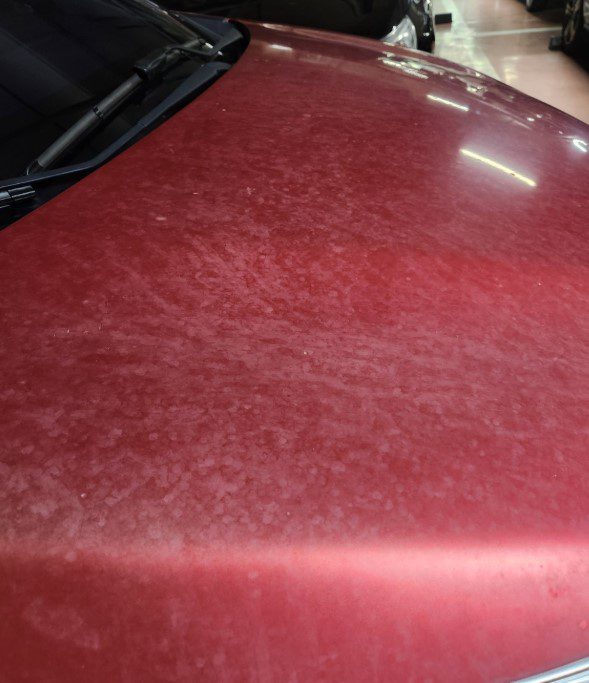
The cleaning power of an alkaline cleaner is not determined by pH alone.
The actual result depends on the cleaner’s formula, dilution ratio, dwell time, and the type of contamination on the vehicle.
The previous article, “When Do You Need an Alkaline Cleaner for Car Washing?”, explained when an alkaline cleaner is needed and how alkaline pre-wash and alkaline shampoo should be used.
This article goes one step deeper and looks at what actually determines the cleaning power of an alkaline cleaner.
For car washing, an alkaline cleaner is not important only because it is “stronger.”
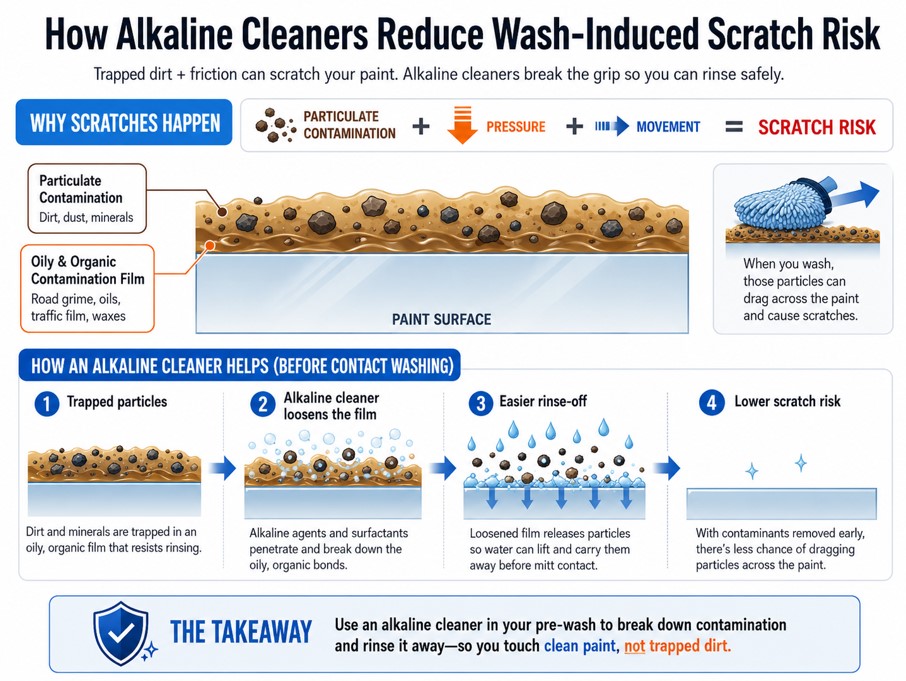
Scratch risk during washing is created when particulate contamination is pressed and moved across the paint by a wash mitt or towel.
In simple terms:
Particulate contamination + pressure + movement = scratch risk
However, particles such as sand, soil, tire dust, and exhaust particles are often not sitting on the paint by themselves.
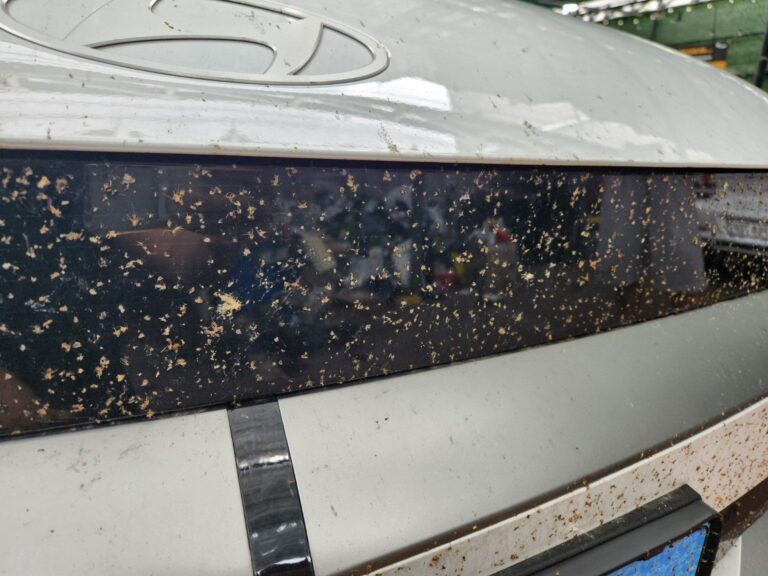
They can be trapped inside an oily and organic contamination film made from road grime, bug residue, bird droppings, old dressing residue, and other organic contamination.
That is why reducing scratch risk is not only about removing loose particles.
You also need to weaken the oily and organic film that holds those particles in place, so water and surfactants can remove them more easily.
So why does an alkaline cleaner work well on this type of contamination?
pH Shows the Strength of Alkalinity
pH is a basic indicator that shows whether a cleaning solution is acidic, neutral, or alkaline.
In general, pH is understood on a scale from 0 to 14.
pH 7 is neutral.
A lower number is acidic, while a higher number is alkaline.
| pH Range | Character | Common Car Wash Product Type | Main Caution |
|---|---|---|---|
| Around pH 6–8 | Near neutral | Neutral car shampoo | Suitable for regular maintenance washing |
| Around pH 9–10 | Mild alkaline | Mild APC or light-duty cleaner | Relatively gentle, but drying still matters |
| Around pH 10–12 | Alkaline | Alkaline pre-wash, APC, general alkaline cleaner | Dilution ratio and dwell time must be controlled |
| Above pH 12–13 | Strong alkaline | Heavy grime cleaner or degreaser-type product | Sensitive materials, coatings, and residue need caution |
| Close to pH 14 | Very strong alkaline | Use with great care on automotive surfaces | Higher risk of corrosion, staining, or surface damage |
The reason an alkaline cleaner has a high pH is that the action of hydroxide ions (OH⁻) becomes stronger in the solution.
In simple terms, as the action of hydroxide ions increases, the solution becomes more alkaline and the pH value rises.
Hydroxide Ions Weaken the Contamination Film
Road grime, exhaust residue, bug remains, bird droppings, and old dressing residue are often hydrophobic contamination.
This means they do not mix easily with water.
These contaminants are not always just sitting loosely on the surface.
Oily and organic residues can bind together and form a connected contamination film.
In many cases, particulate contamination is trapped inside that film.
This condition matters because pressure washing alone may not remove everything.
If you try to force it off with a wash mitt, the trapped particles can move across the paint and increase the risk of scratches or wash-induced marring.
The role of an alkaline cleaner is not to completely dissolve and erase the entire contamination film.
The key role is to weaken part of the contamination structure and make it easier for water and surfactants to penetrate.
This is where hydroxide ions (OH⁻) become important.
1. Structural Loosening
Hydroxide ions can weaken or break some of the bonds within the contamination film.
This loosens the structure that holds oily and organic residues together.
2. Saponification
Some oily components can undergo saponification in an alkaline environment.
As a result, they can become more water-compatible and easier to rinse away.
3. Softening Protein-Based Contamination
Bug residue and bird droppings often contain protein-based organic material.
Alkaline chemistry can help soften these hardened residues, making them easier to separate from the surface.
Once the contamination film becomes weaker, water and surfactants can enter the gaps more easily.
Then surfactants surround the loosened contamination, disperse it into the water, and allow it to be removed with a pressure rinse.
In short, an alkaline cleaner uses hydroxide ions and surfactants to weaken a water-resistant contamination film and turn it into a condition that can be washed away more easily.
Cleaning Power Depends on Both Product Design and Field Use
Now that we understand why alkaline cleaners work well on oily and organic contamination, the next question is this:
What actually determines cleaning power?
The real cleaning power of an alkaline cleaner is not controlled by one factor alone.
Some factors are built into the product.
Other factors are controlled by the user during the wash.
| Category | Cleaning Power Factor | Meaning |
|---|---|---|
| Determined by the product | pH | The acidic, neutral, or alkaline direction of the cleaner |
| Surfactants | Help wet, penetrate, and disperse contamination into water | |
| Solvents | Help with oily contamination that water alone cannot handle well | |
| Controlled by the user | Dilution ratio | The concentration used in the actual wash |
| Dwell time | How long the cleaner stays and works on the contamination |
A simple way to think about it is:
Cleaning power = product design × field use
Choosing a good product matters.
But even with the same product, the result can change depending on how it is diluted, how long it is allowed to dwell, and whether it is rinsed before drying.
Product Factors That Determine Cleaning Power
The cleaning power built into the product mainly comes from three elements:
pH, surfactants, and solvents.
These are difficult to change once you choose the product.
They are part of the cleaner’s formula.
pH Shows Both Cleaning Direction and Material Reactivity
pH is not just a number that shows how “strong” a cleaner is.
It also gives you an idea of how the cleaner is likely to act on contamination, paint, and sensitive vehicle materials.
In an alkaline cleaner, the key chemical factor is the action of hydroxide ions (OH⁻).
As the action of hydroxide ions increases, the cleaner can become more effective at loosening oily and organic contamination films.
Common Alkaline Ingredients
Common ingredients that can create strong alkalinity include sodium hydroxide (NaOH) and potassium hydroxide (KOH).
These ingredients can give a cleaner strong alkaline action and help weaken oily contamination quickly.
However, they also make the product more sensitive to dilution ratio, dwell time, panel temperature, and working conditions.
Some products may also use ingredients such as sodium metasilicate or sodium carbonate to support alkalinity or help maintain pH stability.
These ingredients help create the cleaning environment in which surfactants can work more effectively.
Why High pH Requires Material Caution
Higher pH does not automatically mean a better product.
As pH rises, the ability to loosen oily and organic contamination can increase, but so can material reactivity, corrosion potential, and residue risk.
Chrome trim, aluminum parts, metallic badges, rubber trim, and older coating layers can be more sensitive to high-pH cleaners.
If a high-pH cleaner remains in gaps, trim edges, or around emblems for too long, it can cause problems.
The same risk increases if the cleaner dries on the surface.
Staining, whitening, gloss loss, or residue issues can occur depending on the material, product, dilution ratio, and dwell time.
How to Use pH as a Practical Guide
Using an alkaline cleaner is not simply about choosing the strongest product.
It is about finding the right balance between contamination removal and material safety.
If the vehicle is not heavily contaminated or has many sensitive materials, even a high-pH product may need to be used at a lower concentration.
It should also be rinsed thoroughly before it dries.
On the other hand, lower panels with heavy road film or old oily contamination may require a stronger dilution and controlled dwell time.
pH helps you understand the cleaning direction and material sensitivity, but the final result also depends on surfactants, solvents, dilution ratio, dwell time, and rinseability.
Surfactants Act as the Bridge Between Contamination and Water
In an alkaline cleaner, hydroxide ions help loosen part of the oily and organic contamination film.
Surfactants then help that loosened contamination move into the water so it can be rinsed away.
In simple terms:
If hydroxide ions help loosen the contamination film, surfactants help disperse that loosened contamination into water.
How Surfactants Help Remove Contamination
Surfactants work in three main ways.
1. Wetting
Surfactants lower surface tension, allowing the cleaner to spread over contamination instead of beading up or running away from it.
This helps the cleaner make even contact with the contamination film.
2. Penetration
Once hydroxide ions have loosened the contamination film, surfactants can enter the gaps.
They begin to surround loosened oily contamination and trapped particles.
3. Dispersion
Once surrounded by surfactants, the contamination becomes easier to disperse into water.
This allows contamination that normally does not mix well with water to be carried away during the rinse.
The important point is that surfactants are not simply “foam makers.”
Their core role is to help the cleaner wet, penetrate, and disperse contamination so it can be rinsed away.
Foam Supports Dwell Time
Surfactants can also contribute to foam formation.
However, foam itself is not the main cleaning force that directly breaks down contamination.
Foam helps slow down runoff and reduce rapid water evaporation from the surface.
In other words, foam helps create dwell time by allowing hydroxide ions and surfactants to stay on the contamination film long enough to work.
So foam is not cleaning power by itself.
It is a supporting structure that helps the cleaner stay active on the surface.
Solvents Help with Oily Contamination
Solvents help weaken or separate oily contamination that water and surfactants alone may not handle effectively.
They can be useful for contamination such as road oil, tar-like residue, old dressing residue, adhesive residue, and sticky oily grime.
Common solvent types found in car cleaning products include the following.
1. Limonene
Limonene is often found in citrus-based cleaners.
It may be used in citrus pre-wash products or citrus degreasers that focus on oily grime removal.
2. Glycol Ethers
Glycol ethers can be found in products designed to handle oily films, fingerprints, and general interior or exterior grime.
They may appear in APCs, interior cleaners, or glass cleaners that need to break down light oily contamination.
3. Alcohol-Based Solvents
Alcohols such as IPA or ethanol are often used in surface-preparation products.
They are common in panel wipes, coating prep sprays, or polishing oil removal products where the goal is to reduce residue and prepare the surface.
However, a product is not automatically better just because it contains solvents.
Solvents can support oily contamination removal, but they can also affect odor, residue, surface compatibility, and coating behavior depending on the formula.
That is why solvents should be understood as a cleaning-supporting factor that must be considered together with dilution ratio and the surface being cleaned.
Cleaning Power Must Include Rinseability
Good cleaning power does not only mean loosening contamination strongly.
The loosened contamination and the cleaner itself must also rinse away cleanly.
If an alkaline cleaner loosens grime but leaves residue behind, the final result may still be poor.
Residue can remain around emblems, trim edges, grilles, door lowers, and other areas where cleaner or water can collect.
This can lead to staining, streaking, or dried residue.
A good cleaner is not simply the strongest cleaner.
It should loosen contamination and then rinse away cleanly.
Rinseability can depend on the surfactant system, product concentration, dwell time, and how thoroughly the surface is rinsed.
User-Controlled Factors That Change Cleaning Power
If pH, surfactants, and solvents are product-side factors, then dilution ratio and dwell time are user-controlled factors.
Even with the same product, these two variables can change the result significantly.
Dilution Ratio Controls Cleaning Strength
Dilution ratio determines the concentration of the cleaner during actual use.
People search for alkaline pre-wash dilution ratios not just to memorize a number.
They want to know how strong the cleaner should be for their vehicle’s contamination level.
1. Dilution Ratio Is Not an Absolute Number
The same 1:10 dilution does not produce the same cleaning power across all products.
Different products have different raw concentrations, pH levels, surfactant systems, solvent content, and rinseability.
That is why dilution ratio should not be treated as a universal answer.
The manufacturer’s recommended dilution range should be the starting point.
From there, you need to find the right working range for your product, your vehicle, and your contamination level.
2. Adjust Dilution to the Contamination Level
A well-maintained vehicle may only need a mild dilution.
If the car is washed frequently and has only light dust or a thin road film, a strong concentration may not be necessary.
On the other hand, lower doors, side skirts, rear bumpers, and heavily soiled lower panels may require a stronger dilution.
In these areas, a higher concentration can increase the amount of active cleaning components reaching the contamination film.
However, stronger is not always better.
As concentration increases, cleaning power can increase, but so can material stress, drying risk, and residue risk.
A safer approach is to start with a lower concentration within the recommended range and then adjust based on the result.
3. Confirm the Dilution Ratio by the Result
When adjusting dilution ratio, do not only ask, “Did it remove the dirt?”
You should also check two things.
First, drying behavior.
If the cleaner dries too quickly, the concentration may be too high or the working environment may be too hot, windy, or exposed to direct sunlight.
In that case, reduce the concentration, work in smaller sections, or rinse sooner.
Second, residue.
If streaks, stains, or residue remain after rinsing, the cleaner may have been too strong, left too long, or not rinsed thoroughly enough.
In that case, lower the concentration and improve rinsing.
The standard for dilution ratio is simple:
Use a concentration that loosens the contamination without creating drying or residue problems.
Finding that balance is the key to using an alkaline cleaner safely and effectively.
Dwell Time Is the Time the Cleaner Works on Contamination
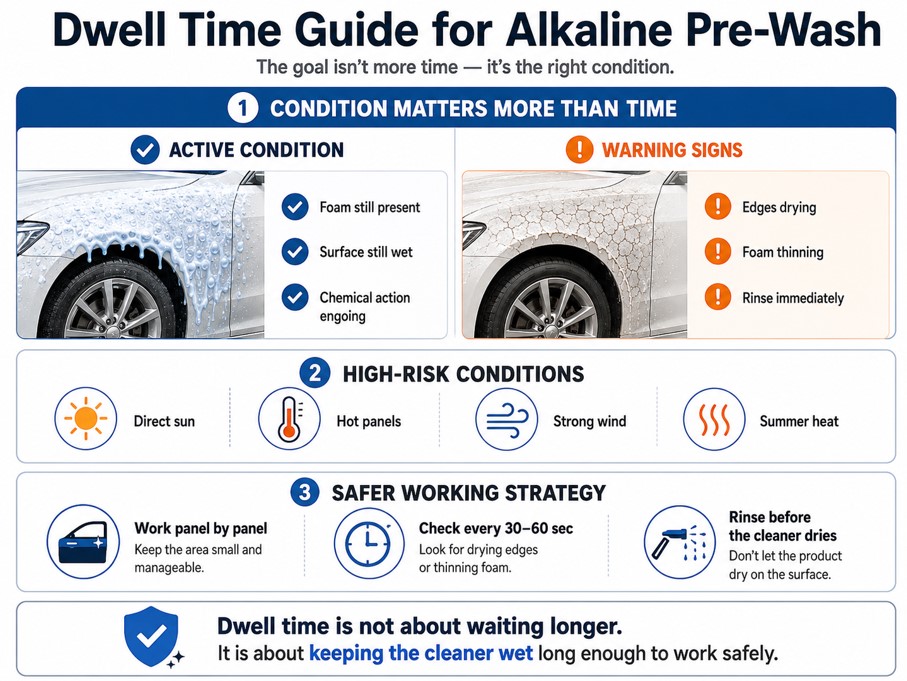
If dilution ratio determines concentration, dwell time determines how long that concentration has to work on the contamination film.
After applying an alkaline pre-wash, the cleaner needs time to loosen the contamination.
However, leaving it longer does not always mean better cleaning.
The important question is not simply how many minutes have passed.
The real question is:
Is the cleaner still wet and active on the surface?
1. Condition Matters More Than Time
A practical baseline is to check within 1 to 3 minutes.
But this is not an absolute rule.
The key is whether the cleaner is still wet on the paint.
- Active condition: If the foam is still present and the cleaner remains wet, the chemical action is still happening.
- Warning sign: If the edges start to dry or the foam becomes thin and patchy, rinsing should begin immediately. A dried cleaner can cause staining, residue, or bonded contamination.
2. Adjust Dwell Time to the Environment
Working conditions can change drying speed dramatically.
- High-risk conditions: Summer heat, direct sunlight, hot panels, and strong wind can cause the cleaner to dry very quickly. In these conditions, check the surface every 30 seconds to 1 minute.
- Working strategy: Instead of applying the cleaner to the entire vehicle at once, work panel by panel so the cleaner does not dry before rinsing.
3. Rinse Before the Cleaner Dries
The standard for dwell time is not how long the cleaner can stay on the surface.
The standard is how long it can safely work before drying.
If contamination does not come off easily, simply leaving the cleaner longer or increasing the concentration is not always the best answer.
A more stable approach is to keep the cleaner wet, allow it to loosen contamination within a safe working time, and rinse thoroughly before it dries.
In other words, an alkaline cleaner should not be used only by increasing strength.
The goal is to match the dilution ratio and dwell time to the contamination level while preventing drying.
Conclusion: Understand the Cleaner and Adjust It to the Contamination
The cleaning power of an alkaline cleaner is not determined by pH alone.
pH is an important guide because it shows the cleaning direction of the product.
However, real-world cleaning power comes from the combined effect of surfactants, solvents, concentration, rinseability, dilution ratio, and dwell time.
The product itself matters.
pH, surfactants, and solvents are part of the product’s built-in characteristics.
These are mostly determined when you choose the cleaner.
But the way you use the product also matters.
Dilution ratio and dwell time are controlled by the user, and they must be adjusted according to contamination level and working conditions.
So when evaluating an alkaline cleaner, do not ask only:
“Which product is stronger?”
A better question is:
“Does this cleaner’s formula match the contamination, and can I control the dilution ratio and dwell time safely?”
Choosing a strong cleaner is important in some cases.
But just as important is understanding the cleaner’s characteristics and adjusting it to the vehicle’s contamination level.
Good alkaline cleaner use is not about maximizing strength.
It is about finding the balance where contamination is loosened effectively while unnecessary stress on paint, trim, coatings, and sensitive materials is avoided.
In the end, the key is simple:
Understand the cleaner’s characteristics, then adjust the dilution ratio and dwell time according to the vehicle’s contamination level.