Car-wash water is not pure water
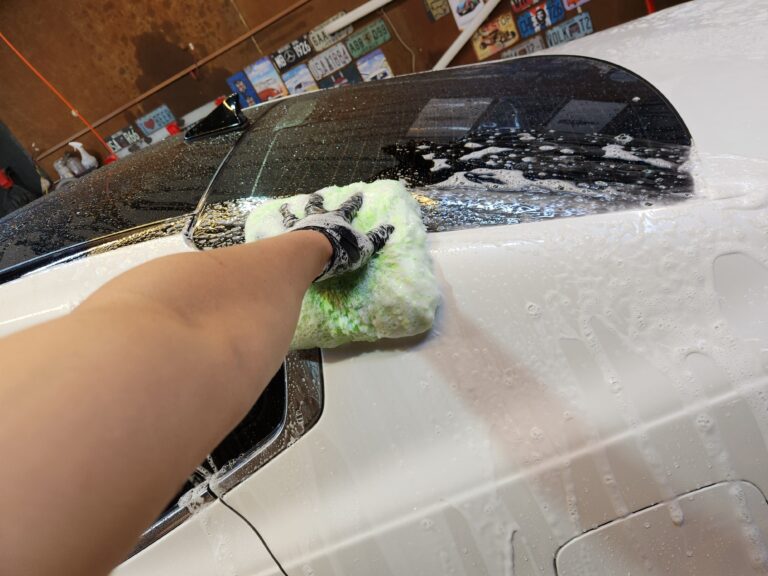
Car wash water quality affects both the cleaning process and the finish left behind after drying. Water carries cleaners during pre-washing, supports the liquid film during contact washing, and rinses loosened contamination away. Yet the water itself can leave something behind.
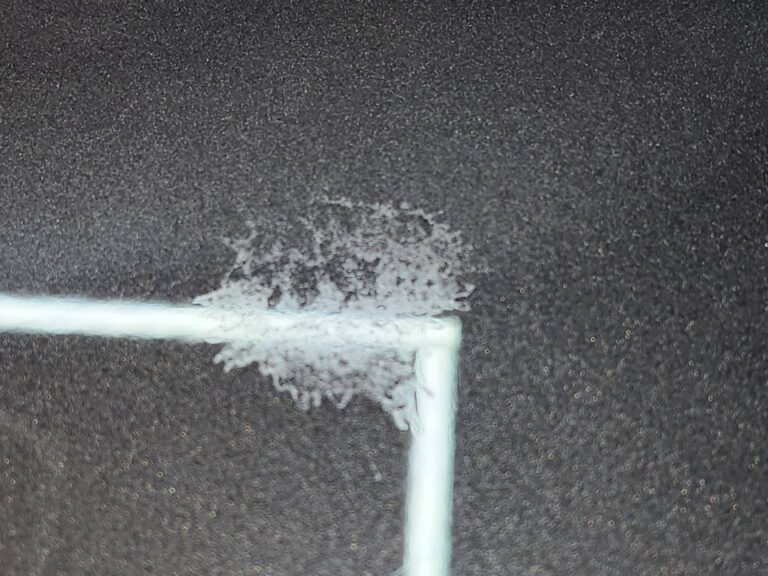
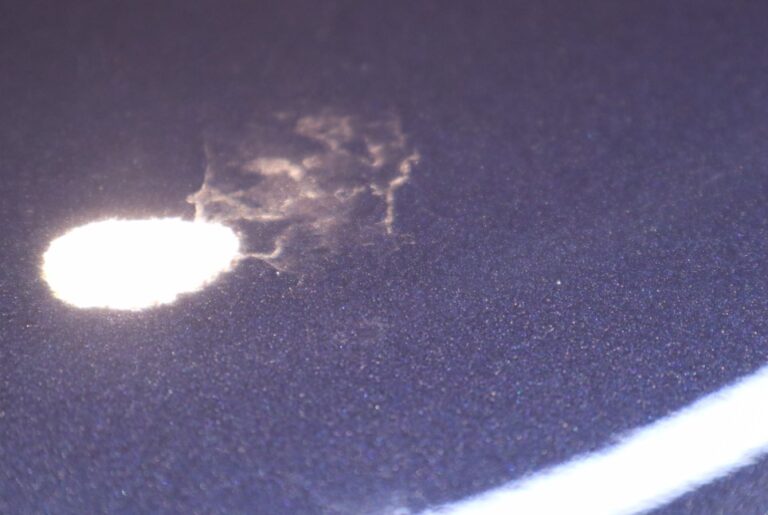
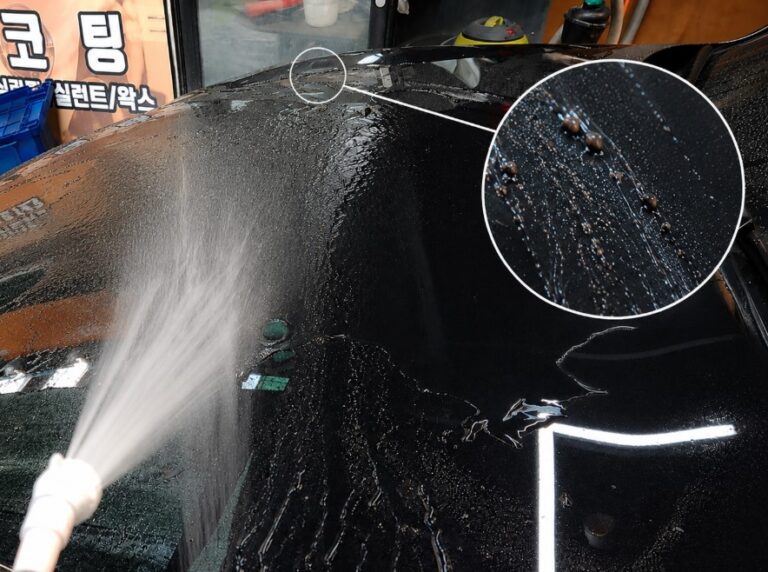
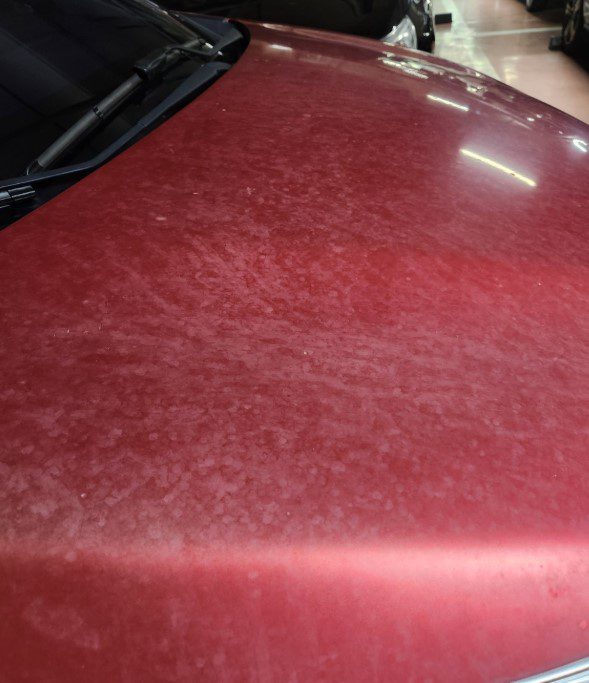
Tap water and well water contain dissolved minerals and other substances. Calcium and magnesium are the best-known examples. These materials may be invisible while the paint is wet. As water evaporates, however, some of them can remain as pale residue, water marks or mineral deposits.
This is why the same shampoo and washing method can produce different results in different locations. Water quality changes how the wash solution behaves. It also changes what may remain on the paint after rinsing.
Most drivers cannot control the source water at a self-service car wash. This guide therefore focuses on practical decisions. It explains what hardness and TDS mean, why softened water is not the same as spot-free water, how to prevent drying residue, and when an RO or DI final rinse can help.
Repeated mineral deposits and water spotting can progress beyond removable surface residue and damage the clear coat.
Contents
- How water quality changes washing and drying
- Tap water and well water
- Drying as the most practical form of water-quality control
- RO and DI water for a spot-free final rinse
- Frequently asked questions
1. How water quality changes washing and drying
Hardness, TDS and pH describe different properties
Understanding car wash water quality does not require a laboratory report. Three terms are enough for most practical decisions.
| Measurement | What it describes | Why it matters during a car wash |
|---|---|---|
| Hardness | Mainly dissolved calcium and magnesium | Can affect cleaner behaviour and contribute to mineral residue |
| TDS | The combined amount of dissolved substances | Helps estimate how much dissolved material may remain after evaporation |
| pH | Whether the water is acidic, neutral or alkaline | Does not tell you whether the water has low hardness or low TDS |
The U.S. Geological Survey defines water hardness mainly by its dissolved calcium and magnesium content. Hard water can change the way soap and detergent solutions feel. It can also contribute to mineral scale and visible residue.
TDS is a broader measurement. It includes calcium and magnesium, but it also includes sodium, chloride, bicarbonate, sulfate and other dissolved substances. A higher TDS reading suggests that more dissolved material is present. It does not reveal which substances are in the water.
This distinction matters. TDS alone cannot predict whether a particular drop of water will form a visible spot. Paint temperature, droplet size, drying speed, paint colour and the composition of the dissolved material all affect the final result.
The pH value answers a different question. Neutral water can still contain substantial hardness and dissolved solids. A pH reading near 7 does not mean the water will dry without residue.
A simple hardness reference
Water hardness is commonly reported as milligrams per litre, or parts per million, expressed as calcium carbonate.
| Hardness as CaCO3 | General description |
|---|---|
| 0–60 mg/L | Soft |
| 61–120 mg/L | Moderately hard |
| 121–180 mg/L | Hard |
| More than 180 mg/L | Very hard |
These ranges help describe water. They are not absolute water-spot limits. Even relatively soft water can leave residue if large droplets repeatedly dry on hot paint.
Softened water is not residue-free water
Some homes, detailing shops and commercial car washes use an ion-exchange water softener. It replaces much of the calcium and magnesium with sodium ions. This can help cleaners behave more consistently and can reduce scale inside equipment.
Softening does not remove every dissolved substance. The U.S. EPA explains that ion-exchange softening replaces calcium and magnesium with sodium. For that reason, hardness can fall while the total amount of dissolved material remains significant.
Softened water can therefore improve washing conditions without becoming a truly spot-free final-rinse water. It can still leave residue when it dries.
2. Tap water and well water
Car wash water quality can vary greatly between municipal tap water and private well water. The name of the source does not reveal its hardness or TDS.
Tap water passes through a regulated treatment system, but mineral content still depends on the local source and treatment process. Water drawn from rivers, reservoirs and aquifers can produce very different readings between regions.
Well water has spent more time moving through soil and rock. It may collect more calcium, magnesium, iron and other dissolved material along the way. For this reason, well water is often hard in mineral-rich areas. It is not automatically hard everywhere.
The practical signs matter more than the label. Watch what happens at the wash location:
- Does water leave pale rings after only a short drying period?
- Does residue repeatedly appear on dark paint?
- Does the shampoo feel different from the same product used elsewhere?
- Does scale build up quickly around taps and equipment?
A handheld TDS meter can reveal changes in the total dissolved content. It cannot identify the individual minerals or guarantee a spot-free result. Use the reading together with what you observe on the vehicle.
3. Drying is the most practical form of water-quality control
Dissolved substances remain in the liquid while the panel stays wet. As the water evaporates, those substances become concentrated in a smaller area. Some can then remain as fine sediment, pale rings or mineral residue.
This explains why a freshly rinsed vehicle may look perfectly clean. The marks often become visible only after the vehicle moves into sunlight and the remaining droplets dry.
Most self-service users cannot change the source water or treatment equipment. The most practical response to car wash water quality is to stop the water from drying on the paint.
As explained in Part 3: How Water Pressure and Flow Rate Remove Contamination, rinsing removes shampoo and loosened contamination from the vehicle. Water still remains on the paint after that process. The wash is not complete until this water is also managed.
1) Lower the panel temperature first
Water and wash solutions evaporate quickly on hot paint. Cleaners may become concentrated before they have completed their work. This can leave streaks or residue.
Whenever possible, move the vehicle into shade and allow hot panels to cool. This is especially important after driving or parking in direct sunlight.
2) Rinse before the wash solution dries
Follow the product’s recommended dwell time. Keep the solution wet throughout that period.
Reduce the working area when the panel is warm, the air is dry or the wind is strong. Working one section at a time is safer than coating the whole vehicle and then rushing to rinse it.
3) Do not stop rinsing when the foam disappears
The absence of visible foam does not prove that rinsing is complete. Diluted shampoo and loosened contamination can remain along lower panels and inside gaps.
Work from the top down and maintain a continuous flow. Check mirror housings, badges, trim edges, door handles and lower panel seams. The goal is to move the remaining wash solution off the vehicle, not merely make the foam disappear.
4) Dry the vehicle promptly after the final rinse
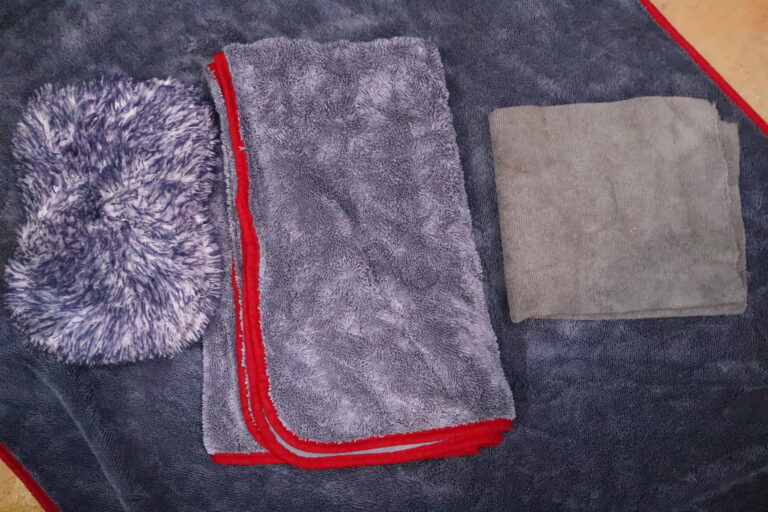
Remove water before the remaining droplets dry naturally. Use a clean drying towel on large panels. Compressed air or a vehicle dryer can help clear water from gaps.
Drying is more than a cosmetic final step. It is a form of water-quality control because it removes the water before dissolved substances become concentrated on the surface.
For towel and air-drying technique, see the Car Drying Guide.
5) Check for water that returns from gaps
Water can continue to drain from mirrors, handles, badges, number plates and trim after the main drying pass. These drops often run across panels that were already dry.
Walk around the vehicle once more. Blow out or wipe away the returning water before it dries.
4. RO and DI water improve the final rinse
RO and DI systems offer another way to manage car wash water quality during the final rinse. They are more common at professional detailing shops and commercial spot-free car washes in the United States and Europe. Some enthusiasts also use compact systems at home.
These systems do not replace washing or thorough rinsing. Their main purpose at the end of a car wash is to reduce the dissolved material left in the final water film.
RO water reduces dissolved solids
Reverse osmosis pushes feed water through a semipermeable membrane. The membrane rejects a large portion of dissolved salts and other substances. The U.S. EPA describes RO as a treatment that can reduce total dissolved solids.
RO water contains far fewer dissolved substances than the original feed water, but it does not automatically mean zero TDS. The result depends on the source water, membrane, pressure, temperature and maintenance condition.
DI water removes remaining ions
Deionization passes water through ion-exchange resin. Cation and anion resins capture electrically charged dissolved species. A properly maintained DI stage can produce water with very low ionic content.
The resin eventually becomes exhausted. When this happens, ions begin to pass through and the final water quality declines. Conductivity or TDS monitoring helps show when the cartridge needs replacement.
DI treatment focuses on dissolved ions. It is not a substitute for removing dirt, shampoo, oils or other contamination from the vehicle.
Why RO and DI are often combined
| Treatment | Main role | Practical place in a car-wash system |
|---|---|---|
| RO | Greatly reduces the dissolved load | Produces low-TDS water and reduces the demand on DI resin |
| DI | Removes many of the remaining ions | Polishes RO water for a very low-residue final rinse |
| RO + DI | Uses both stages in sequence | Extends DI life while producing a more consistent spot-free rinse |
An RO stage can remove much of the dissolved load first. The DI stage then handles the remaining ions. This arrangement usually makes more sense than asking a small DI cartridge to treat high-TDS source water by itself.
How to use a spot-free final rinse
First complete the normal wash and rinse. Use enough ordinary rinse water to remove shampoo and loosened contamination. Low-TDS water should not be used to compensate for an incomplete rinse.
Then apply the RO or DI water from the top down. Use a continuous sheet or flow rather than a light mist. The aim is to dilute and replace the ordinary water that remains on the panel.
A small amount of mist can add low-TDS water without fully displacing the tap water already present. Sufficient coverage matters more than simply activating the spot-free setting for a few seconds.
Low-TDS final-rinse water reduces the mineral residue that the water itself can leave. It does not remove shampoo residue, existing water spots or bonded contamination. If practical, careful drying remains the safest finish.
When mineral deposits have already formed, see Mineral Contamination vs. Water Spots and the Water Spot Removal Guide.
5. Frequently asked questions
Can I wash a car with hard water?
Yes. Hard water does not prevent washing. It can change cleaner behaviour and increase the chance of drying residue. Work in the shade, prevent the wash solution from drying, rinse thoroughly and dry promptly.
Can I skip drying when the TDS is low?
Low-TDS water reduces the mineral residue contributed by the water itself. It does not eliminate shampoo, contamination or ordinary rinse water that may remain on the vehicle. Drying is still the safer choice when practical.
Does softened water prevent water spots?
No. A softener reduces calcium and magnesium hardness, but it does not remove all dissolved substances. Soft water can improve the washing process without becoming residue-free water.
Should I avoid a car wash that uses well water?
Not solely because it uses well water. Well-water quality varies with local geology and treatment. Judge the site by the actual residue it leaves, the available water-quality information and how quickly you can dry the vehicle.
Are RO water and DI water the same?
No. RO uses a membrane to reduce a broad range of dissolved substances. DI uses ion-exchange resin to remove charged ions. Many spot-free systems use RO first and DI second.
Does RO or DI water clean contamination better?
Its main advantage is not stronger cleaning. The benefit is the smaller amount of dissolved mineral residue left by the final rinse. Normal pre-washing, contact washing and thorough rinsing still perform the cleaning.
Can I use the spot-free setting for only a few seconds?
Only if that amount fully covers the vehicle and replaces the ordinary rinse water. A light mist may not be enough. Apply a continuous top-down flow across every panel.
Conclusion — after using water, remove the water too
Water weakens contamination, carries cleaning ingredients and moves loosened material off the vehicle. Its role changes throughout the wash, as explained in Part 1: The Role of Water in Car Washing and Part 2: How Water Removes Different Types of Contamination.
Water can also become the source of the final residue. When ordinary rinse water evaporates, some of its dissolved content may remain on the paint.
Hardness and TDS help describe the risk, but they do not replace practical control. Keep the panel cool. Prevent wash solutions from drying. Rinse completely. Remove water from panels and gaps.
Where an RO or DI spot-free rinse is available, use it after a complete conventional rinse. Give it enough flow to dilute and replace the ordinary water. Then dry the vehicle whenever conditions allow.
Water moves contamination from the beginning to the end of a car wash. Once the wash is complete, the water itself should not remain on the vehicle.
The final result depends on more than the product you choose. It also depends on the water you use, the way you rinse and how you finish the drying stage.
References
- Hardness of Water — U.S. Geological Survey
- Chloride, Salinity and Dissolved Solids — U.S. Geological Survey
- Evaluation of Ion Exchange Softening — U.S. Environmental Protection Agency
- Point-of-Use Reverse Osmosis Systems — U.S. Environmental Protection Agency
- Overview of Drinking Water Treatment Technologies — U.S. Environmental Protection Agency