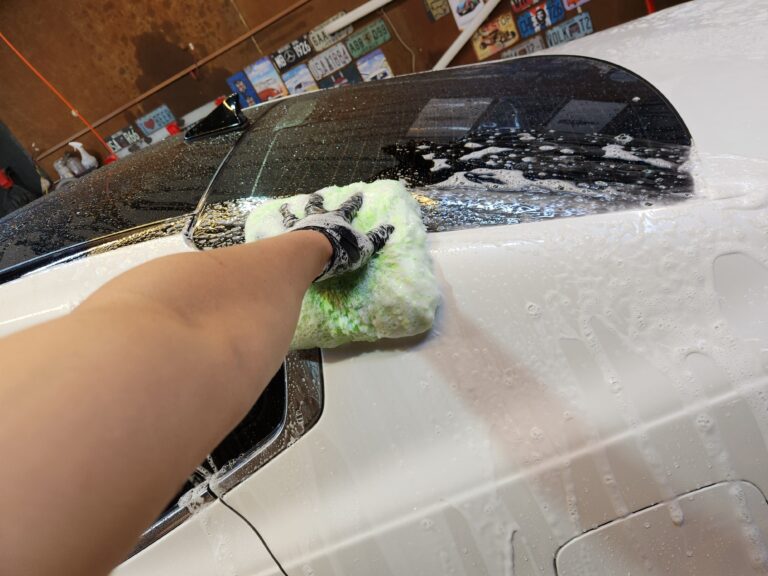
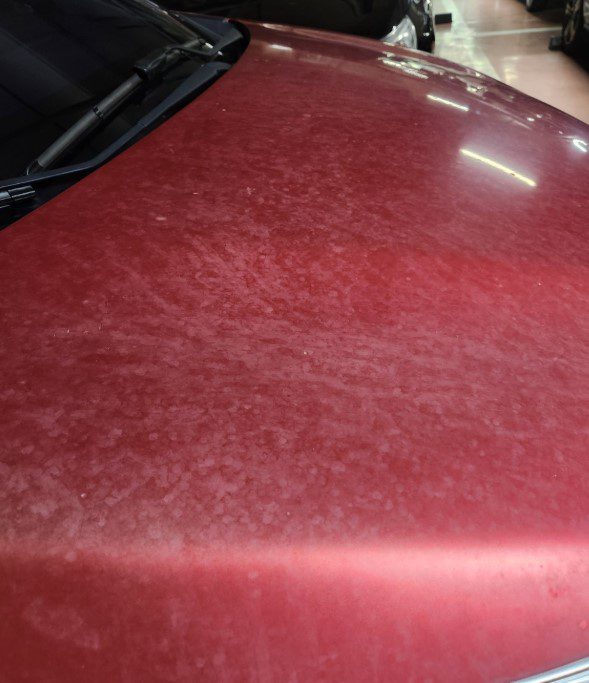
When choosing a wash mitt, most people start by comparing materials and dry softness. They ask whether microfiber, wool, chenille, or a sponge feels gentler in the hand.
However, a wash mitt is not used dry.
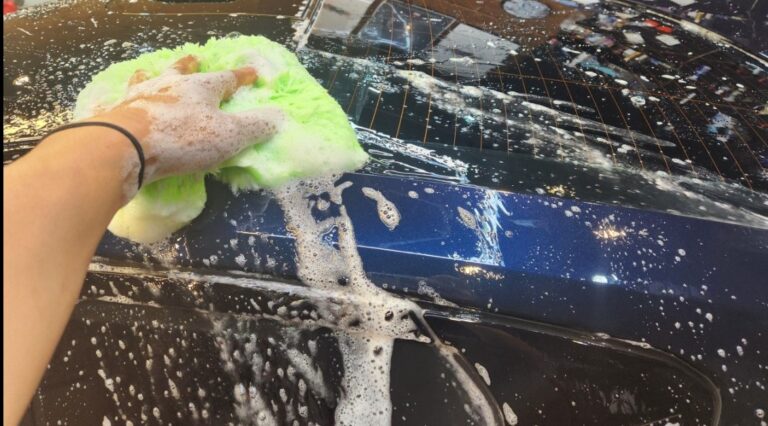
During a contact wash, the mitt touches the paint while fully loaded with car shampoo solution. Once wet, the weight, movement, and shape of the pile change. The solution inside the mitt also moves toward the contact area as you guide it across the panel.
For that reason, dry softness alone cannot tell you whether a wash mitt will manage scratch risk well.
A good mitt should remain soft and flexible when wet. It should carry enough shampoo solution to the panel, allow that solution to flow through the pile, and maintain enough working depth to spread pressure.
Wash-induced marring usually develops when several factors come together:
Particulate contamination + pressure + friction + movement = scratch risk
A good wash mitt is not simply a soft tool for scrubbing dirt away. Its real purpose is to use shampoo solution and pile structure to stop those risk factors from increasing at the same time.
Table of Contents
- Five features that determine wash mitt safety
- How the five features reduce scratch risk
- Comparing common wash tools
- How to use a wash mitt safely
- Frequently asked questions
Five Features That Determine Wash Mitt Safety
Do not judge a wash mitt by material alone.
Microfiber, natural wool, and chenille all have different strengths and weaknesses. Even within the same material, performance can change according to pile length, yarn thickness, density, and how the fibers behave after repeated use.
The important question is whether the following five features remain effective after the mitt becomes fully saturated with shampoo solution.
1. Softness That Remains After the Mitt Gets Wet
A mitt that feels soft when dry may behave differently once it absorbs water.
Wet fibers can stick together or become tangled. When that happens, several fine strands begin moving as one thicker contact point.
The mitt may still feel soft in your hand, yet the working surface can behave like a compacted layer instead of many separate fibers.
This makes it harder for the pile to adapt to panel curves and small changes in hand pressure. If a hard particle becomes caught at the end of a tangled section, it may stay in one contact point and travel across the paint.
What matters is not how soft a new mitt feels on a store shelf.
A safe wash mitt should remain soft and flexible under actual wet washing conditions.
2. Enough Retention to Carry Shampoo Solution
Retention describes how much shampoo solution a wash mitt can hold and carry from the bucket to the working area.
In simple terms, it tells you how much water and shampoo the mitt brings to the paint.
A mitt with low retention may feel fully wet when you first remove it from the bucket. After a short pass, however, the contact area can begin losing solution quickly.
As the surface becomes less lubricated, the mitt may feel harder to move. The user may then apply more pressure without realizing it.
A mitt with good solution-carrying capacity can:
- Deliver plenty of shampoo solution to the panel
- Slow the loss of lubrication at the contact area
- Keep the wet pile fuller and more flexible
- Help spread hand pressure over a wider area
- Supply the water needed for flushing
However, high retention does not automatically mean good flushing.
Retention describes the ability to hold and transport solution. Flushing describes whether that solution can actually move through the pile and across the contact area.
3. Flushing That Moves Shampoo Solution Through the Pile
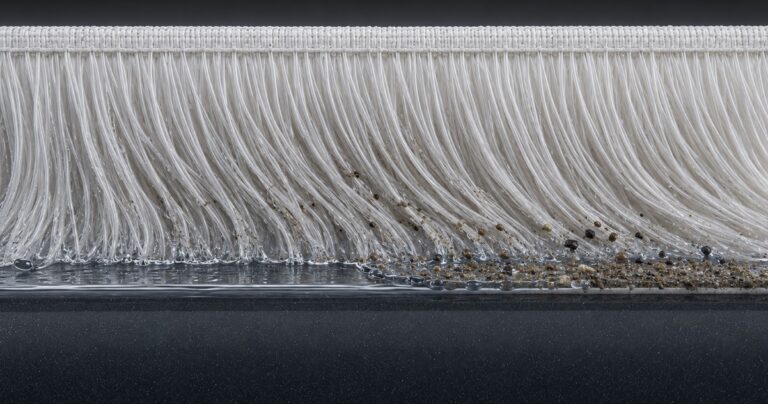
Flushing is the movement of shampoo solution through the mitt and into the area where the pile touches the paint.
As you guide a saturated mitt across a panel, or lightly compress and release it, solution moves between the fibers. This flow supplies fresh lubrication and helps prevent loosened contamination from staying in one contact point.
This is different from dragging a particle across the paint.
- Dangerous movement occurs when a hard particle stays under pressure and travels along the surface.
- Flushing uses flowing solution and open pile space to help move contamination away from that concentrated contact point.
Good retention gives the mitt enough solution to support flushing. Still, holding a large amount of water and releasing it effectively are not the same thing.
A conventional car wash sponge illustrates this difference.
A sponge can hold a significant amount of solution inside its pores. To actively push that water toward the surface, however, the user normally needs to compress the sponge.
That pressure does not act only on the water. It can also press particulate contamination between the sponge and the paint.
A pile-style wash mitt can release solution more naturally through fiber movement and deformation. This advantage decreases if the pile becomes overly compacted or tangled.
Retention carries shampoo solution to the panel. Flushing makes that solution flow through the working surface.
For a closer look at how solution moves through different pile structures, see this guide to wash mitt flushing.
4. Pile Mobility That Remains When Wet
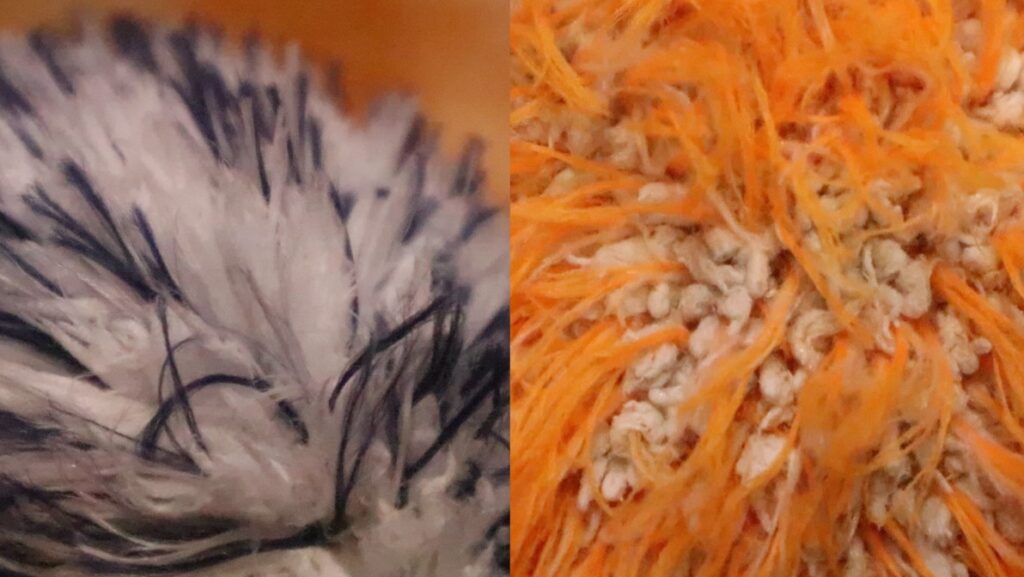
Pile mobility describes how freely the individual fibers can move instead of behaving like one fixed mass.
When the fibers remain mobile, they can adjust to panel curves and changes in hand movement. Loosened particles also have more opportunities to move between open spaces instead of remaining fixed at one fiber tip.
If the pile becomes tangled, several fibers begin moving together as a thick bundle.
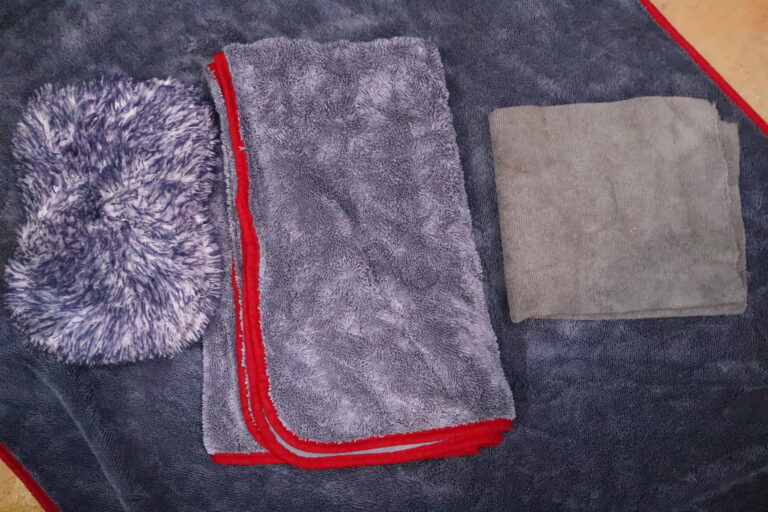
Some microfiber wash mitts use extremely fine yarns at high density. They may feel exceptionally soft and hold a large amount of solution when new. After repeated use and washing, however, fine fibers can begin to tangle.
This can lead to several changes:
- Individual fibers lose independent movement
- Open space for contamination becomes smaller
- Water-flow paths become narrower
- Flushing performance may decrease
Put simply, the pile must remain open so that water and contamination have room to move.
Do not judge a microfiber mitt only by its original softness. Check whether the pile still separates and moves naturally after repeated use.
5. A Working Pile Layer That Spreads Pressure
The total thickness of a wash mitt is not always the same as the depth of the pile that actually works against the paint.
A mitt may contain thick internal foam or padding. If the outer pile is shallow or collapses easily, there may still be very little space between the paint and the base of the mitt.
A saturated and flexible outer pile creates a buffer between your hand and the paint. This working layer spreads pressure and reduces the chance that one hard particle receives the full force of your hand.
When checking the working pile layer, consider the following:
- Does it keep enough depth after absorbing solution?
- Does it collapse completely under light pressure?
- Is there real pile space between the paint and the base material?
- Does the pile recover after repeated use and washing?
Tangling and flattening reduce the amount of usable pile depth.
The goal is not simply to find the longest or thickest-looking mitt. What matters is how much functional pile space remains when the mitt is wet and under light pressure.
How Do These Five Features Reduce Scratch Risk?
The five features do not work independently.
A wet pile layer spreads hand pressure. Retention supplies shampoo solution, while flushing moves that solution through the contact area and helps prevent loosened contamination from staying in one place.
Pile mobility keeps pathways open for water and contamination. A sufficient working pile depth also creates a buffer between the paint and the base of the mitt.
Together, these features reduce the chance that particulate contamination will remain trapped under high pressure and friction while being dragged across the paint.
The purpose of a good wash mitt is not to make every particle disappear. It is to manage the contact conditions so that several scratch-risk factors do not increase at the same time.
Comparing Common Wash Tools
The following comparison does not represent every product on the market.
It shows how easily each general structure allows the user to manage particulate contamination, pressure, and solution flow. Products made from the same material can still perform differently.
| Wash tool | Scratch-risk management | Main point |
|---|---|---|
| Microfiber wash mitt | High | Check yarn thickness, density, and tangling after repeated use |
| Natural wool mitt | High | Good wet softness and retention, but maintenance and clumping matter |
| Chenille mitt | Moderate | Thinner and more flexible microfiber strands are preferable |
| Car wash sponge | Low | Creating active flow often requires compression that also increases pressure on particles |
Chenille mitts and wash sponges can still remove visible dirt.
They may be acceptable when low cost and basic cleaning matter more than managing paint marring. However, removing visible contamination and controlling scratch risk are not the same thing.
At self-service car washes, I often see drivers using basic sponges or inexpensive chenille mitts.
Most did not compare the structures before buying them. They saw a product labeled as a “car wash sponge” or “car wash mitt” and reasonably assumed that it must be safe for automotive paint.
After I explain how compression, pile depth, and contamination interact, many stop using the sponge or switch to a pile-style mitt.
Beginners may find pressure control more difficult than experienced detailers. When dirt does not disappear immediately, they often press harder or repeat the same pass several times.
For that reason, a beginner can benefit from a forgiving wash mitt that carries plenty of solution and maintains a wet pile layer that spreads pressure.
To apply these five structural features when comparing actual products, read this guide on how to choose a wash mitt.
How to Get the Best Performance From a Wash Mitt
A well-designed wash mitt cannot manage scratch risk by itself. The washing process must allow its structure to work properly.
1. Reduce Contamination With a Pre-Wash
A pre-wash reduces the amount of particulate contamination that the mitt must manage during contact washing.
If large amounts of sand, soil, and heavy road grime remain on the paint, the pile and flushing action must handle a much greater load.
Every mitt has structural limits. Open pile space and solution flow cannot safely manage an unlimited amount of contamination.
Remove as much loose and chemically responsive grime as possible before making contact. A suitable pre-wash followed by a thorough pressure rinse reduces the initial contamination load.
A pre-wash does not make contact washing completely risk-free. It creates more manageable conditions for the wash mitt.
2. Fully Saturate the Mitt and Use Light Pressure
A wash mitt should not rely on strong mechanical force to remove contamination.
Fully load it with shampoo solution, then guide it over the panel with little more than the weight of the wet mitt.
Pressing harder compresses the outer pile. Open space becomes smaller, and more force can reach any hard particles that remain between the mitt and the paint.
The goal is not to press the mitt into the paint. The goal is to move it while maintaining plenty of shampoo solution between the pile and the surface.
Do not wash an entire large panel after only one dip into the bucket.
Reload the mitt before it becomes noticeably lighter or starts to feel less smooth across the paint.
If contamination does not release under light contact, first consider whether the pre-wash or chemical cleaning stage was sufficient. Increasing pressure should not be the first response.
3. Separate Lower Panels and Check the Mitt Regularly
Rocker panels, lower bumpers, and areas behind the wheels usually carry more particulate contamination than upper panels.
Use a separate mitt for the lower sections, or clean those areas at the end of the wash. Avoid returning a heavily contaminated lower-panel mitt to the hood, roof, or upper doors.
The condition of the mitt also matters.
After repeated use, saturate the mitt and check whether the pile separates naturally. Tangled sections that remain compacted may have reduced mobility and flushing ability.
If the working pile has flattened and no longer maintains enough depth, retire the mitt from paint use. Depending on its condition, it may still serve as a lower-panel or wheel tool.
Frequently Asked Questions
Should I Choose the Wash Mitt That Feels Softest When Dry?
No. Dry softness is only one first impression.
You also need to check how the mitt behaves after becoming saturated. The pile should remain flexible, maintain working depth, and allow solution to move through the fibers.
Is a Mitt Better if It Holds More Shampoo Solution?
Good retention is helpful, but it is not the only requirement.
A mitt may hold a large amount of solution while releasing very little through the working surface. Retention and flushing should be evaluated separately.
Can I Use a Car Wash Sponge Instead of a Mitt?
A sponge can remove dirt and hold a considerable amount of water.
However, releasing that water usually requires compression. The same compression can increase pressure on particles trapped between the sponge and the paint.
When minimizing wash-induced marring is a priority, a pile-style wash mitt usually provides more forgiving pressure distribution.
When Should I Replace a Wash Mitt?
Use condition rather than age as the main guide.
Consider replacing or downgrading the mitt when the wet pile remains tangled, the working layer has become permanently flattened, or the fibers no longer separate naturally after washing.
A Good Wash Mitt Is Defined by How It Behaves When Wet
Wash mitt performance is not determined by dry softness alone.
During an actual wash, the mitt contacts the paint while saturated with shampoo solution. At that point, fiber movement, solution flow, working pile depth, and pressure distribution all matter.
A good wash mitt should meet five conditions:
- It remains soft when wet.
- It carries enough shampoo solution to the working area.
- It allows that solution to flow through the pile.
- Its fibers remain mobile instead of becoming tangled.
- Its working pile layer maintains enough depth to spread pressure.
One strong feature cannot compensate for every weakness.
A mitt may hold a large amount of solution but flush poorly. Long pile can lose its advantage if the fibers tangle. A new mitt may feel soft but develop a compacted contact surface after repeated use.
A good wash mitt is not a tool for scrubbing dirt away with force. It uses shampoo solution and a mobile pile structure to prevent contamination from being dragged across the paint under high pressure and friction.