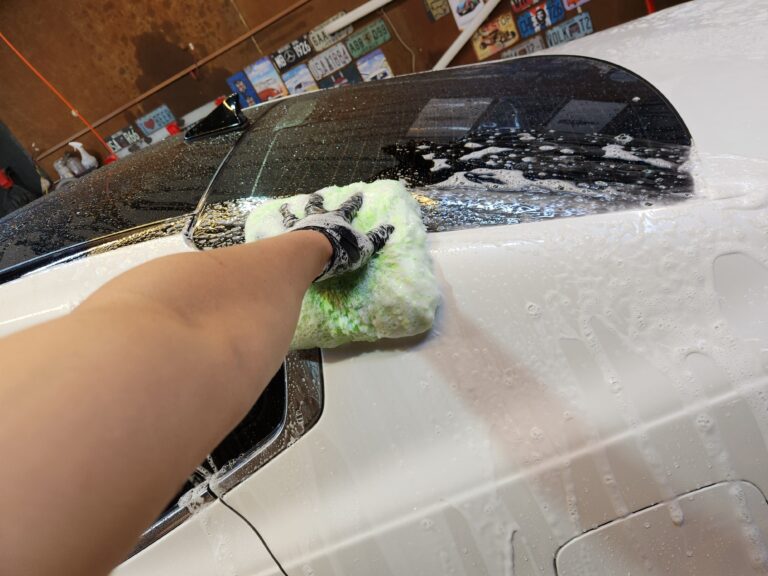
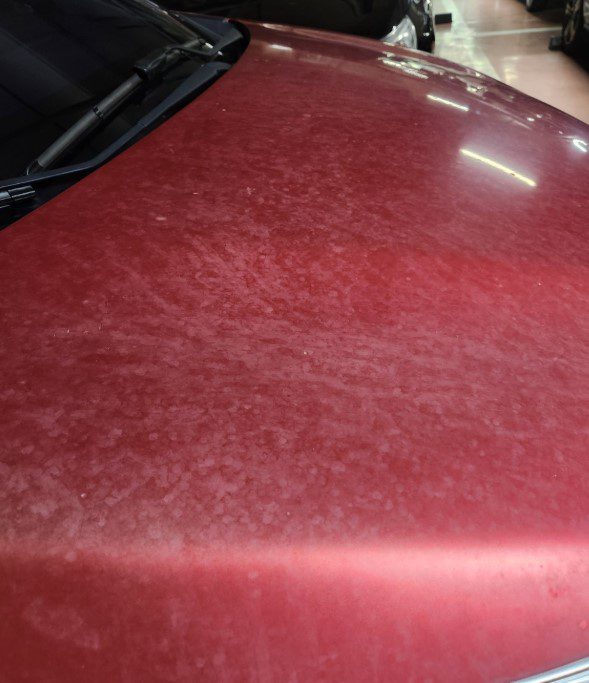
Choosing the softest wash mitt does not automatically make a contact wash safer.
To choose a car wash mitt, look beyond how soft it feels when new. A practical mitt must carry enough shampoo solution to the vehicle, release that liquid onto the paint, create space for loosened contamination, and rinse clean before it touches the next panel.
For most users, a plush microfiber mitt with a flexible, moderately open pile provides the best balance of softness, water release, dirt control, and easy maintenance.
Wool mitts can also perform extremely well, but they require more careful cleaning, drying, and storage. Foam wash pads vary widely, so their surface design and ability to manage contamination matter more than absorbency alone.
The safest wash mitt is not simply the one that holds the most water.
It is the one that carries, releases, and empties that water effectively.
How to Choose a Car Wash Mitt: Quick Answer
Before choosing a wash mitt, check whether it performs these five jobs:
- It feels soft enough for automotive paint.
- It carries enough shampoo solution from the bucket.
- It releases that solution at the contact surface.
- It creates space for loosened contamination.
- It releases collected dirt during rinsing.
A mitt that performs only the first two jobs may still feel impressive in your hand. It may be soft, thick, and heavy with water.
However, if the liquid remains trapped inside or the collected dirt cannot escape, the mitt may begin to drag and carry contamination onto the next panel.
That is why softness and water retention are only the starting point.
1. Check the Softness and Cushioning
Softness matters because the wash mitt makes direct contact with the clear coat.
A soft pile provides cushioning between the hand and the paint. It also helps distribute the load across a wider area instead of concentrating it through a few firm contact points.
However, softness should not be judged only by touching a dry mitt in the store.
A wash mitt may feel extremely soft when new but perform differently after it becomes:
- Saturated with water
- Loaded with shampoo
- Compressed under the hand
- Contaminated during washing
- Repeatedly washed and dried
- Matted or tangled over time
The more useful question is not simply:
Does this mitt feel soft?
Instead, ask:
Does the pile remain soft, open, and flexible during actual use?
A soft surface with collapsed or clogged fibers cannot manage water and contamination as effectively as an open, healthy pile.
2. Check How Much Shampoo Solution It Carries
Water retention describes how much shampoo solution a mitt can collect and carry from the bucket to the vehicle.
This is an important function.
Even a well-formulated car shampoo cannot maintain a useful working film if the mitt delivers too little liquid to the panel. A thin or poorly saturated tool may begin to drag before completing a section.
Wool mitts, plush microfiber mitts, and absorbent wash pads can all carry substantial amounts of shampoo solution.
However, the heaviest mitt is not automatically the safest.
Water retention tells you how much liquid the mitt stores. It does not tell you how effectively that liquid reaches the paint.
The mitt must do more than act like a sponge. It must deliver the stored solution to the contact area while it moves.
3. Check Whether the Mitt Releases Water Onto the Paint
A wash mitt can feel heavy and fully saturated while releasing surprisingly little liquid during use.
This often happens when the pile is:
- Extremely dense
- Packed too tightly
- Compressed
- Tangled
- Clogged with residue
- Unable to flex freely
The internal fibers may remain wet, but the outer contact surface gradually loses liquid.
As a result, the mitt feels heavy in your hand while the area beneath it begins to feel dry or resistant.
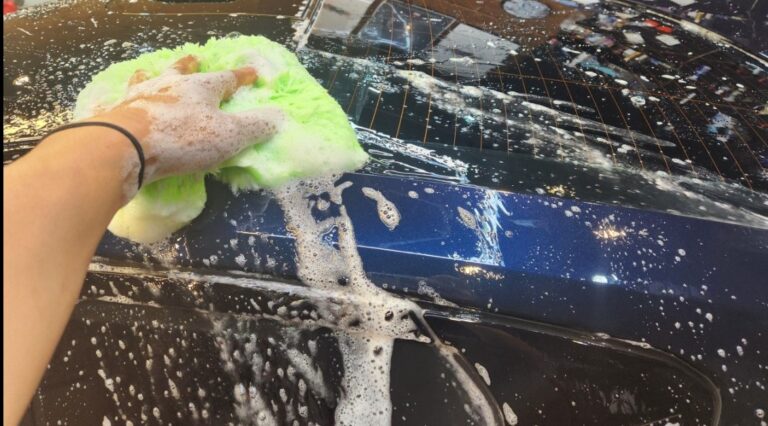
A useful wash mitt should release some of its shampoo solution under its own saturated weight and light hand support.
As the mitt moves, the surface behind it should remain visibly wet.
Do not judge a mitt only by how much water drips from it when lifted from the bucket. Check whether that water flows where it is needed.
4. Check How It Manages Loosened Contamination
Even after a thorough prewash and pressure rinse, some contamination may remain on the vehicle.
During the contact wash, the mitt separates this remaining material from the paint. Once loosened, those particles need somewhere to move.
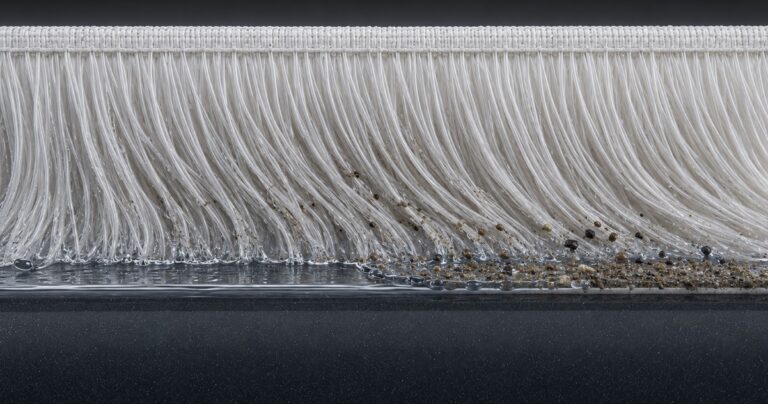
A plush, open pile creates temporary space within the fibers. This allows some contamination to move away from the immediate contact point rather than remaining directly between the hand and the clear coat.
This does not eliminate scratch risk.
However, it may reduce the chance of a hard particle remaining trapped under concentrated pressure while the mitt travels across the panel.
The mitt therefore needs enough internal structure to perform two different jobs:
- Carry shampoo solution
- Receive loosened contamination
Holding water and controlling dirt are related, but they are not the same ability.
A tool may absorb a large amount of liquid while providing very little space for contamination to move away from the paint.
5. Check Whether the Mitt Rinses Clean
Collecting contamination helps only when the mitt can release it before the next pass.
If particles remain trapped deep inside tangled or compressed fibers, they may return to the paint on the following panel.
During rinsing, clean water should move through the pile and carry contamination out.
Gently agitating the mitt against a grit guard can help loosen particles. However, aggressive scrubbing should not be required after every section.
In practical use, the condition of the pile is critical.
When the fibers remain open and separated, water can move through the structure and visible contamination usually releases more easily. When the fibers become tangled or matted, particles can remain trapped even after repeated rinsing.
A good wash mitt should therefore empty as easily as it fills.
Which Car Wash Mitt Is Best for Most Users?

For most beginners and regular maintenance washing, a well-constructed microfiber wash mitt is the most practical choice.
Look for:
- A soft, plush pile
- A flexible construction
- Moderate rather than excessive density
- Visible space between fiber bundles
- Secure but non-abrasive stitching
- Easy rinsing and drying
- A shape that remains controllable when saturated
The pile should be dense enough to cushion contact but open enough to allow water and contamination to move.
An extremely thick mitt may look premium, but maximum thickness does not guarantee better performance.
A heavy, tightly packed mitt may store a large amount of shampoo solution internally while releasing little of it at the paint surface.
Moderate density with open pathways is often more useful than maximum density.
Why Does My Wash Mitt Drag Across the Paint?
A wash mitt usually begins to drag when the contact area is losing liquid, the fibers are clogged, the panel is drying, or too much hand pressure is being applied.
Do not solve increased resistance by forcing the mitt forward.
Instead, stop and check the working condition.
Common causes of wash mitt drag include:
- Insufficient shampoo solution
- A panel beginning to dry
- Excessive hand pressure
- Contamination trapped inside the mitt
- Shampoo mixed outside its intended range
- Fibers that have become compressed or clogged
- A product layer or contamination remaining on the paint
- Trying to cover too large an area in one pass
Drag is not automatically proof that the mitt has scratched the paint.
It is a warning that friction, pressure, or contamination control may be changing.
When resistance increases:
- Stop moving the mitt.
- Lift it away from the paint.
- Rinse it thoroughly.
- Reload it with shampoo solution.
- Inspect both the mitt and the panel.
- Resume with lighter, shorter passes.
When the mitt suddenly becomes difficult to move, change the contact condition before adding more pressure.
Microfiber vs Wool Wash Mitts
Material affects how a mitt carries water, controls contamination, and responds to repeated maintenance.
However, no material is automatically safest in every condition.
Prewashing, shampoo dilution, hand pressure, rinsing frequency, storage, and washing habits all influence the final result.
Microfiber Wash Mitts
Microfiber wash mitts offer a practical balance of:
- Softness
- Water retention
- Durability
- Availability
- Easy washing
- Faster drying
- Consistent maintenance
For most drivers, a quality microfiber mitt is easier to keep in a reliable condition than a natural wool mitt.
However, greater density is not always better.
An extremely thick microfiber pile may become heavy and retain liquid without releasing it efficiently. Closely packed fibers may also be harder to rinse once contamination enters the structure.
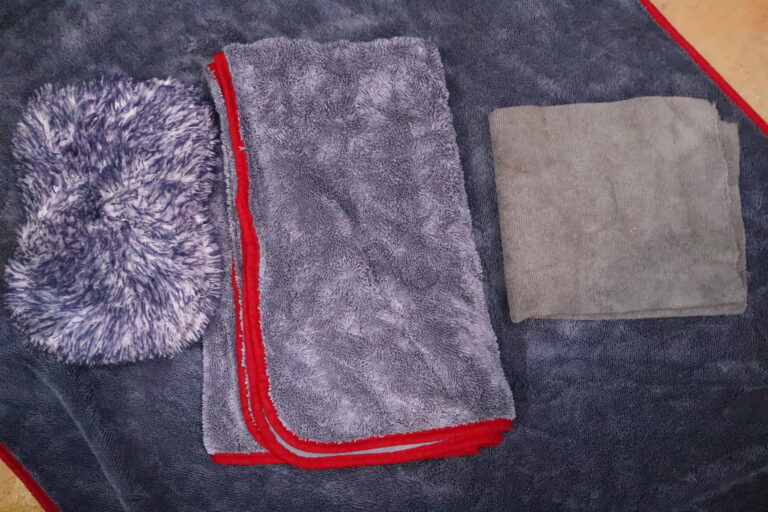
Choose a plush mitt with enough fiber to provide cushioning, but also look for flexibility and visible openness between the fiber bundles.
Wool Wash Mitts
Wool mitts are valued for their soft feel, long pile, and strong water retention.
The longer fibers can create useful space for loosened contamination, while the material carries a large amount of shampoo solution to the vehicle.
Their main disadvantage is maintenance.
Wool may:
- Tangle
- Mat
- Dry slowly
- Retain residue
- Lose its open structure
- Change significantly after poor storage
A properly maintained wool mitt can work extremely well.
However, a neglected wool mitt may perform very differently from a new one, even when it still feels soft when touched by hand.
Wool is therefore more suitable for users prepared to manage cleaning, drying, pile separation, and storage carefully.
Sponge and Foam Wash Pads
Foam wash pads can be lightweight, absorbent, and easy to rinse.
However, their performance depends heavily on the surface design and internal structure.
A simple flat sponge may provide limited space for contamination to move away from the clear coat. A purpose-designed porous washing sponge may behave differently because its pores allow liquid and particles to move through the material.
Do not judge every foam product as either safe or unsafe based only on the material name.
Check:
- Surface texture
- Pore structure
- Flexibility
- Water release
- Dirt release
- Intended use
Separate foam tools may be useful for wheels, lower panels, or heavily contaminated areas. They should not automatically be treated as the best choice for every painted surface simply because they absorb a large amount of water.
What Is Wash Mitt Flushing?
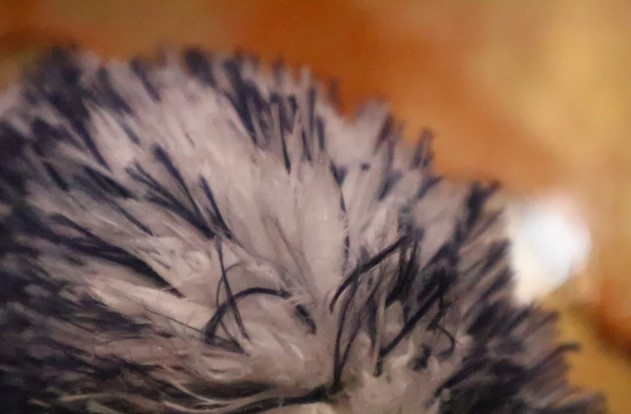
Wash mitt flushing describes the movement of shampoo solution and contamination through the mitt during washing and rinsing.
It consists of three connected stages:
- The mitt carries shampoo solution from the bucket.
- The solution moves through the pile and reaches the paint.
- Collected contamination leaves the mitt during rinsing.
A mitt that only holds water completes the first stage.
A mitt with effective flushing continues moving that water toward the contact surface and then allows dirty water and contamination to leave the fibers.
This creates a continuous cycle:
Fill → Release → Collect → Rinse → Empty
The purpose of flushing is not to make the mitt release all of its water immediately.
It is to maintain enough controlled movement that the contact surface stays wet and the collected contamination does not remain trapped indefinitely.
A good wash mitt manages flow rather than simply maximizing storage.
Why Foam Is Not the Same as Lubrication
Thick foam is visually reassuring.
When a panel is covered in foam, it appears wet and protected. This leads some users to increase shampoo concentration or create as much foam as possible.
However, the visible height of the foam does not tell you how much flowing shampoo solution remains between the mitt and the paint.
Foam contains both liquid and air.
It may help the cleaning solution remain on the surface, but foam volume is not the same as the thickness of the liquid working film at the contact point.
During a contact wash, the liquid shampoo solution performs the most important transport functions.
It helps:
- Wet the paint
- Reduce movement resistance
- Carry loosened material
- Move particles away from the immediate contact point
- Keep the mitt from becoming locally dry
The objective is not to create the thickest possible foam.
The objective is to maintain enough flowing solution beneath and around the mitt.
Depending on the shampoo formulation, using more product than recommended may also make rinsing more difficult without producing a meaningful improvement in the wash.
Follow the manufacturer’s mixing range, then evaluate how the mitt and shampoo behave together during actual contact.
How to Test a Wash Mitt in Real Use
You do not need laboratory equipment to evaluate how a wash mitt handles water and contamination.
Several simple observations reveal more than softness alone.
Test 1: Watch the Water Release
Fully saturate the mitt in the wash bucket and lift it without squeezing.
Place it gently on a wet, well-prewashed panel.
Observe whether shampoo solution begins flowing around and beneath the mitt. During a light pass, the area behind it should remain visibly wet.
If the mitt feels heavy but leaves the working area relatively dry, much of the liquid may be trapped internally.
Test 2: Pay Attention to Drag
Begin with a fully saturated mitt and use only light hand support.
The mitt should move with limited resistance over a clean, wet panel.
If it begins to drag, do not immediately conclude that the shampoo lacks lubrication.
Check whether:
- The panel is drying
- The mitt needs reloading
- The fibers are clogged
- Too much pressure is being used
- The mitt contains contamination
- The shampoo concentration is appropriate
A change in movement is information. Do not cover it with more force.
Test 3: Check Dirt Release on the Grit Guard
After washing one section, place the mitt in the rinse bucket.
Move it gently across the grit guard and observe whether visible contamination releases from the pile.
A grit guard does not pull every particle out automatically. It works best when clean water can move through fibers that remain open and separated.
If repeated aggressive scrubbing is required, inspect the pile for:
- Tangling
- Matting
- Dried shampoo
- Wax or sealant residue
- Hardened contamination
- Heat damage
The real test is not whether the mitt can collect dirt.
The real test is whether that dirt leaves before the mitt returns to the paint.
Test 4: Compare It After Repeated Washing
A new mitt does not reveal its long-term performance.
After several wash and drying cycles, check whether:
- The pile still separates easily
- The mitt releases water as before
- It rinses clean without heavy agitation
- The contact surface remains flexible
- Drag has increased
- Hardened sections have formed
A mitt that performs well only when new may not be the most practical long-term choice.
How to Maintain Wash Mitt Fibers
The spaces between the fibers allow water and contamination to move.
Once the pile becomes clogged or matted, the mitt may retain water internally while releasing less of it at the contact surface. Dirt release may also become more difficult.
Rinse the mitt thoroughly immediately after use.
Do not allow shampoo residue and contamination to dry inside the fibers.
For microfiber mitts:
- Use an appropriate microfiber-safe detergent.
- Avoid fabric softener.
- Rinse detergent residue thoroughly.
- Avoid high drying temperatures.
- Allow the mitt to dry completely before storage.
- Separate and lift the pile after drying.
For wool mitts:
- Follow the manufacturer’s cleaning instructions.
- Avoid twisting or aggressive wringing.
- Reshape the mitt while damp.
- Dry it thoroughly in a ventilated area.
- Separate tangled fibers before storage.
Clean, low-pressure compressed air may help lift a dry pile when used carefully. The purpose is not simply to make the mitt look fluffy.
The purpose is to preserve the internal spaces that support water flow and contamination release.
For more detail about detergent, heat, drying, and synthetic fiber structure, see the complete microfiber towel care guide.
Better Washing Technique Still Matters
Even the best wash mitt cannot make poor technique completely safe.
The mitt is only one part of the contact-wash process.
Before touching the vehicle, remove as much loose and oily contamination as practical through prewashing and thorough pressure rinsing.
An alkaline prewash and a neutral contact shampoo perform different jobs. The prewash reduces the contamination load before contact, while the shampoo supports lubrication and movement during the wash.
For a detailed explanation, see alkaline prewash vs neutral car shampoo.
During the contact wash:
- Work from cleaner upper panels toward dirtier lower panels.
- Keep the surface wet.
- Use short, controlled passes.
- Apply only light hand support.
- Reload the mitt frequently.
- Rinse it after each section.
- Use separate tools for wheels and heavily contaminated lower areas.
- Stop immediately when movement resistance increases.
- Replace any mitt that cannot be cleaned properly.
The mitt should move mainly under its own saturated weight.
Do not press it firmly into the paint in an attempt to increase cleaning power.
Contact washing combines high lubrication with remaining contamination. Therefore, a slippery shampoo does not make hard particles harmless.
The interaction between contamination, pressure, and movement is explained further in the guide to car detailing scratch risk.
Common Wash Mitt Selection Mistakes
Choosing Only by Softness
A soft feel is useful, but it does not reveal water release, contamination control, or rinse performance.
Assuming Thicker Is Always Safer
Greater thickness may provide cushioning, but excessive density can trap water and contamination inside the pile.
Choosing the Mitt That Holds the Most Water
High water retention helps only when the liquid reaches the paint during use.
Ignoring Dirt Release
A mitt that captures contamination but does not rinse clean may return those particles to the next panel.
Using One Mitt for the Entire Vehicle
Lower panels collect heavier road contamination than upper panels.
Using a separate mitt or tool for the dirtiest areas reduces cross-contamination.
Pressing Harder When the Mitt Drags
Increased resistance usually means the working condition has changed.
Restore water flow, rinse the mitt, and inspect the surface instead of adding force.
Continuing to Use Matted Fibers
A mitt may still feel soft even after its internal pile has collapsed.
Judge its performance by water release, dirt release, and movement—not appearance alone.
Frequently Asked Questions About Car Wash Mitts
What Is the Best Car Wash Mitt for Beginners?
A plush microfiber wash mitt with a moderately open pile is usually the most practical choice for beginners.
It offers a useful balance of softness, water retention, dirt control, easy washing, and predictable drying.
Is a Wool Wash Mitt Safer Than Microfiber?
Not automatically.
A well-maintained wool mitt can be very soft and manage contamination effectively. However, wool requires more careful cleaning, drying, and storage.
A clean microfiber mitt with an open pile may be safer in practice than a tangled or poorly maintained wool mitt.
Why Does My Wash Mitt Feel Heavy but Leave the Paint Dry?
The mitt may have high water retention but poor water release.
Dense, compressed, or clogged fibers can hold shampoo solution internally without delivering enough of it to the contact surface.
How Often Should I Rinse My Wash Mitt?
Rinse it after each working section and whenever the mitt collects visible contamination or begins to drag.
Heavily contaminated lower panels may require more frequent rinsing or a separate wash tool.
Does More Shampoo Make the Mitt More Slippery?
Not always.
Car shampoos are formulated to work within a recommended mixing range. Excess product may create more foam or make rinsing harder without delivering a proportional improvement in lubrication.
Should a Wash Mitt Be Used With Pressure?
Use only enough hand support to keep the mitt stable and controlled.
The saturated weight of the mitt should perform most of the contact. When extra pressure seems necessary, stop and check the surface, shampoo solution, and mitt condition.
How Do I Know When to Replace a Wash Mitt?
Replace or downgrade the mitt when:
- It no longer rinses clean
- The pile remains matted
- Hardened contamination is trapped inside
- The surface has become rough
- Water release has significantly decreased
- It creates repeated drag despite proper saturation
- Stitching or edges have become damaged
A mitt does not need to look destroyed before it becomes unsuitable for sensitive paint.
Final Principle: Choose Water Movement, Not Water Weight
Learning how to choose a car wash mitt requires more than comparing wool, microfiber, and foam.
The safest practical mitt must complete an entire cycle.
It must:
- Carry enough shampoo solution to the vehicle.
- Release that solution where the mitt touches the paint.
- Create space for loosened contamination.
- Release that contamination during rinsing.
- Maintain its open structure after repeated use.
Softness remains important, but softness alone does not explain how the mitt behaves during a wash.
Likewise, a mitt that holds a large amount of water is not automatically better than one that carries slightly less but releases it more consistently.
When choosing a wash mitt, ask three final questions:
Does it deliver enough liquid to the paint?
Does it keep loosened contamination away from the immediate contact point?
Does it rinse clean before touching the next panel?
These questions describe the real value of wash mitt flushing.
The safest practical wash mitt is not necessarily the one that stores the most water. It is the one that carries, releases, and empties it effectively.