When choosing an alkaline pre-wash, many people start by comparing product names.
They look for the strongest cleaner, the thickest foam, or a product that says it is safe for ceramic coatings.
Product performance matters. However, the first question should not be:
“Which product is the strongest?”
The better question is:
How much cleaning power does your car actually need before the contact wash begins?
A frequently maintained vehicle and a heavily contaminated vehicle should not always get the same chemical strength or dilution.
The best alkaline pre-wash is not always the strongest product. It is the one that lets you match the cleaning power to the actual condition of your car.
This article explains how to choose an alkaline pre-wash based on contamination level, coating condition, wash frequency, and the way your car responds during washing.
What Is the Purpose of an Alkaline Pre-Wash?
You apply an alkaline pre-wash before the main contact wash.
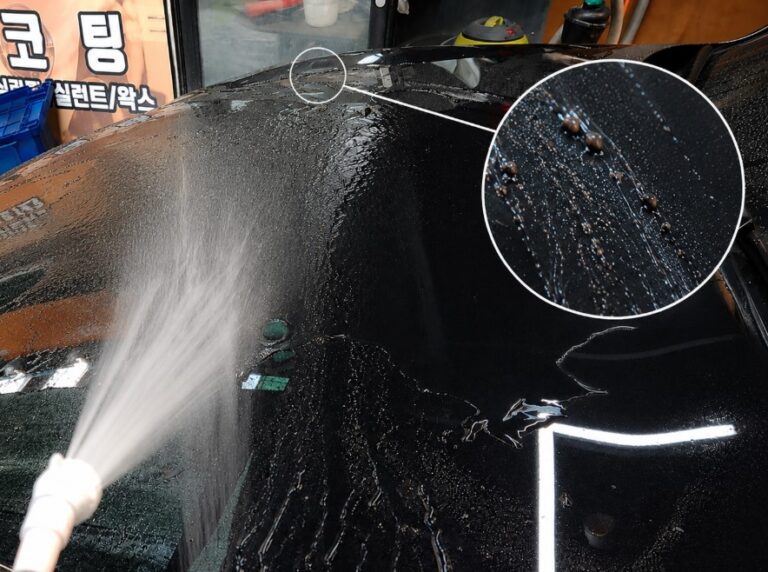
Its purpose is to loosen oily and organic contamination so that rinsing can remove more dirt before a wash mitt touches the paint.
Typical contamination includes:
- Oily road film, also called traffic film
- Exhaust residue
- Tire and rubber residue
- Asphalt dust
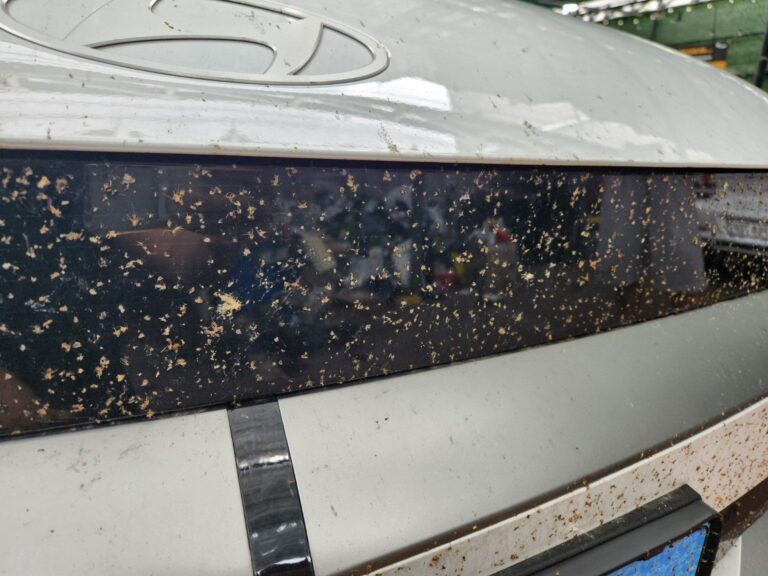
- Baked-on bug splatter
- Bird-dropping residue
- Dirt collected around rocker panels, lower trims, and rear bumpers
An alkaline pre-wash does not need to clean the whole vehicle perfectly by itself.
Its job is to reduce the amount and bonding strength of contamination before mechanical cleaning begins.
Chemical Cleaning Before Mechanical Cleaning
This is the main difference between pre-washing and contact washing.
- Pre-washing relies mainly on chemical cleaning.
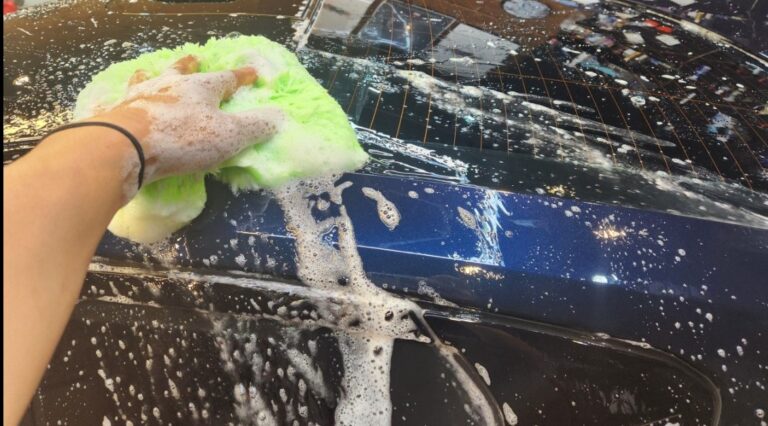
- The wash mitt adds mechanical cleaning.
Chemical cleaning loosens and weakens contamination. Mechanical cleaning physically removes what remains.
The more contamination you leave on the paint before the mitt touches it, the harder the contact wash must work.
Alkaline pre-washes help weaken oily road film, bug splatter, and organic grime through alkaline cleaning action, surfactants, emulsification, and, in some cases, saponification of fatty residues.
The goal is simple:
Make sticky contamination easier to rinse away before the mitt reaches the clear coat.
Why Pre-Washing Matters for Marring
Contamination trapped between the wash mitt and the paint can act like an abrasive.
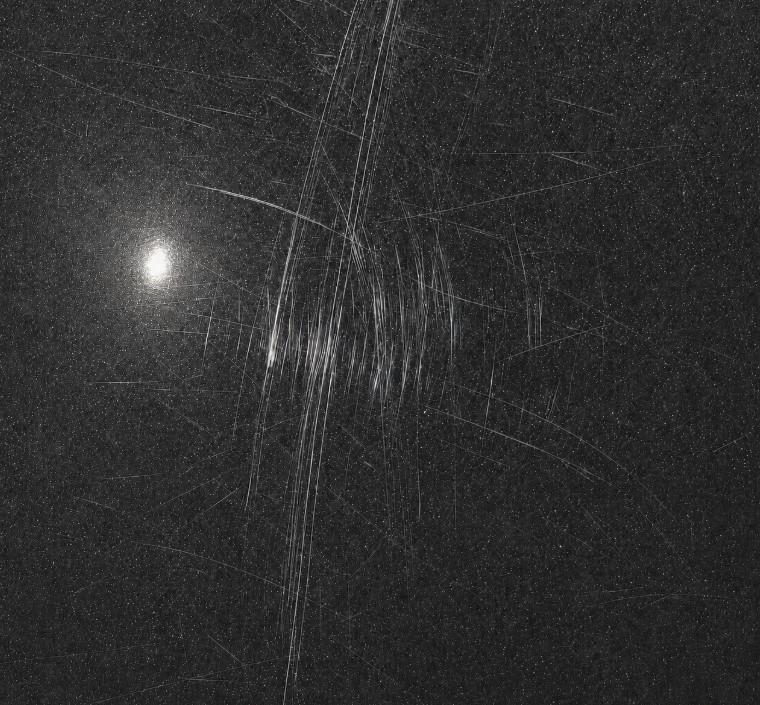
When you add pressure and movement, those particles can increase the risk of wash-induced marring or micro-marring.
An alkaline pre-wash does not remove existing defects. It also cannot guarantee a completely marring-free wash.
However, it can reduce one major risk factor:
too much contamination left on the paint before contact.
Less Dirt Means Less Resistance
When a pre-wash removes more road film before contact, the mitt often moves with less resistance.
That matters because resistance changes how people wash.
If the mitt feels grabby, many people press harder.
If they press harder, friction rises.
If friction rises with dirt still present, marring risk increases.
A good pre-wash helps chemical cleaning do more of the work before mechanical cleaning begins.
Check Whether Your Car Actually Needs More Cleaning Power
Before buying a stronger alkaline pre-wash, inspect the result of your current wash process.
Two signs are especially useful:
- Dirt still remains after washing.
- The car looks clean, but wash-induced marring keeps increasing.
These signs do not automatically prove that your pre-wash is the only problem.
A contaminated wash mitt, poor mitt flushing, weak shampoo lubricity, dirty drying towels, excessive pressure, and repeated dry buffing can also contribute.
Still, the amount of contamination that remains before the contact wash plays a major role in marring-risk management.
Dirt Still Remains After Washing
Pay close attention to areas that collect the heaviest traffic film:
- Rocker panels
- Lower door trims
- Rear bumpers
- Areas behind the wheels
- Front bumper and mirrors
- Badges, trim edges, and panel gaps
These areas often hold a mix of oil, exhaust residue, tire residue, asphalt dust, moisture, fine dust, and organic contamination.
This is not just dry dust.
It is a sticky road film.
A neutral shampoo provides lubricity and light cleaning, but it may not always break down this kind of contamination effectively before contact.
The Towel Test Failure
A useful clue appears during drying or final buffing.
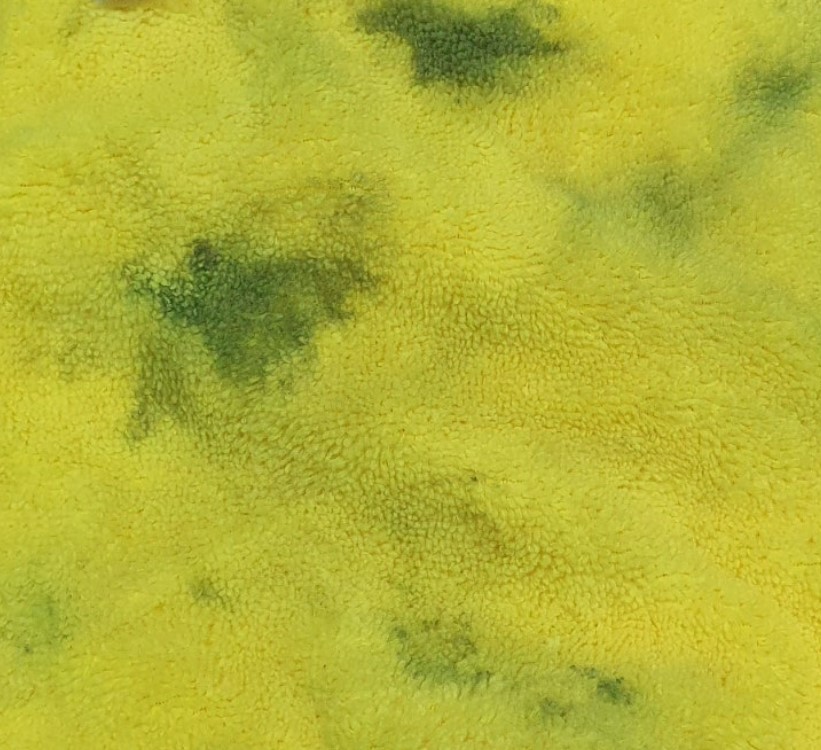
If a clean microfiber towel picks up dark residue after the car has already been washed, your wash process may be leaving road film behind.
This does not always prove that the pre-wash is the only problem.
An incomplete contact wash, poor mitt flushing, weak shampoo lubricity, dirty towels, or too much hand pressure can also cause residue transfer.
However, a repeated Towel Test Failure is a strong sign that the pre-wash stage may not be loosening enough contamination before the mitt touches the paint.
When dirt repeatedly remains, adding more pressure with the wash mitt is not the best solution.
A suitable alkaline pre-wash can help loosen the contamination first. Then pressure rinsing can remove more of it before contact.
The Car Looks Clean, but Marring Keeps Increasing
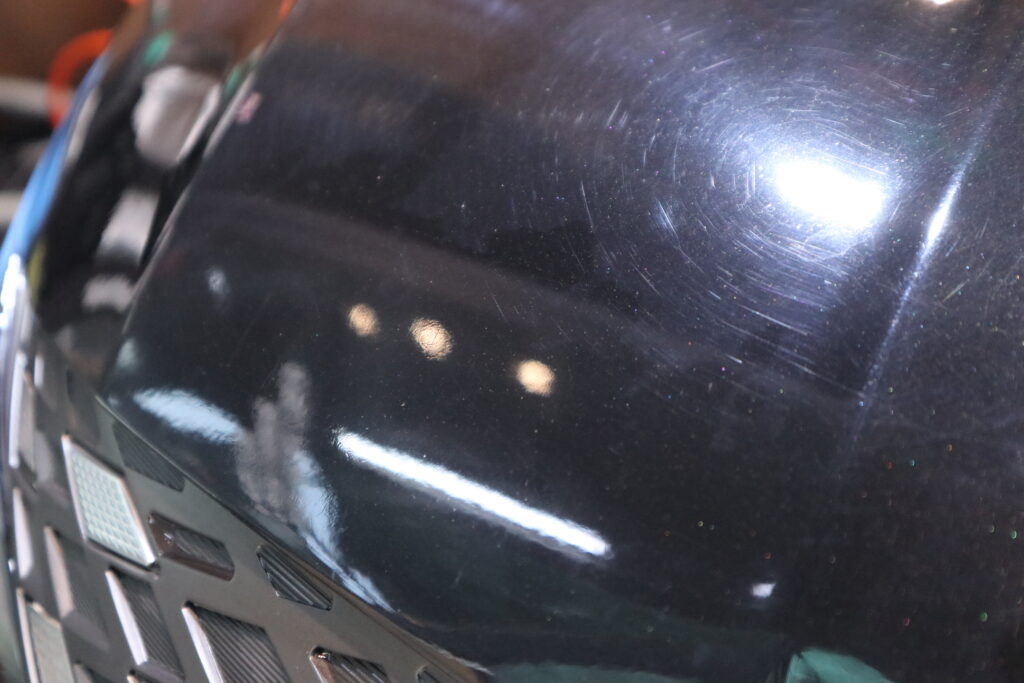
A vehicle can look clean after washing but still show more fine defects under sunlight or inspection lighting.
These marks may appear as:
- Swirl marks
- Light marring
- Micro-marring
Wash-induced marring can have several causes:
- A contaminated wash mitt
- Poor dirt release from the mitt
- Excessive hand pressure
- Insufficient shampoo lubricity
- Dirty drying towels
- Repeated dry buffing
- Previous automatic car washes
- Existing paint defects becoming more visible
Another possible cause is starting the contact wash while too much contamination remains on the surface.
When the Mitt Has to Work Too Hard
If the pre-wash is too weak for the condition of the vehicle, the mitt must remove both loosened dirt and contamination that still clings to the paint.
At that point, the user may apply more pressure to make the surface feel clean.
The visible dirt disappears, but some particles may still move across the clear coat during the process.
An alkaline pre-wash does not remove marring.
It helps reduce the risk of wash-induced marring by lowering the amount of contamination present before physical contact.
For this reason, you should understand pre-washing as preparation for the contact wash, not just an extra cleaning step.
A Well-Maintained Car May Need Less Cleaning Power
A car that you wash regularly may not need a strong alkaline pre-wash during every wash.
This usually applies to vehicles that:
- Get washed frequently
- Have only light road film
- Have little rocker-panel contamination
- Carry fresh bug splatter rather than baked-on bug splatter
- Stay indoors or drive short distances
- Have a well-maintained coating or sealant
When contamination has not had time to build up, a mild alkaline dilution may be enough.
In some cases, a neutral pre-wash or neutral shampoo may also handle routine maintenance cleaning well.
When Mild Cleaning Is Enough
If dirt does not remain after washing, the mitt moves smoothly, shampoo lubricity stays consistent, and the drying towel stays clean, you may not need more chemical strength.
For a well-maintained car, practical qualities may matter more than maximum cleaning power:
- Easy dilution
- Even application
- Good rinsing performance
- Low residue
- Reasonable cost per wash
- Clear manufacturer instructions
The most useful product may be one that works economically at a mild dilution, not one designed only for severe contamination.
A Heavily Contaminated Car May Need More Cleaning Power
The requirements change when a vehicle goes too long between washes or repeatedly retains dirt.
More alkaline cleaning power may help when the car has:
- Heavy road film on rocker panels and lower trims
- Oily traffic film
- Persistent rear-bumper grime
- Baked-on bug splatter
- Organic contamination
- Long intervals between washes
- Dirt that repeatedly remains after a normal wash
In this situation, cleaning strength and dilution flexibility become more important.
However, the entire vehicle may not need the same concentration.
Treat Dirty Areas Differently
Upper panels often carry less contamination than rocker panels, lower door trims, wheel areas, and rear bumpers.
A practical method is to use a milder dilution for general maintenance and increase the concentration only on heavily contaminated areas.
Always stay within the manufacturer’s instructions.
Do not judge real cleaning power only by the dilution ratio printed on the label.
A highly concentrated product is not automatically stronger.
A product advertised with a high dilution ratio is not always more economical.
Product chemistry, application volume, surface temperature, dwell time, and rinsing all influence the final result.
Can You Use an Alkaline Pre-Wash on a Coated Car?
A coated vehicle does not automatically need to avoid alkaline pre-wash products.
The correct approach depends on:
- The type of protection
- The condition of the protection
- The level of contamination
- Whether you want to preserve or replace the protection
Ceramic- and Glass-Coated Vehicles
For ceramic- or glass-coated vehicles, the usual priority is to remove contamination while preserving the existing coating.
Start with the mildest concentration that produces an acceptable result.
Increase the concentration only when contamination repeatedly remains, and only within the manufacturer’s recommended range.
A durable coating does not mean you should use the strongest dilution.
At the same time, repeatedly performing mechanical cleaning on a contaminated surface is not a good maintenance strategy either.
The goal is to remove enough contamination without creating unnecessary chemical or mechanical stress.
Coating Clogging vs Coating Removal
True ceramic or glass coatings are usually more chemically resistant than waxes or traditional sealants.
A properly diluted alkaline pre-wash will not normally strip a healthy coating layer by itself.
In many cases, the bigger issue is not coating removal.
It is coating clogging.
Oily road film, traffic film, and mineral residue can sit on top of the coating and reduce its natural hydrophobic behavior. When that contamination blocks the surface, water beading and sheeting may look weaker even though the coating is still present.
A controlled alkaline pre-wash can help unclog the coating by removing oily road film before the contact wash.
However, you should still avoid:
- Strong dilution without need
- Excessive dwell time
- Hot panels
- Direct sunlight
- Product drying on the surface
- Poor rinsing around trims and badges
A coated car still needs careful chemical control.
The coating may be durable, but the surface condition still matters.
Wax- and Sealant-Protected Vehicles
Wax and traditional sealant protection may require a different decision.
If you want to preserve the existing layer, use a mild maintenance dilution.
However, if the protection has already weakened and you plan to wax or seal the vehicle again after washing, a more thorough cleaning process may make sense.
In that case, removing degraded protection together with accumulated contamination can create a cleaner surface for the new protection.
The basic distinction is:
- Ceramic or glass coating: preserve the existing coating while cleaning.
- Wax or sealant: decide whether the current protection should stay or be replaced.
The important point is not simply whether the cleaner is alkaline.
It is whether the cleaning strength matches the protection system and the maintenance goal.
What to Look for When Choosing an Alkaline Pre-Wash
Once you understand how much cleaning power your car needs, you can compare products more effectively.
Do not choose only by foam thickness, pH label, or online popularity.
Choose by how well the product fits your normal wash environment.
Dilution Flexibility
A practical alkaline pre-wash should provide clear dilution guidance for different contamination levels.
This makes it easier to adapt the product for:
- Regular maintenance washes
- Moderate road film
- Heavily contaminated rocker panels and lower trims
- Localized bug splatter or organic residue
Do not compare products using the dilution number alone.
A product used at 1:100 is not automatically stronger or cheaper than one used at 1:20.
The amount of working solution applied to the car also matters.
Rinsing Performance
The cleaner should rinse away without leaving excessive residue.
Pre-wash solution can collect around:
- Door handles
- Side mirrors
- Grilles
- Badges
- Trim edges
- Panel gaps
A product that is difficult to rinse or dries quickly can create more work, especially at a self-service car wash.
Cleaning power should always be considered together with rinsing performance, working time, and drying risk.
Suitable Dwell Time
Dwell time is the period between applying the alkaline pre-wash and rinsing it away.
A longer dwell time does not always mean better cleaning.
The product must remain wet while it works.
Direct sunlight, warm paint, wind, low humidity, and slow application can shorten the safe dwell time.
A strong product with very little working margin may be difficult to manage outdoors or at a self-service wash.
Choose a product whose recommended dwell time is realistic for your normal washing environment.
Suitability for Your Normal Wash Routine
A frequently maintained car does not need the strongest product available.
If your current cleaner removes contamination successfully, moving to a stronger product may provide little practical benefit.
A heavily contaminated vehicle may require stronger chemical cleaning.
A maintenance vehicle may benefit more from a mild, economical product that is easy to control.
Real Cost per Wash
Bottle price alone does not show the true cost.
Consider:
- Product volume
- Recommended dilution
- Amount of working solution used
- Application method
- Number of washes per bottle
A concentrated product may be economical when you use it correctly.
However, it may become expensive if you need a large amount of working solution to cover the vehicle.
Stronger Is Not Always Better
One common mistake is assuming that a stronger alkaline pre-wash always produces a better wash.
Cleaning performance depends on more than concentration or pH.
It also depends on:
- The type of contamination
- Dilution
- Application volume
- Dwell time
- Surface temperature
- Whether the product dries
- Water pressure
- Rinsing quality
If the cleaner is too weak, contamination may remain.
If it is unnecessarily strong, it may reduce protection, shorten the safe working time, increase residue risk, or affect sensitive exterior materials.
The correct strength is the mildest effective concentration that removes enough contamination for a safer contact wash.
The 5-Point Pre-Wash Diagnostic Checklist
If you answer YES to two or more of the following conditions, your current wash process may be leaving too much contamination behind before the contact wash.
- The Towel Test Failure
Does your clean drying towel pick up dark residue after a wash? - Persistent Road Film
Does oily traffic film repeatedly remain on your rocker panels, lower trims, or rear bumper? - Mechanical Resistance
Do you feel the need to apply noticeable hand pressure during the contact wash? - Increasing Micro-Marring
Have wash-induced marring or swirl marks become more visible under sunlight? - Extended Wash Intervals
Does your vehicle go through long driving periods between proper washes?
How to Read the Results
Mostly No
Your current cleaning strength may already be sufficient.
A mild alkaline dilution, or even a neutral maintenance wash, may be enough.
Two or More Yes Answers
Your current pre-wash may not be removing enough contamination before mechanical cleaning begins.
Consider a more suitable alkaline pre-wash or a stronger dilution within the manufacturer’s instructions.
Before increasing chemical strength, also inspect your wash mitt, towels, hand pressure, and shampoo lubricity.
A stronger pre-wash cannot correct poor mechanical washing technique.
Final Thoughts
Choosing an alkaline pre-wash should begin with the condition of the vehicle, not with the popularity of the product.
A frequently maintained car with light contamination may need only a mild and economical solution.
A vehicle with long wash intervals, oily road film, baked-on bug splatter, and persistent rocker-panel grime may require stronger chemical cleaning and a wider usable dilution range.
The goal is not to use the strongest possible cleaner.
The goal is to remove enough contamination before the contact wash so that you can clean the vehicle with less mechanical force and less abrasive material trapped beneath the wash mitt.
A good alkaline pre-wash is not defined by foam thickness, maximum concentration, or online reviews.
It is defined by control.
It should let you match the cleaning power to the actual condition of your car.
In the next article, we will compare spray and foam application and explain why penetration and dwell time are not the same thing.