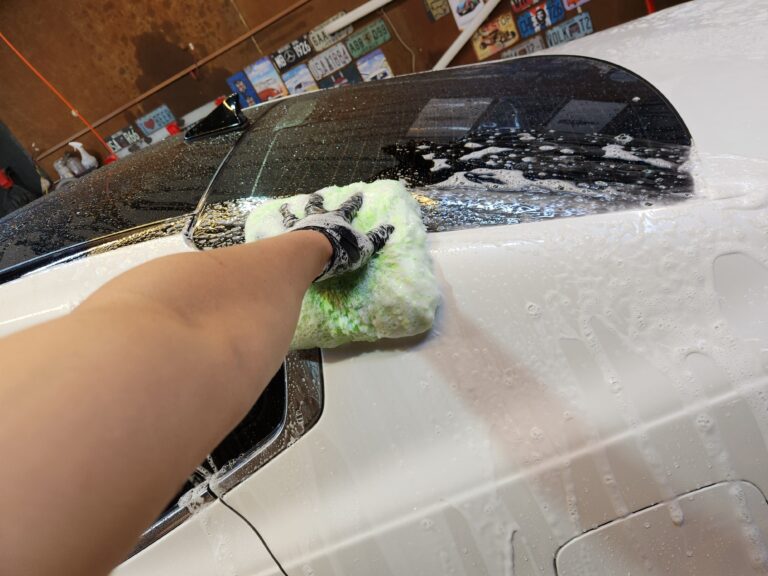
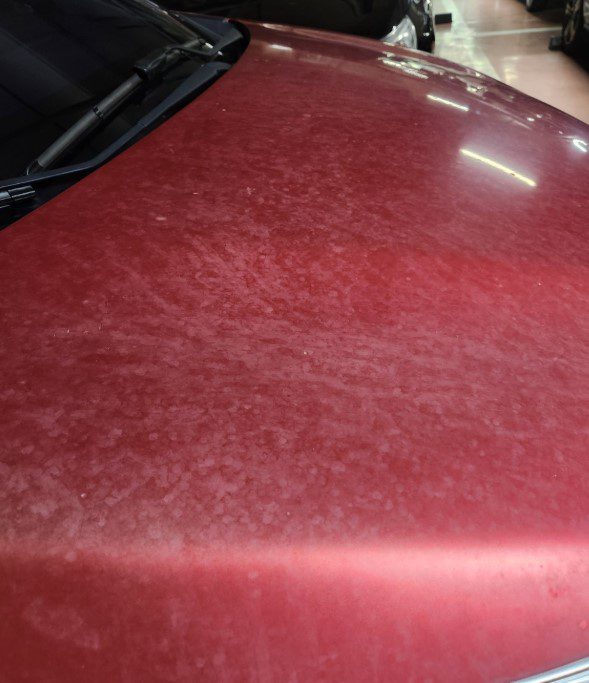
How to remove bird poop from car paint starts with one simple rule: supply enough water to soften it before touching the paint. Many people treat bird droppings like ordinary dirt, wipe them off immediately, or leave them until the next wash.
The visible deposit may disappear while scratches or etching remain. Scrubbing dried bird droppings before they have softened can scratch the paint. Leaving them in place gives the contamination more time to react with the clear coat and cause etching.
Bird droppings should be removed quickly. The goal is not to wipe faster, but to soak sooner.
The basic rule
Apply water as soon as you find bird droppings.
Once the deposit has softened, lift off the bulk without scrubbing. Follow with a proper wash as soon as practical to remove the remaining residue.
Table of Contents
- 1. What Happens When Bird Droppings Are Wiped or Left on Paint
- 2. Why Bird Droppings Require Special Handling
- 3. How to Remove Bird Poop From Car Paint
- Frequently Asked Questions
- Conclusion
1. What Happens When Bird Droppings Are Wiped or Left on Paint
Scratches Appear After Wiping
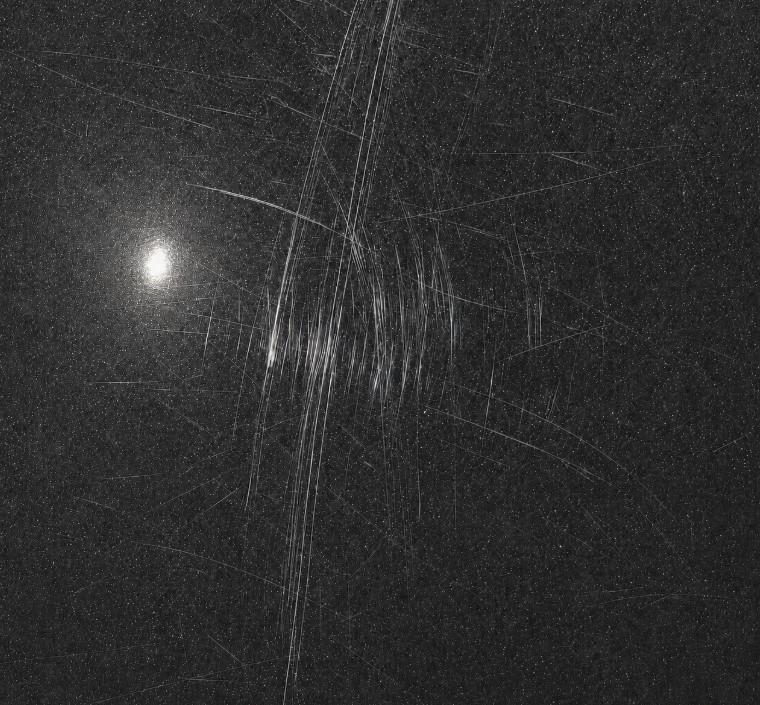
A wet wipe can make bird droppings disappear quickly. Under an inspection light, however, fine scratches may remain in the direction the wipe was moved.
The main problem is not the wet wipe itself. It is dragging a hardened deposit across the paint with pressure before it has been thoroughly softened. Hard material within the droppings can move across the clear coat at the same time.
Etching Remains After the Deposit Is Removed
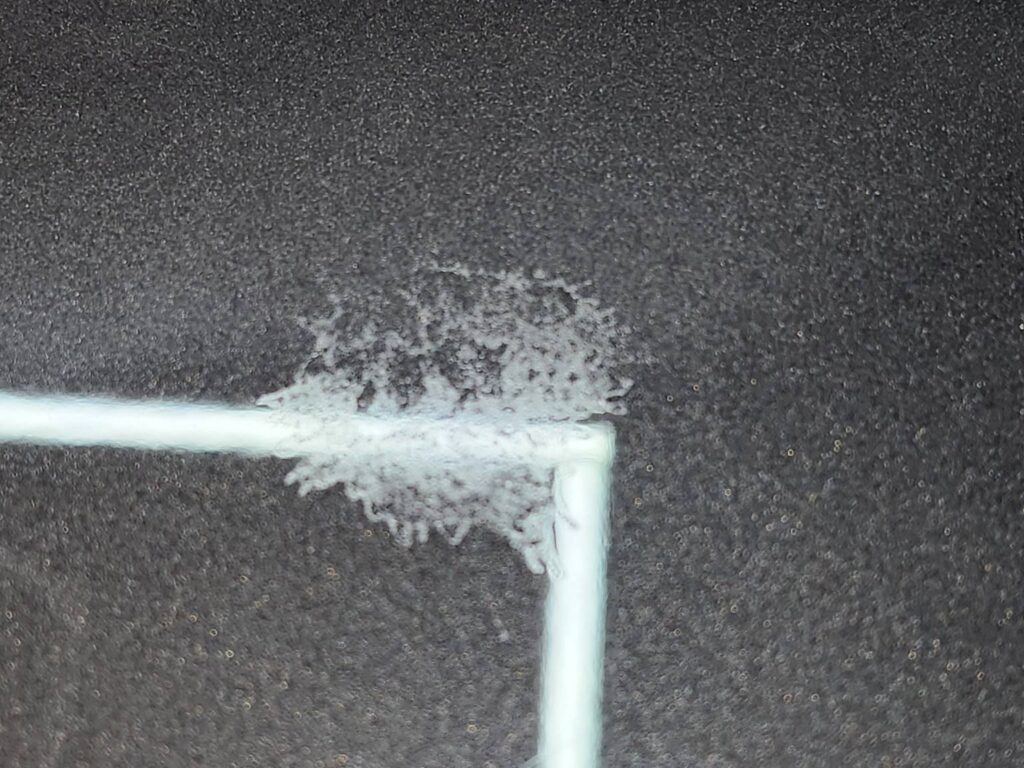
If bird droppings are left until the next wash, an outline or change in gloss may remain after the contamination has been removed. If the surface is clean but shows swelling, a depression, or wrinkles, the clear coat may already be etched.
As the damage becomes deeper, swelling and depression can appear together and create a measurable height difference in the paint surface. This type of damage can be difficult to level with ordinary polishing alone and may require localized sanding.
2. Why Bird Droppings Require Special Handling
Reactivity Determines When Removal Should Begin
Bird droppings are biological contamination containing enzymes, salts, organic matter, and other compounds that can react with automotive paint. Their reactivity cannot be explained by acidity alone. The effect of the complete mixture on the coating must also be considered.
A study of an automotive acrylic–melamine clearcoat found that digestive enzymes in bird droppings promoted hydrolytic degradation and contributed to etching and structural changes in the coating. In the tested system, acidity alone did not adequately explain the clearcoat damage. (Mechanistic study of automotive clearcoat degradation caused by bird droppings)
The rate of damage depends on the composition of the droppings, paint condition, heat, moisture, and contact time. When the reaction progresses, the clear coat may swell and sink in different areas. In severe cases, wrinkles, height differences, and gloss loss can remain along the outline even after the deposit has been removed.
Hard Particles Determine How Removal Should Be Performed
Bird droppings can contain hardened waste, food remnants, and crystalline material. Depending on the bird and its diet, small grains of sand or other hard particles may also be present.
Scrubbing with a wet wipe or towel can drag these particles across the paint and create scratches. Add water, allow the deposit to soften, and lift it away instead of pulling it sideways across the panel.
Water Absorption Means Water Comes Before Strong Cleaner
Oily contamination does not disperse easily in water and often requires additional cleaning power. Dried bird droppings behave differently: when supplied with water, the contamination layer absorbs moisture and gradually softens.
For the first removal step, thorough soaking matters more than starting with a strong cleaner.
Bird-dropping management rule
Reactivity determines when removal should begin, while hard particles determine how it should be done.
Apply water immediately, allow the deposit to soften fully, and lift it away without scrubbing.
3. How to Remove Bird Poop From Car Paint
Time is the most important factor. Bird droppings can continue reacting with the surface while you wait to gather cleaners and washing equipment.
Even when a complete wash is not immediately possible, soak the deposit where you find it and remove the bulk first. This temporary removal reduces contact time and lowers the risk of further etching.
Follow with a proper wash to remove the thin residue that may remain and then inspect the paint for damage.
Time comes first
A complete wash can follow later, but the bulk of the bird droppings should be removed as soon as they are discovered.
Temporary Removal: Soak With Water and Lift Away
Bird droppings are highly reactive contamination, but their damage rate is not constant. Under strong sunlight and high paint temperatures, etching can develop within a single day. Immediate removal is the safer response.
Wax, sealant, ceramic coating, and paint protection film provide a first line of defense between the contamination and the paint. When the protective layer is intact, it can delay direct contact with the clear coat and buy additional time before etching develops. It cannot completely stop highly reactive bird droppings, so the same immediate-removal rule still applies.
If no cleaner is available, water and several layers of plain toilet paper can be used to remove the bulk temporarily.
- If possible, move the vehicle into the shade and allow the panel to cool.
- Fold several layers of plain toilet paper, saturate them with water, and cover the entire deposit.
- Wait about five minutes, then check whether the bird droppings have softened fully.
- If any hard areas remain, add more water and extend the soaking time.
- Once the deposit is soft, lift the paper straight away without dragging it sideways.
- If visible material remains, repeat the process and rinse the area with clean water.
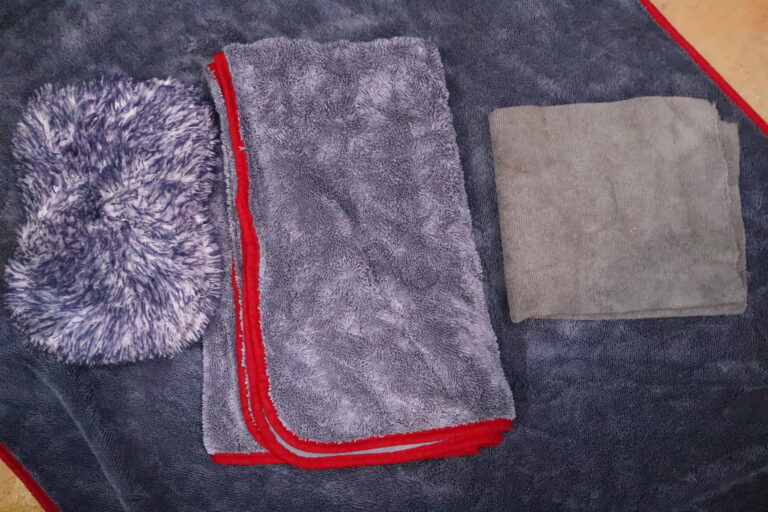
On a warm panel, add water as needed so the paper does not dry out. A soft microfiber towel thoroughly saturated with water can be used instead of toilet paper.
This is a temporary method for removing the bulk quickly. A thin layer of dried organic and crystalline residue may remain, so complete a proper wash as soon as practical.
Remove the Remaining Residue: Alkaline Pre-Wash to Paint Cleaner
Soaking makes the bulk easier to lift, but dried organic and crystalline material can remain as a thin residue bonded to the surface. A proper wash therefore begins with a thorough car pre-wash.
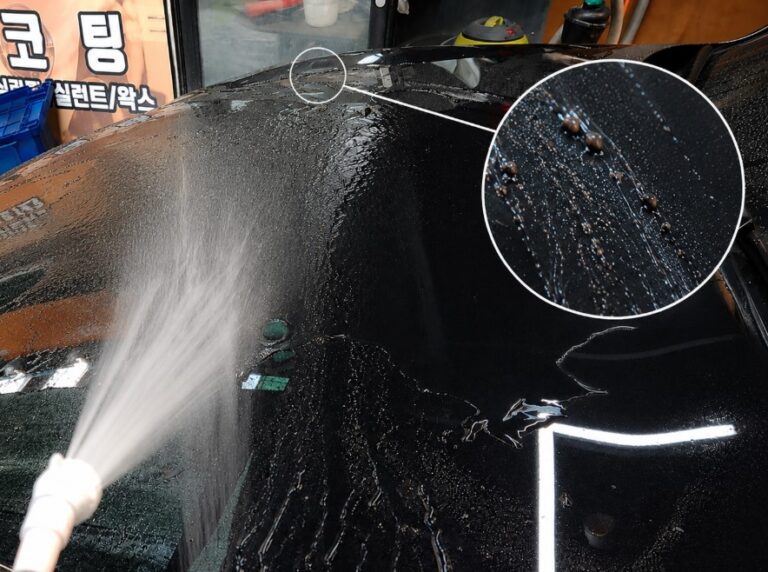
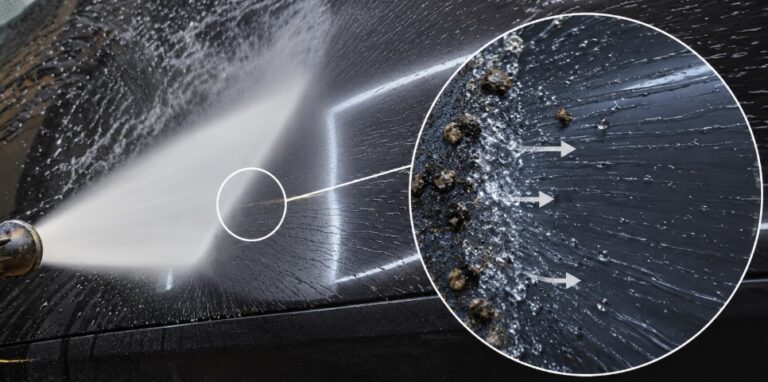
Apply an appropriate alkaline pre-wash generously to the affected area. Allow the recommended dwell time without letting the product dry, then use a pressure rinse to separate and carry away the loosened contamination.
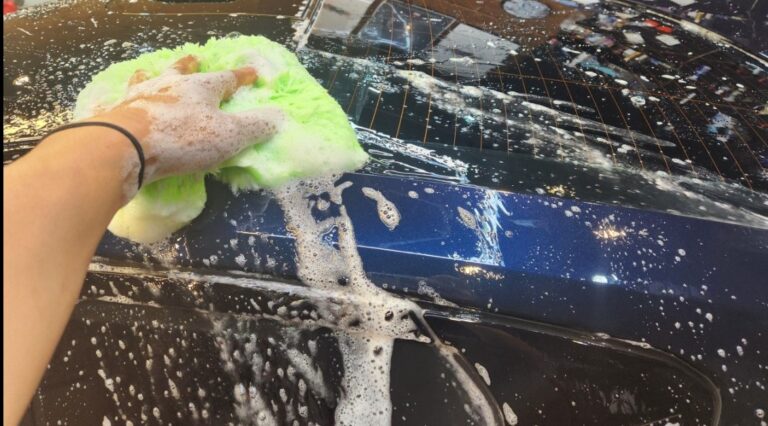
Next, provide plenty of shampoo lubrication and clean the area lightly with a clean wash mitt. If one light pass does not remove the residue, do not add more pressure. Repeat the alkaline pre-wash first.
After washing and drying, inspect the area. If the surface still feels rough or raised and the outline remains visible, use a paint cleaner designed for automotive paint to remove bonded residue. This step helps remove the thin contamination left after washing and exposes the actual condition of the paint.
Some paint cleaners contain abrasives, so avoid excessive pressure. On vehicles with ceramic coating or PPF, confirm that the cleaner is compatible with the coating or film before use. Abrasive products can alter the coating or damage the film. Remove the loosened residue with a clean towel, then inspect the surface again.
Complete-removal standard
Lift off the bulk with water, then remove the residue with alkaline pre-wash and a wash mitt.
If a mark remains after washing, use a suitable paint cleaner. If the surface is then clean and smooth but the mark remains, inspect it as etching.
Treat a Remaining Mark as Etching Once the Contamination Is Gone
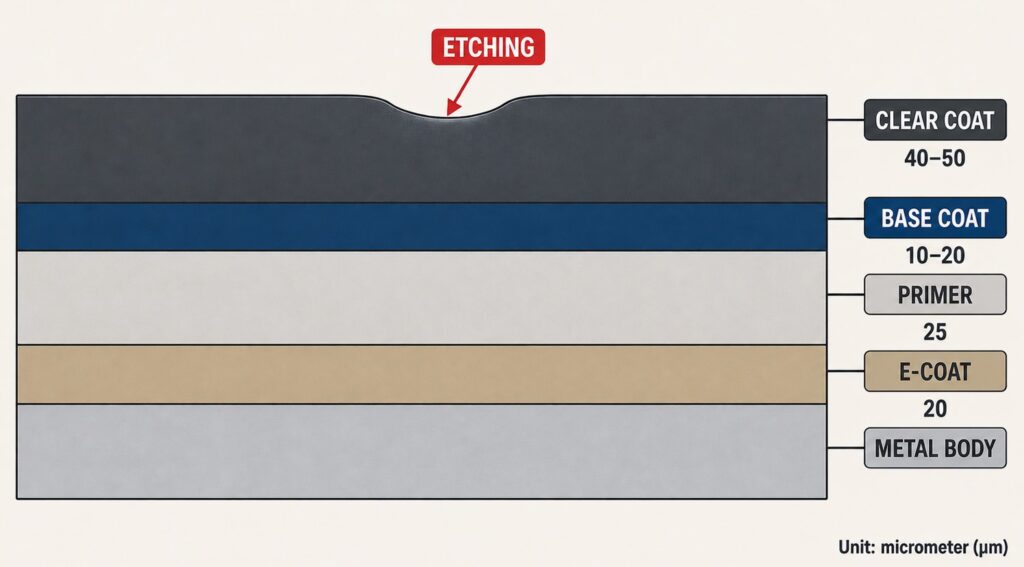
After the bonded contamination has been removed with a paint cleaner, the surface should feel clean and smooth. If the outline or a difference in gloss still remains, stop rubbing and treat the mark as paint etching.
A shallow mark may improve with light polishing. Etching that includes both swelling and depression creates a height difference, which is difficult to level with ordinary polishing alone. Repeated polishing can remove healthy surrounding clear coat while leaving the deeper depression behind. The raised area may need to be leveled by localized sanding before the sanding marks are refined with polish.
If the damage shows wrinkles, cracks, or a severe depression, avoid DIY sanding and have the paint thickness and condition assessed by a professional.
For a detailed explanation of damage levels and correction methods, see the car paint etching guide.
When to stop
If the contamination is gone but an outline or height difference remains, stop the removal process.
Do not scrub harder. Inspect the depth of the etching first.
Restore Protection After Removal
Alkaline pre-wash and paint cleaner can weaken or remove wax and sealant from the treated area. Once cleaning and inspection are complete, reapply wax or sealant if the paint does not require further correction. This restores water behavior and contamination resistance.
If polishing or localized sanding is required, complete the paint correction first and apply protection afterward. On ceramic-coated or PPF-covered vehicles, use a maintenance product confirmed to be compatible with the installed coating or film.
Frequently Asked Questions
Can I Wipe Bird Droppings Off With a Wet Wipe?
Dragging hardened bird droppings across the paint before soaking can move hard particles and create scratches. If a wet wipe is all you have, add plenty of water and leave the wipe over the deposit until it softens. Lift it away instead of scrubbing sideways.
Can Bird Droppings Be Removed With Water Alone?
Water can soften bird droppings enough to remove the bulk temporarily. A thin residue may remain, so follow with alkaline pre-wash and a proper contact wash as soon as practical.
How Long Should Bird Droppings Soak?
Start with about five minutes, then check whether the deposit has softened fully. Add more water and wait longer if any hard areas remain. The actual removal standard is softness, not a fixed number of minutes.
Is It Safe to Leave Bird Droppings on the Car for One Day?
There is no universal safe period. The rate of damage depends on the composition of the droppings, paint condition, heat, moisture, and contact time. On hot paint in strong sunlight, etching can develop within a single day, so removal should begin as soon as the deposit is found.
Do Wax, Ceramic Coating, or PPF Prevent Bird-Dropping Etching?
An intact protective layer can delay direct contact with the clear coat and buy time before etching develops. It is not a complete barrier against highly reactive contamination. Remove bird droppings immediately and use products compatible with the installed coating or film.
Should I Keep Rubbing if a Mark Remains?
No. Once a proper wash and paint cleaner have removed the bonded residue, a remaining outline or gloss difference on a clean, smooth surface should be treated as etching. Stop rubbing and assess the depth of the damage.
Conclusion
How to remove bird poop from car paint depends on controlling both reactivity and hard particles. Leaving the deposit in place can cause etching, while scrubbing it before it has softened can create scratches.
When you are away from your normal washing equipment, saturate several layers of plain toilet paper or a soft microfiber towel with water, allow the deposit to soften, and lift off the bulk. During the proper wash, use alkaline pre-wash to loosen the remaining residue and clean lightly with a well-lubricated wash mitt. If bonded contamination remains, continue with a suitable paint cleaner.
Reapply wax or sealant to the cleaned area when needed.
Soaking sooner is more important than wiping faster. This rule does not change when the vehicle has a coating or protective film.