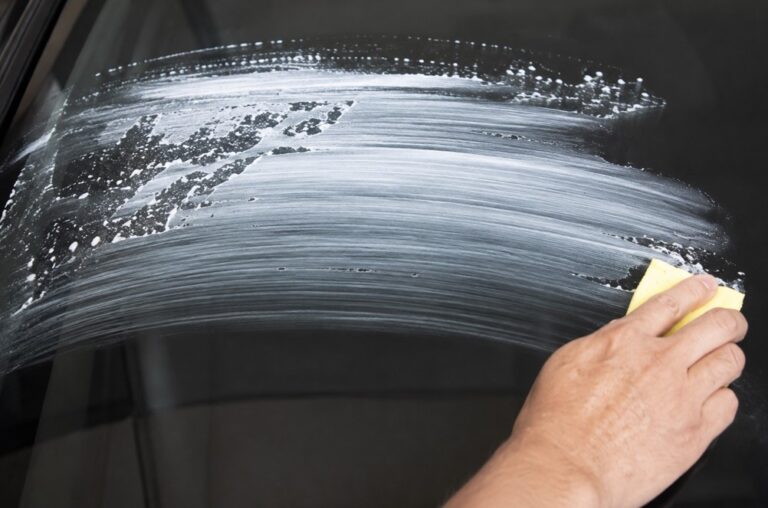
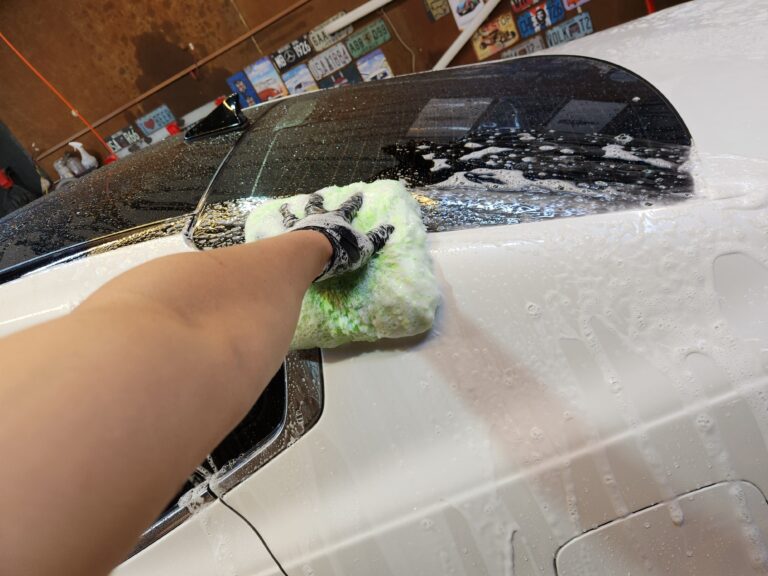
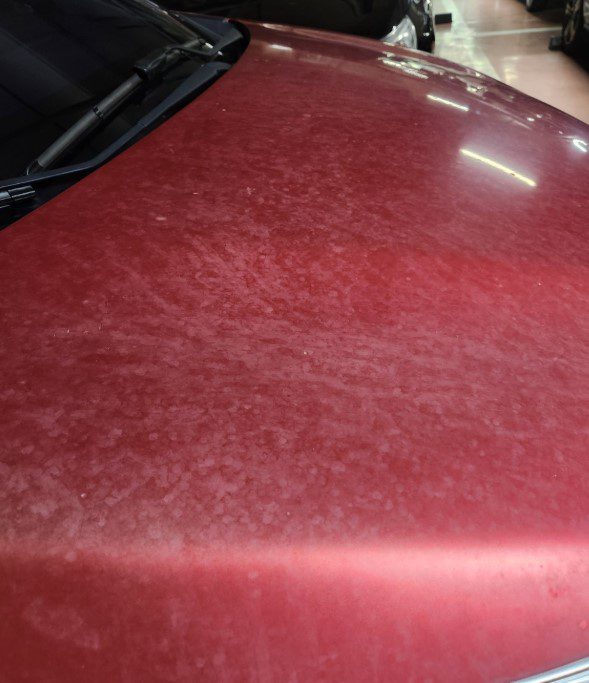
Wiper chatter can appear immediately after oil film removal, even when the windshield looks completely clean. The typical symptoms are a harsh juddering sound, a blade that feels as though it is dragging across the glass, and chatter that becomes worse in drizzle even though the wipers remain quiet in heavy rain.
Oil film removal clears uneven contamination and old coating residue, making the glass surface more uniform. It does not automatically reduce the baseline friction of bare glass. The condition of the rubber edge, its contact angle, the pressure applied by the wiper arm, and the blade structure also affect the friction generated during each wipe.
If visibility is clear and water moves evenly across the windshield, the oil-film removal stage is complete. From that point, inspect the friction between the rubber and the glass first, followed by physical contact conditions such as blade angle, arm pressure, and blade design.
Key Summary | How to Fix Wiper Chatter After Oil Film Removal
When a clean windshield develops a harsh juddering sound after oil film removal, divide the diagnosis into two stages: friction conditions and physical contact conditions.
Stage 1: Check friction between the rubber and the surface
Oil-film removal makes the glass more uniform, but the combination of bare glass and insufficient water in light rain can reveal high baseline friction and trigger stick-slip.
- Temporary measure: Apply a dedicated graphite treatment to a sound rubber edge to restore dry lubrication.
- Surface management: Use a windshield-safe water-repellent coating with good surface slickness. Monitor slickness separately from water repellency and reset uneven coating layers when necessary.
- Lower-maintenance option: Compare a correctly fitted silicone blade or another blade with a low-friction surface treatment.
Stage 2: Check blade angle, arm pressure, and blade design
- Replace rubber that is hard, cracked, or permanently folded to one side.
- When chatter occurs mainly in one direction, inspect whether the rubber edge is close to a perpendicular neutral position and reverses cleanly.
- Separate low arm pressure, which causes lifting and missed areas, from excessive loading, which makes movement heavy in both directions.
- If the problem remains, compare another correctly specified conventional, hybrid, or beam blade.
Diagnostic order: glass condition → rubber lubrication → glass surface → blade material → rubber edge → contact angle → arm pressure → blade design
Contents
- What Causes Wiper Chatter? Friction and Stick-Slip
- Why Remove Windshield Oil Film?
- Why Can Wipers Chatter After Oil Film Removal?
- How to Reduce Baseline Friction on Bare Glass
- Physical Causes of Wiper Chatter: Angle, Pressure, and Blade Design
- Wiper Chatter After Oil Film Removal: FAQ
- Final Diagnosis
What Causes Wiper Chatter? Friction and Stick-Slip
The direct cause of wiper chatter is an increase in frictional resistance as the rubber moves across the glass.
When resistance becomes high enough, the rubber momentarily grips the windshield. It then releases suddenly and grips again, producing the familiar juddering movement and harsh chattering sound.
Two Conditions That Determine Friction
The friction acting on a wiper is created by two groups of conditions.
- Surface friction: the interaction between the glass, water film, coating, and wiper material
- Physical contact: wiper-arm pressure, rubber-edge angle, pressure distribution, and blade structure
Even on the same windshield, stronger arm pressure can increase friction. Friction can also rise with normal arm pressure when the surface feels grabby or there is too little water.
Resistance may be high across the entire sweep, or it may vary from one area to another.
Oil film, uneven coating residue, and an irregular water film create different friction conditions across the windshield. A deformed rubber edge or uneven pressure distribution can also load one section more heavily than another.
Stick-Slip: How Increased Friction Becomes Chatter
When low-friction and high-friction areas repeat across the sweep, the resistance acting on the blade changes rapidly.
Grip in a high-friction area interferes with the rubber’s movement and can increase the dynamic resistance experienced by the blade across the contact area.
The wiper mechanism continues to apply force while the rubber remains stuck to the glass. The rubber deforms and stores elastic energy.
Once the stored elastic force exceeds the friction holding the edge in place, the rubber slips suddenly. It then grips the glass again and repeats the same cycle.
This rapid repetition of sticking and slipping is called stick-slip. It is the process through which increased friction becomes visible and audible wiper chatter.
💡 A Two-Stage Approach to Wiper Chatter
1. Check surface friction
Remove oil film and uneven coating residue to create a uniform glass surface. If chatter remains, reduce baseline friction with rubber lubrication, a coating that provides good slickness, or a blade with different friction characteristics.
2. Check physical contact
If friction management does not solve the problem, inspect the rubber edge, contact angle, wiper-arm pressure, pressure distribution, and blade structure.
Why Remove Windshield Oil Film?
Oil Film Reduces Clarity and Spreads Light
A windshield covered with oily film does not wipe cleanly. Oily contamination forms a thin layer that interferes with how water spreads and moves across the glass.
When the thickness and distribution of that film vary, hazy streaks and water smearing remain after the blade passes. At night, headlights and streetlights spread across the windshield and make visibility more uncomfortable.
The first purpose of oil-film removal is to restore clear visibility by correcting incomplete wiping and light scatter.
For the causes of windshield oil film, the removal process, and ways to reduce recontamination, see How to Remove Windshield Oil Film: Causes, Methods, and Prevention.
Oil Film Creates Different Friction from One Area to Another
Oil film affects both visibility and the friction between the rubber and the windshield.
Its thickness and composition are rarely distributed evenly. The blade may slide relatively easily across one section and grip strongly in another. These differences become greater when remnants of an old water-repellent coating overlap with other contamination.
On a uniform surface, the blade moves under relatively consistent resistance. On an uneven surface, it repeatedly crosses high- and low-friction areas.
Local stick-slip can then develop within the contact area. Interaction between those areas can increase the dynamic resistance experienced by the full blade beyond what a simple inspection of each isolated section would suggest.
The greater the friction variation, the less stable the blade movement becomes and the more easily chatter develops.
Oil-Film Removal Makes Friction More Uniform
Oil-film removal clears uneven oily residue, old coating remnants, and the contamination accumulated above them. As the glass becomes more uniform, the difference in friction across the sweep decreases.
The baseline friction of bare glass may be similar to or higher than it was before cleaning. However, reducing the repeated high- and low-friction pattern also reduces the dynamic resistance caused by an uneven surface. The blade can then move more consistently.
Oil-film removal produces two important changes.
- The windshield wipes cleanly and light scatter is reduced.
- The glass surface and its friction conditions become more uniform.
If the wipers still chatter after the glass is clean, the next step is to inspect the baseline friction of the now-uniform bare glass.
Why Can Wipers Chatter After Oil Film Removal?
Uniform Bare Glass Can Still Have High Friction
After oil-film removal, the windshield is close to a bare-glass condition. The difference in friction from one area to another has been reduced, but the baseline friction between bare glass and the rubber remains.
If the old film or coating had been reducing resistance in some areas, the overall friction after removal may be similar to or higher than before.
When baseline friction becomes strong enough to grip the rubber, stick-slip can occur even on a uniform surface. This is why chatter may remain after the uneven friction caused by contamination has been corrected.
Rainfall Determines the Condition of the Water Film
Chatter on bare glass changes significantly with rainfall.
Heavy rain continuously supplies water and maintains a relatively uniform film across the windshield. Fresh water quickly replaces what the wiper removes, helping the rubber move under lower and more consistent friction.
This water film acts as lubrication between the rubber and the glass. It explains why a wiper may travel smoothly in heavy rain even when the baseline friction of the cleaned windshield is high.
Drizzle and light rain leave much less water after each pass. If the next wipe begins before a sufficient water film develops, direct contact increases and the baseline friction of bare glass becomes more apparent.
Water distribution also becomes less uniform. Wet sections slide more easily, while drier sections grip the rubber more strongly.
Two conditions therefore act together in light rain.
- High baseline friction between bare glass and the rubber
- Friction variation and dynamic resistance caused by an uneven water film
This combination explains why a wiper may stay quiet in heavy rain but feel grabby and chatter in drizzle. HELLA also notes that excessive wiping speed in light rain can drag a blade over glass that is too dry and increase squeak or judder in its windshield wiper noise guidance.
Light rain exposes both high baseline friction and an uneven water film, making chatter most noticeable under these conditions.
The Main Goal Is to Reduce Baseline Friction
Oil-film removal makes uneven friction more uniform. If chatter remains, reduce the baseline friction between the clean windshield and the wiper rubber.
Lower baseline friction reduces the tendency of the rubber to grip bare glass. It also helps keep friction below the level that triggers stick-slip when the water film is thin or uneven.
Once the windshield is clean, focus on changing the contact condition between the rubber and the glass rather than polishing the windshield repeatedly.
How to Reduce Baseline Friction on Bare Glass
Temporarily Restore Rubber Lubrication with Graphite
Graphite is best treated as a temporary measure for wiper chatter. It does not change the windshield surface in the way a coating does. Instead, it temporarily supplements lost lubrication on an aging rubber edge.
Many wiper blades use graphite or another low-friction surface treatment. Repeated use, wear, or aggressive cleaning can weaken that surface and increase the time during which rubber contacts bare glass directly. DENSO explains the role of finished wiping edges and surface treatment in its wiper blade development and testing guide.
If the rubber is still flexible and the wiping edge has no cracks or deformation, a dedicated wiper graphite product can restore some dry lubrication. This can temporarily reduce stick-slip in light rain, when the water film is limited.
Graphite is not permanently bonded to the rubber. Rain and repeated wiping gradually remove it, so the treatment may need to be repeated.
Use graphite as a temporary measure before replacing an aging blade. If chatter returns quickly or the effect is brief, replace the wiper and manage the windshield surface as needed.
Manage Surface Friction with a Water-Repellent Coating

The coating changes the surface condition of bare glass. Here, slickness means that the rubber moves across the windshield smoothly with low resistance.
A glass coating combines several properties: water repellency, surface slickness, resistance to contamination, and the durability of the coating layer itself.
Slickness is the property most directly related to wiper chatter. Evaluate coating condition and maintenance timing by how smoothly the blade moves, not only by how strongly the glass beads water.
Each property can decline at a different rate. The coating layer may remain on the windshield after its initial slickness has weakened, and water repellency may remain after the blade begins to feel grabby. Treat slickness retention as a separate maintenance criterion.
Fluorinated water-repellent coatings can maintain a coating layer and strong water repellency for a relatively long time. That durability does not guarantee that the initial slickness will remain unchanged for the same period.
Repeated wiping and surface contamination can reduce slickness before the visible water-repellent effect disappears.
A coating with good slickness can reduce friction between the rubber and bare glass. Depending on the product and use conditions, slickness may require periodic refreshment or reapplication.
Repeated reapplication can leave old coating, new coating, and trapped contamination layered together. If those layers become uneven, friction variation can return across the windshield and trigger chatter again.
When a maintenance application no longer restores smooth movement, or when wiping and water behavior become patchy, strip the old coating and prepare the glass again.
Use the following maintenance flow.
Uniform application → monitor slickness → reapply when slickness weakens → strip and recoat when the surface becomes uneven
When selecting a coating, compare initial slickness, slickness retention, and the expected reapplication cycle instead of judging the product only by its total durability claim.
Change to a Wiper with Different Friction Characteristics
If rubber lubrication and glass-surface management do not stop recurring chatter, change the friction characteristics of the blade itself.
Wipers use natural rubber, synthetic rubber, silicone, and various compound blends. Graphite and other low-friction surface treatments may also be applied. Even on the same glass under the same water-film conditions, the material formulation and surface finish change how strongly the rubber grips and how easily stick-slip begins.
Some silicone blades and low-friction-treated blades maintain relatively low resistance on bare glass. Certain silicone products also transfer a thin silicone layer to the windshield during operation, changing both water behavior and the contact condition. PIAA describes this behavior in its silicone wiper technology overview.
Changing the material sets a different baseline friction condition from the beginning. It reduces the need to repeatedly supplement graphite or maintain coating slickness solely to control chatter.
A correctly fitted blade with suitable friction characteristics usually requires the least additional maintenance of these three options. It can provide a more durable reduction in recurring chatter on bare glass and in light rain.
Physical Causes of Wiper Chatter: Angle, Pressure, and Blade Design
If chatter remains after friction has been managed, inspect how the wiper contacts the windshield and how force is applied.
Rubber-edge shape, contact angle, wiper-arm pressure, and blade structure work together to determine blade movement.
Use the following inspection order.
Rubber edge → contact angle → arm pressure → blade design
Vehicle service information identifies many of the same causes. A Volkswagen technical bulletin lists glass contamination, product residue, a contaminated or torn insert, a bent or misadjusted arm, and a warped blade among conditions that can reduce wiping performance in its wiper performance bulletin.
Rubber-Edge Movement: Check for One-Sided Deformation
The thin wiping lip leans in the direction of travel and reverses when the blade changes direction.
When a vehicle remains parked for long periods, the edge can stay loaded to one side. Heat, age, and repeated compression can gradually make that position permanent and interfere with clean reversal in the opposite direction.
During routine washing, clean the rubber edge and check whether it moves naturally in both directions.
Use a damp towel to remove contamination. If a flexible edge has been resting to one side, gently check whether it can return and reverse naturally. Replace the blade when the rubber is hard, cracked, or visibly deformed.
Routine check: clean the edge → inspect movement in both directions → replace it if one-sided deformation remains
Wiper Blade Angle: Use a Near-Perpendicular Neutral Position
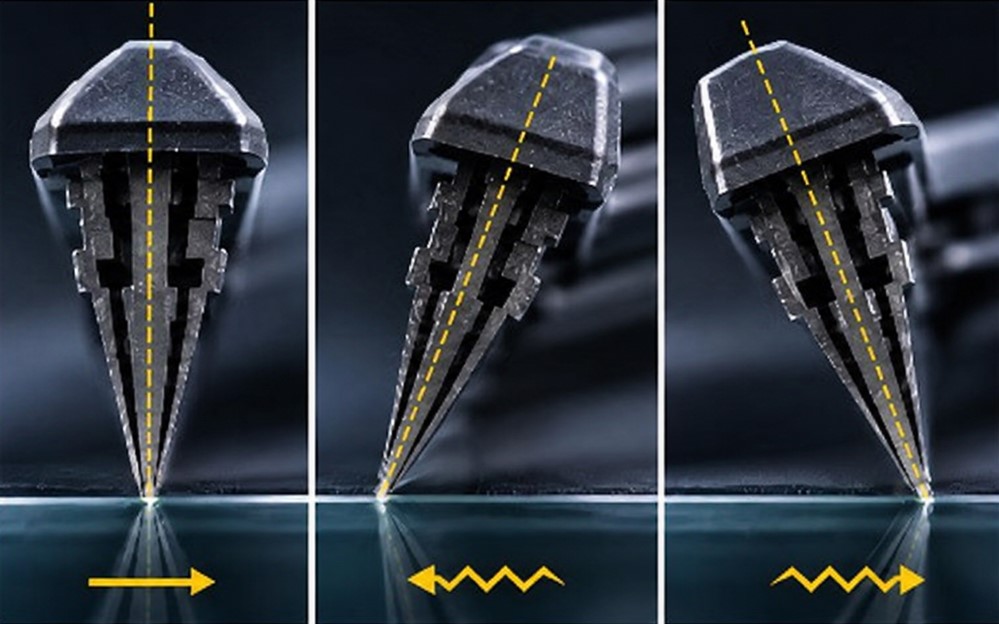
Use a rubber-edge centerline close to 90° to the local glass surface as the visual baseline. If the neutral angle is tilted to one side, the edge may reverse smoothly in one direction and resist reversal in the other, producing chatter or a harsh juddering sound.
During operation, the rubber leans with the sweep and flips to the opposite side when direction changes. A tilted centerline can make the edge push across the windshield instead of reversing cleanly.
One-direction chatter is a strong reason to inspect rubber-edge reversal and wiper-arm alignment. Adjustment should be made in very small increments and checked in both directions.
Small adjustment → operate the wipers with ample water → check both directions → adjust again if necessary
The correct specification can vary with windshield curvature and arm position. Professional measurement and adjustment are safer than a large hand twist.
Chatter in one direction → inspect edge reversal and arm alignment → correct to vehicle specification
Wiper-Arm Pressure: Separate Insufficient Pressure from Excessive Loading
Arm pressure is the force that holds the blade against the windshield. Insufficient pressure and excessive loading create different symptoms.
Signs of insufficient pressure
When pressure is too low, the blade cannot follow the windshield curvature consistently. The first symptom is usually incomplete wiping in a specific area.
- Part of the blade lifts away from the glass.
- The end of the blade leaves an unwiped section.
- A water film or line remains in the same location.
- Wiping becomes less stable as vehicle speed increases.
These symptoms can result from incorrect blade fitment, unsuitable curvature, arm damage, a weak spring, or linkage play. Restore the factory condition with the correctly fitted blade or a sound wiper arm.
Insufficient pressure → lifting or incomplete wiping → verify fitment and restore the correct arm condition
Signs of excessive pressure or loading
Excessive loading keeps the blade against the glass but makes its movement heavy.
The rubber can feel as though it is dragging in both directions, and edge reversal may become harsh at each end of the sweep.
- The windshield clears, but blade movement is unusually heavy.
- The blade drags strongly in both directions.
- Chatter becomes much stronger in light rain.
- Edge reversal remains harsh after the angle is corrected.
Inspect the arm spring, arm deformation, blade specification, and mechanism resistance together. Stretching a spring by hand does not provide a reliable pressure setting. Have the system measured and adjusted professionally, or restore it with a correctly specified arm.
Excessive loading → heavy movement in both directions → inspect arm and blade specification → professional adjustment or replacement
⚠️ DIY caution: A released wiper arm can crack the windshield, and an incorrectly parked or twisted arm can damage the hood or paint. Use the vehicle’s service position and leave arm bending or spring adjustment to a technician when the required specification is unknown.
Blade Design: Conventional, Hybrid, and Beam Blades

If the same chatter returns after cleaning the windshield, replacing the rubber, and checking the angle, inspect the combination of blade structure and arm pressure.
The wiper arm produces most of the total force that holds the blade against the windshield. Blade structure determines how that force is transferred and distributed along the rubber edge.
A beam blade uses internal spring rails to distribute force along its length, while its aerodynamic shape and spoiler help reduce lift at speed. A conventional blade uses multiple joints and pressure points to follow the glass. A hybrid blade combines a jointed support structure with an outer cover.
On bare glass, strong arm pressure or a pressure distribution that does not suit the windshield curvature can make rubber movement heavy and make chatter more noticeable.
First confirm blade fitment, angle, and arm pressure. If the same problem remains, compare another correctly specified conventional, hybrid, or beam blade. A different support structure can change how the rubber follows the same windshield under the same arm.
Persistent chatter → verify fitment, angle, and pressure → compare another approved blade model or structure
Physical Symptoms and Solutions
| Current symptom | Check | Next action |
|---|---|---|
| Rubber edge remains folded to one side | Edge movement and flexibility | Replace it if clean reversal does not return |
| Rubber is hard, cracked, or visibly distorted | Blade condition | Replace the blade |
| Chatter repeats mainly in one direction | Edge reversal and arm angle | Measure and correct alignment to vehicle specification |
| Part of the blade lifts and leaves water behind | Fitment, curvature, arm pressure, or linkage play | Restore the correct blade and arm condition |
| Wiping is clear but movement is heavy in both directions | Glass friction, arm loading, and mechanism resistance | Inspect pressure and mechanism condition professionally |
| Angle and arm condition are correct but chatter remains | Blade fitment and support structure | Compare another approved blade model or design |
Wiper Chatter After Oil Film Removal: FAQ
Should I Remove the Oil Film Again If the Wipers Suddenly Chatter?
Check visibility and water behavior first. When the windshield is clear and water moves evenly, stop polishing and inspect rubber friction, coating condition, blade angle, arm pressure, and fitment.
Why Do the Wipers Chatter in Light Rain but Stay Quiet in Heavy Rain?
Heavy rain maintains a lubricating water film between the rubber and the glass. Light rain leaves less water, exposing the higher baseline friction of bare glass and increasing variation between wet and dry sections.
What Should I Check First When the Rubber Looks Healthy but Feels Grabby?
Confirm that the wiping edge is flexible, correctly shaped, and free from cracks. A dedicated graphite treatment can temporarily restore surface lubrication, especially when the blade became uniformly grabby after aggressive cleaning.
What Causes Chatter Mainly in One Direction?
The rubber edge may be deformed, or the arm may hold the blade at an angle that prevents clean reversal in one direction. Inspect the edge and have the arm alignment checked against vehicle specifications.
What Does Insufficient Wiper-Arm Pressure Look Like?
Part of the blade may lift, an end may remain unwiped, or a water line may return at the same point. Incorrect blade curvature, poor fitment, a weak arm, or linkage play can produce the same pattern.
Can Excessive Wiper-Arm Pressure Cause Chatter?
Yes. Heavy movement in both directions, harsh edge reversal, and stronger chatter in drizzle can indicate excessive loading after glass friction and blade condition have been checked. Pressure should be measured rather than changed by guesswork.
Can Changing from a Beam Blade to a Conventional or Hybrid Blade Reduce Chatter?
It can change the result because each structure distributes force differently. Verify approved fitment first, then compare another correctly specified blade after the glass, rubber edge, angle, and arm condition have been checked.
When Should a Water-Repellent Coating Be Completely Reset?
If the water pattern remains uniform and only slickness has weakened, wash, degrease, and refresh the coating. Strip the old coating and start again when water behavior and blade movement remain patchy after cleaning, or when another application no longer restores uniform performance.
Final Diagnosis
Start with the windshield. Clear visibility and even water behavior show that the oil-film removal stage is complete.
Uniform dragging across the whole sweep points first to friction. Check rubber lubrication and the glass surface. Restore lubrication temporarily with graphite, manage bare-glass friction with a compatible water-repellent coating, and compare a blade with different friction characteristics if the same symptom continues.
Chatter limited to one direction or one area points toward physical contact. Inspect the rubber edge, contact angle, blade fitment, and arm pressure. If movement remains heavy in both directions, have the arm and mechanism measured. If angle and pressure are correct, compare another approved blade structure.
The complete diagnostic flow is:
glass condition → rubber lubrication → glass surface → blade material → rubber edge → contact angle → arm pressure → blade design
Following this order prevents repeated windshield polishing and makes each test meaningful. Once the glass is clean, determine how the wiper meets it: the friction at the surface, the angle of the rubber edge, and the force distributed through the blade.