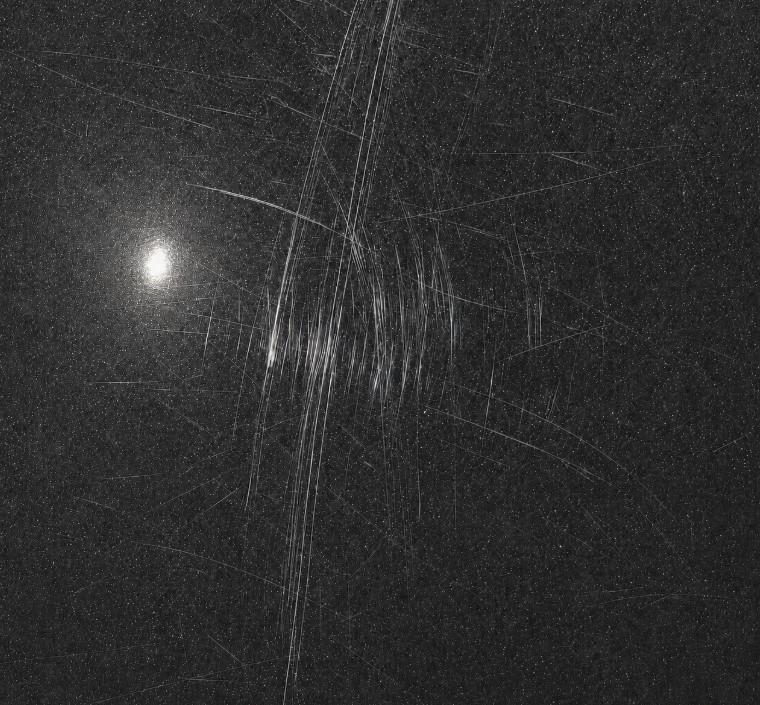
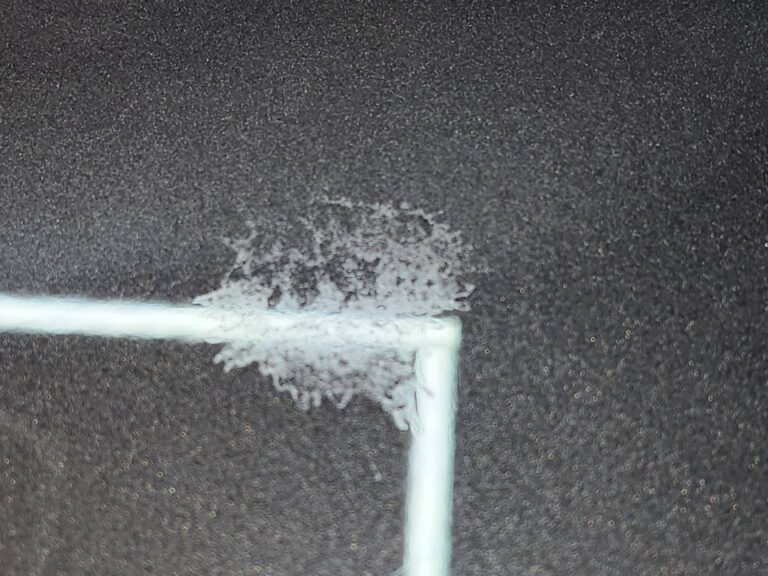
On a rainy day, the windshield may still look hazy even after the wipers pass over it. Smears can remain in the wiped area, while headlights from oncoming vehicles spread across the glass instead of appearing sharp and clear.
Some cars also develop wiper judder or chatter. Washer fluid may spread unevenly and leave patchy areas across the windshield.
When these symptoms appear, many drivers immediately think of windshield oil film removal.
However, one single cause does not explain every case. Road oils and exhaust residue can create a natural contamination film. Wax residue, cleaning-product residue, old water-repellent coatings, and repeatedly applied wet-type glass coatings can produce very similar symptoms.
To remove windshield oil film properly, first understand the characteristics of automotive glass, what car care commonly treats as “oil film,” and which removal method matches the current condition of the windshield.

Contents
- Windshield Oil Film: What Is It and Why Does It Form?
- How to Check for Windshield Oil Film
- How to Remove Windshield Oil Film
- Preventing Recontamination After Windshield Oil Film Removal
- Windshield Oil Film Removal FAQ
- Conclusion
Windshield Oil Film: What Is It and Why Does It Form?
Bare glass easily accumulates and bonds contamination
Automotive glass has a hard, dense inorganic surface. Its hardness gives it relatively high resistance to physical contact and abrasion, but it does not stop contamination from adhering.
Without a coating, bare glass directly faces rainwater, washer fluid, road oils, exhaust residue, dust, tree contamination, cleaning-product residue, and wax residue.
A thick film usually does not appear all at once. Thin contamination remains on the surface, becomes wet and dry repeatedly, and collects new contamination on top.
As this cycle continues, the contamination can bond more firmly to the glass.
For this reason, bare glass readily accumulates contamination and can develop strongly bonded surface films when maintenance is delayed.
Automotive oil film includes more than oily contamination
Chemically, road oil, exhaust-related contamination, cleaning-product residue, wax residue, mineral contamination, old water-repellent coatings, and degraded coating layers are different materials.
In practical automotive care, however, people often group them together when they create similar windshield symptoms.
An old water-repellent coating may remain unevenly on the glass. Repeated applications of wet-type glass coatings without properly cleaning or resetting previous layers can also create an inconsistent surface condition.
Water may move quickly in one area while spreading broadly in another. Wiper performance may also vary across the windshield.
In this article, windshield oil film refers to:
contamination, residue, and degraded surface layers that interfere with windshield wetting behavior, wiper performance, and visibility and become removal targets in practical automotive care.
This broader definition also helps prevent one common mistake: using the same treatment for every similar symptom.
Natural oily contamination, a strongly bonded surface film, and a deteriorated coating may require different approaches.
As contamination ages, bond strength becomes more important
The difficulty of oil film removal depends not only on how much contamination exists but also on how strongly the surface layer bonds to the glass.
Even a thin film can alter water behavior or reduce nighttime visibility, so visual severity alone does not reveal how firmly the contamination has attached.
Road oils, exhaust residue, dust, and cleaning-product residue can repeatedly become wet and dry on the windshield. New contamination then continues to build over the existing layer.
Over time, these different materials can form a more established surface film. Old water-repellent coatings and other residual layers can make the condition even more complex.
A dedicated cleaner may remove early contamination relatively easily. Once the layer becomes more strongly bonded, chemical cleaning alone may no longer separate it efficiently.
At that point, pad contact and repeated physical movement play a larger role in removal.
How to Check for Windshield Oil Film
Check how the windshield changes when it gets wet
Water usually makes windshield oil film easier to identify.
During rain or after using washer fluid, suspect surface contamination if a hazy film remains briefly after the wiper passes or if water moves unevenly across the windshield.
At night, headlights and streetlights may scatter more widely across the glass.
Viewed from an angle, the windshield may also show patchy haze, streaking, or rainbow-like surface patterns.
Repeated wiper judder or persistent wiping marks can accompany the same condition.
However, worn wiper blades, scratches or pitting in the glass, interior windshield contamination, and washer-fluid residue can create similar symptoms.
For that reason, evaluate several signs together:
visibility, water behavior, and the condition of the glass after the wiper passes.
Stop oil film removal when visibility and water behavior return to normal
Wiper chatter or judder can remain even after you remove the oil film.
At this point, many people assume that contamination still remains and repeat the polishing process.
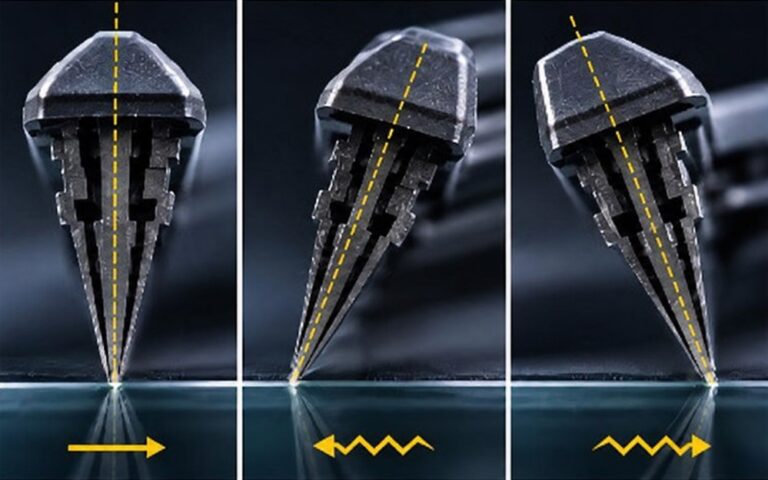
Wiper noise, however, also depends on blade condition, contact angle, contact pressure, and the surface treatment on the windshield.
If visibility returns to normal and water moves evenly across the glass, further oil film removal may simply overwork an already clean surface.
Once visibility and water behavior return to normal, stop the oil film removal process and evaluate any remaining wiper problem separately.
Check the wiper lip condition and material, blade contact angle, wiper-arm pressure, and compatibility between the wiper and water-repellent coating as separate factors.
How to Remove Windshield Oil Film
Not every windshield requires the same level of cleaning.
A light, early-stage film may respond to a dedicated glass cleaner. A more strongly bonded surface film may require an abrasive oil-film remover after proper preparation.
Start with a dedicated cleaner for light oil film
If the symptoms are minor and the windshield only shows slightly uneven water behavior or light oily contamination, try a dedicated glass or oil-film cleaner first.
Early oily contamination and light residue may come off without aggressive abrasion.
If the haze disappears and normal water behavior returns, stop there.
This does not mean chemical cleaning must always come before abrasive removal.
Choose the method according to the current condition of the glass.
Prepare the glass before abrasive oil film removal
If the windshield becomes noticeably hazy in rain, wiping marks repeatedly remain, or water behavior varies strongly across the glass, an abrasive oil-film remover may work more efficiently.
In this condition, repeatedly using a mild cleaner before eventually moving to abrasion can add unnecessary work.
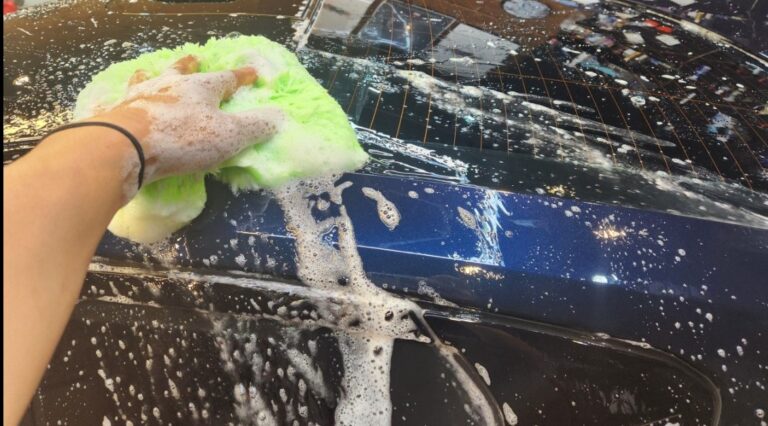
Start with a proper wash.
Remove loose dust, dirt, and ordinary road contamination before inspecting the windshield.
Abrasive oil-film removal requires repeated pad contact. If particle contamination remains on the glass, the pad can drag those particles across the surface.
If the windshield still feels rough after washing, use a clay product suitable for automotive glass with sufficient lubrication to remove bonded particles.
Clay does not serve as the main oil-film remover here.
Its role is to remove bonded particle contamination before abrasive work begins.
Keep the surface wet and use even pad contact
After preparation, apply the abrasive oil-film remover to a suitable pad and work in small sections.
Keep the process wet by adding water during the work.
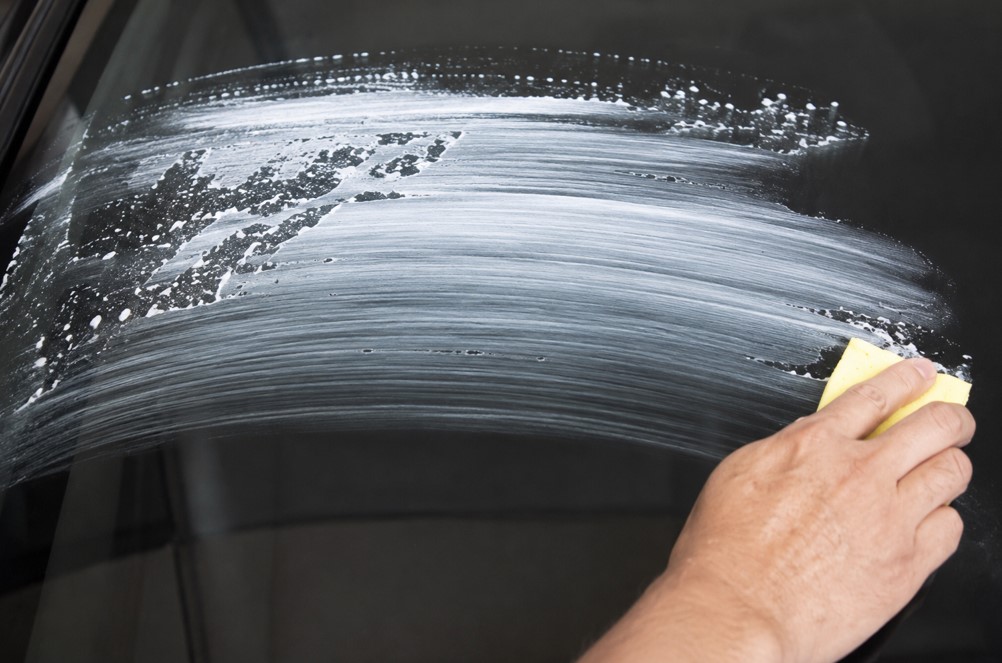
As moisture decreases, add more water and watch how it behaves on the glass.
Where contamination remains, water and product may gather unevenly or break differently from the surrounding area.
These changes help you identify areas that need more passes.
You do not need to rinse the entire product away every time you check progress. Add water during the process and use the changing water behavior as a practical guide.
Do not increase pressure just because removal slows down.
Keep the entire pad evenly against the glass and use repeated passes to gradually remove the bonded layer.
The required physical cleaning power comes mainly from consistent pad contact and repeated movement, not from one heavy application of pressure.
If water still gathers irregularly in one area, add water and repeat the process there.
Once water behavior becomes consistent across the windshield and the original symptoms disappear, finish with a thorough rinse.
Wash → Check for bonded particles and clay if needed → Apply product → Maintain a wet working surface → Use even pad contact and repeated passes → Check water behavior → Final rinse
Why use a glass-specific product instead of a paint cleaner?
A paint cleaner can remove oily contamination from automotive paint.
Windshield oil film can also contain road oils and other organic contamination.
So why do detailers usually choose glass-specific products for windshield oil film?
Manufacturers formulate paint cleaners around automotive paint and the cleaning and abrasion levels that clearcoat can tolerate.
Chemical ingredients can loosen contamination, while pad contact removes what remains. However, the process must stay within a safe range for the comparatively soft painted surface.
Windshield oil film can develop into a more firmly bonded mixture of contamination, residue, and old surface layers.
Glass has much greater hardness than automotive clearcoat, so glass-specific products can use abrasives and working conditions designed specifically for glass.
A paint cleaner may remove some oily contamination from the windshield.
For strongly bonded windshield oil film, a glass-specific product usually provides more suitable abrasion characteristics and better working efficiency.
Cerium oxide is different from ordinary oil-film removal
A mark that remains after abrasive oil-film removal does not automatically mean stronger oil film remains.
If you have already removed the surface contamination but haze or damage still remains, examine the glass itself.
Cerium oxide serves as an abrasive for actual glass polishing.
Do not treat it simply as the next stronger oil-film remover.
Use it only when the glass surface itself requires correction.
Increasing polishing strength simply because a mark remains after decontamination can unnecessarily remove material from the glass.
Important precautions when using abrasive oil-film removers
Poor working conditions can make an abrasive oil-film remover act on the glass itself.
Pay particular attention to drying and excessive pressure.
If the product and water dry while you repeatedly apply strong pressure to one area, the abrasive action can begin working on the glass instead of only the surface film.
Uneven abrasion may remain difficult to see in daylight but appear at night as increased light scatter or glare from headlights and streetlights.
If the pad starts to drag or the working area becomes dry and sticky, add water instead of increasing pressure.
Also watch for fresh environmental contamination.
Even after washing and claying, wind can carry dust or sand back onto the windshield or pad. A pad can trap these particles and drag them across the glass, creating scratches unrelated to oil-film removal.
Direct sunlight and hot glass also make water and product dry faster.
For abrasive windshield oil-film removal, maintain:
clean preparation, sufficient moisture, even pad contact, repeated passes, and continuous checks for fresh contamination.
Preventing Recontamination After Windshield Oil Film Removal
Bare glass can accumulate and bond contamination again
When you thoroughly remove oil film and residual surface layers, you expose bare glass again.
Without a protective layer, road oils, exhaust residue, dust, washer fluid, and other contaminants once again contact the windshield directly.
These contaminants can repeatedly become wet and dry and gradually bond more firmly to the surface.
Removing the oil film once therefore does not permanently end the process.
If regular maintenance stops, contamination can begin accumulating and bonding again.
After oil film removal, consider how to reduce the next cycle of contamination and adhesion.
A water-repellent coating can make future maintenance easier
You can maintain bare glass through regular cleaning.
If contamination returns quickly, you can also apply a dedicated water-repellent glass coating to create a new surface layer.
The coating changes the surface that outside contamination contacts first. Road oils, exhaust residue, dust, and other contaminants now contact the coated layer rather than bare glass.
Contamination can still build on the coating, but the new surface properties change water behavior and can make future cleaning easier.
For this reason, a water-repellent coating does more than make rainwater bead.
It can turn newly exposed bare glass into a more manageable surface for future maintenance.
Over time, contamination can also build on the coating and reduce its water repellency.
When this happens, do not immediately add another coating layer.
Wash the surface first. If necessary, perform light degreasing and check whether the coating recovers.
If water repellency still does not return or the existing layer needs a full reset, remove the old coating before applying a new one.
Wash → Light degreasing → Decoat if necessary → Reapply
This process reduces the chance of repeatedly layering fresh coating over contamination or weakened previous layers.
The key to long-term oil-film management is not how many times you aggressively clean the windshield.
It is preventing contamination from bonding strongly again, either through regular bare-glass maintenance or by maintaining a manageable coated surface.
Windshield Oil Film Removal FAQ
Is windshield oil film simply an oily layer?
Not always. In practical automotive care, the term can include road oils, exhaust residue, cleaning-product residue, mineral contamination, and old or uneven coating layers when they create similar problems with visibility, water behavior, or wiper performance.
Should I wash the windshield before using an oil-film remover?
Yes, especially before using an abrasive product. Washing removes loose dust and road contamination that the pad could otherwise drag across the glass. If bonded particles remain, use a glass-safe clay product with sufficient lubrication before abrasive work.
Do I always need to start with a mild cleaner?
No. A mild cleaner works well for early or light contamination, but a clearly established and strongly bonded surface film may respond more efficiently to an abrasive oil-film remover after proper preparation.
How hard should I press when using an abrasive oil-film remover?
Heavy pressure is usually unnecessary. Keep the pad evenly against the windshield, maintain a wet working surface, and use repeated passes. Add water as needed and watch changes in water behavior to decide where you need more work.
Should I polish the windshield again if the wipers still chatter after oil-film removal?
Not automatically. If visibility looks clear and water behavior has returned to normal, further oil-film removal may only overwork the surface. Check the wiper blade, contact angle, pressure, and windshield surface treatment separately.
Is a water-repellent coating required after oil-film removal?
No. You can maintain bare glass through regular cleaning. A water-repellent coating offers another option when contamination returns quickly or when you want easier ongoing maintenance.
Conclusion
Many different materials can create what drivers call windshield oil film.
Road oils, exhaust residue, cleaning residue, bonded contamination, and old coating layers can all interfere with visibility and water behavior.
Start by identifying the current condition of the windshield.
A light, early-stage film may respond to a dedicated cleaner. A more strongly bonded layer may require proper preparation followed by an abrasive oil-film remover.
During abrasive removal, do not try to force contamination off with maximum pressure.
Maintain a wet working surface, keep the pad evenly against the glass, observe changes in water behavior, and repeat only as much as necessary.
After cleaning, you expose bare glass again.
Regular cleaning or a properly maintained water-repellent coating can then reduce the chance of contamination bonding strongly again.
The purpose of windshield oil-film removal is not to keep polishing until you achieve the strongest possible removal.
The goal is to identify the current surface condition, remove only what needs removal, and leave the windshield in a condition that is easier to maintain afterward.