Parking under a tree may keep your car cooler, but it can also leave the paint covered with sticky droplets, yellow-brown spots, or hardened resin. These contaminants often look similar at first, yet they do not all respond to the same cleaning method.
The key question is whether the contamination is still soft and water-soluble or has hardened into a resinous deposit. Fresh tree sap, honeydew, and many insect residues can often be removed after a thorough soak and normal wash. Hardened pine resin usually requires alcohol or a compatible solvent-based remover.
Quick answer: Start with pre-wash and a normal contact wash. If a sticky or raised resin deposit remains, soften it with isopropyl alcohol or a dedicated tree sap and resin remover. Do not scrape it off or rub it while dry.
Contents
- Common Contamination Found After Parking Under Trees
- Why Pine Resin Becomes Difficult to Remove
- Choosing the Right Tree Sap or Resin Remover
- How to Remove Fresh and Hardened Resin
- What to Do If a Mark Remains
- Important Precautions
- Frequently Asked Questions
1. Common Contamination Found After Parking Under Trees
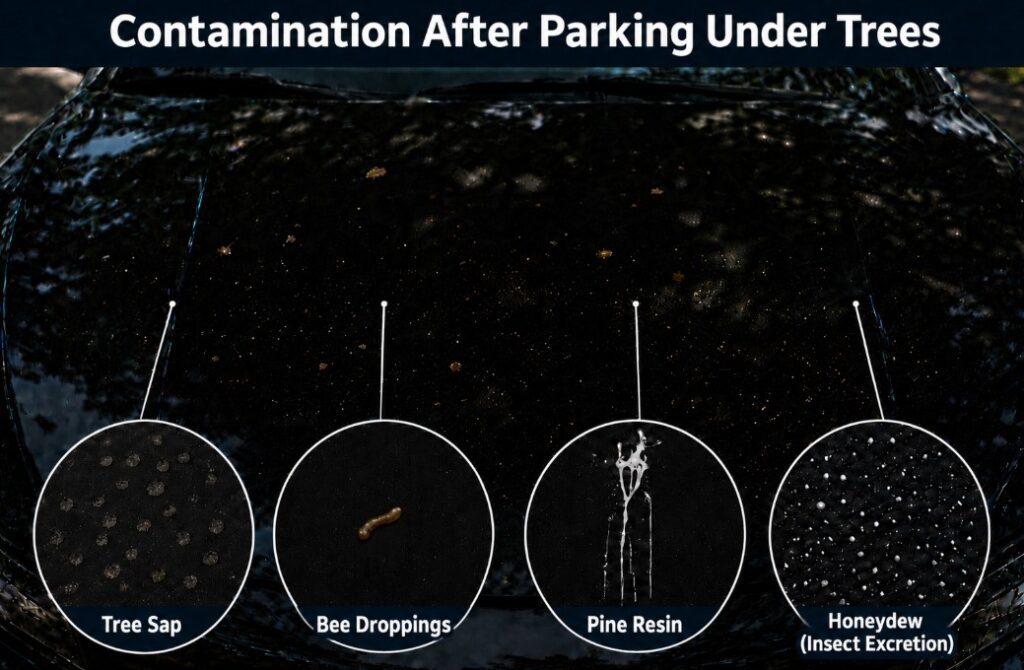
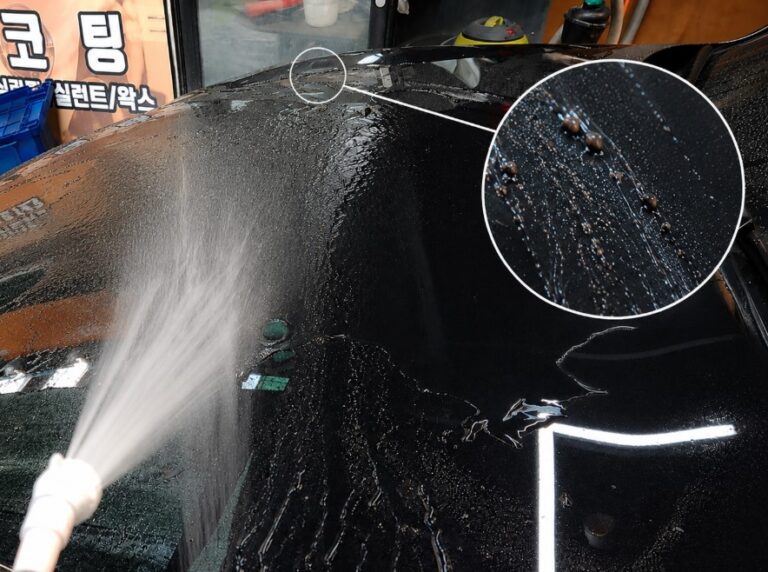
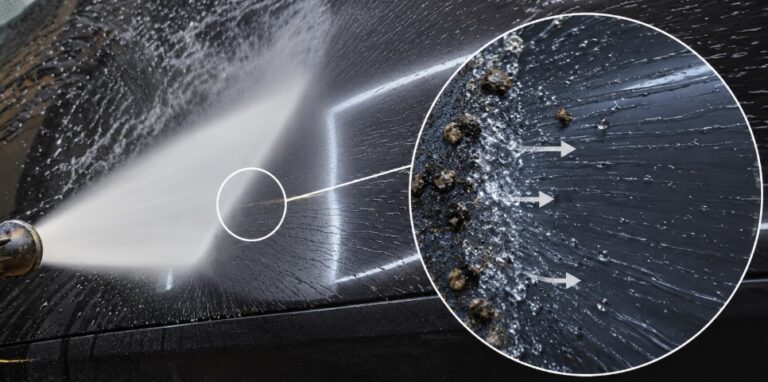
A sticky spot on the paint is not always pine resin. Cars parked under trees may collect tree sap, honeydew, bee droppings, other insect residues, and tree resin. Identifying the general type of contamination helps you choose the least aggressive method that can remove it.
Tree Sap
Tree sap contains water, sugars, and other organic compounds. It may land on the paint as round or slightly distorted droplets. As the water evaporates, the droplets become thinner, duller, and stickier while often retaining a circular outline.
First-line removal:
- Saturate the area with pre-wash solution.
- Allow enough dwell time to rehydrate and soften the residue.
- Rinse thoroughly and continue with a normal contact wash.
Do not wipe dried sap with a dry towel. Re-wet and soften it first so that trapped dust is less likely to scratch the paint.
Honeydew From Insects
Not every sticky liquid beneath a tree comes directly from the tree. Aphids, scale insects, and similar sap-feeding insects produce a sugar-rich liquid known as honeydew. It often appears as many small, pale or nearly white spots scattered across a wide area.
First-line removal: Apply pre-wash, allow it to dwell, rinse, and complete a normal wash. Begin with soaking and washing before reaching for a strong solvent.
Bee Droppings and Other Insect Residue
Bee droppings and similar insect contamination often appear as small yellow-brown spots. A fresh deposit may be elongated or slightly curved, while an older one can dry into a flatter mark.
First-line removal: Soften the spot with water or pre-wash solution, then wash it away gently. If it does not release immediately, repeat the wet dwell instead of adding pressure.
Avoid scraping it with a fingernail or aggressively rubbing it with a towel.
Pine Resin and Other Tree Resin
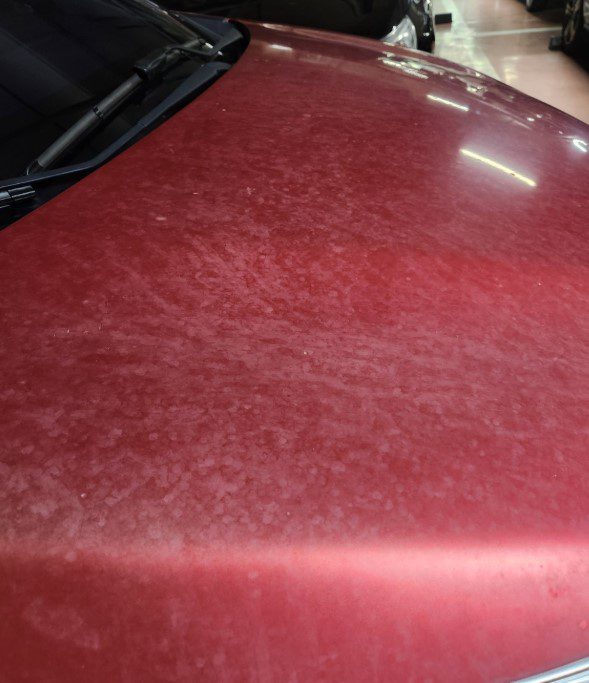
Pine resin behaves differently from water-rich sap and insect residues. Fresh resin is usually clear to amber, sticky, and thick. As volatile components evaporate, it can turn cloudy or white and form a hardened, raised deposit. On a sloped panel, softened resin may also stretch or run before hardening again.
If resin remains after washing, use isopropyl alcohol, a dedicated tree sap and resin remover, or another paint-compatible solvent product to soften it before lifting it away.
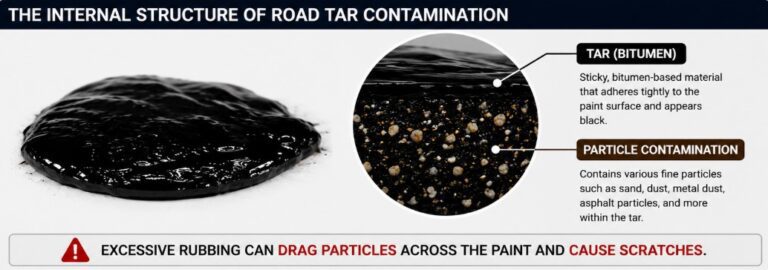
Never try to chip or scrape off hardened resin. Dust and fine particles can become embedded in the sticky material, and dragging them across the paint may cause scratches.
At-a-Glance Comparison
| Contamination | Typical appearance and behavior | First-line removal |
|---|---|---|
| Tree sap | Round or slightly distorted dried droplets; thin and sticky after moisture evaporates | Soak, pre-wash, rinse, and wash |
| Honeydew | Numerous pale, sticky specks spread over a broad area | Pre-wash, rinse, and wash |
| Bee droppings | Small yellow-brown spots, sometimes elongated or curved | Soak, pre-wash, and wash |
| Pine resin | Thick, sticky resin that may harden, turn cloudy, or become white | Wash first, then soften with alcohol or a compatible remover |
Most contamination found under trees should be soaked and washed first. Pine resin is the type most likely to remain and require a separate removal step.
For a safer wash sequence, see Why Pre-Wash Before a Contact Wash?.
Image placement
- Image title: Contamination After Parking Under Trees
- Alt text: Close-up comparison of tree sap, bee droppings, pine resin, and honeydew contamination on a black car hood.
- Caption: Tree sap, bee droppings, pine resin, and honeydew can look similar, but their properties and removal methods differ.
2. Why Pine Resin Becomes Difficult to Remove
If clear, amber, cloudy, or white raised spots remain after washing, inspect them closely. They may be pine resin rather than water-soluble tree sap.
What Is Pine Resin?
Pine resin is a sticky material released by pine trees and other conifers. It contains terpenes, resin acids, and other organic compounds. Fresh resin is soft and tacky, but it has low affinity for water and does not behave like a sugar-rich, water-based contaminant.
Why Does Sticky Resin Harden?
Fresh resin contains volatile components. As these components evaporate, the material left behind becomes more concentrated. Exposure to oxygen, sunlight, and heat can then cause the resin to oxidize and age, turning it into a firm or brittle deposit.
This is more than simple water evaporation. An older resin spot has changed chemically and usually requires a solvent-compatible removal method.
Why Does Normal Car Shampoo Struggle With It?
Pre-wash products and car shampoos are primarily water-based. They work well on loose dirt and many water-soluble contaminants, but hardened resin does not readily dissolve in water. Alcohol or a suitable solvent-based product is more effective because it can soften or dissolve the resin itself.
Removal principle: Fully soften the resin first, then lift it away with minimal contact.
Why Shouldn’t You Wipe Soft Resin Immediately?
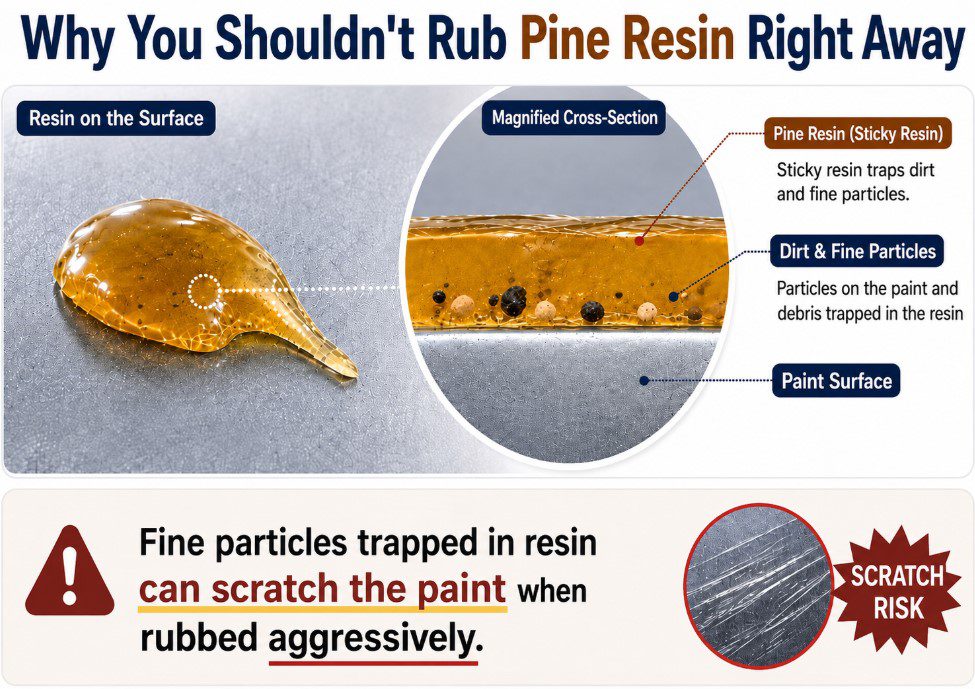
Sticky resin easily traps dust, grit, and fine particles. Wiping before the resin has fully softened can drag those particles across the clear coat. This may spread the contamination and leave scratches at the same time.
Always remove surrounding dirt through a proper wash before working directly on the resin. Then allow the selected remover to loosen the deposit before collecting it with a clean towel.
Can Old Resin Leave a Permanent Mark?
Yes. Resin left on a hot painted surface for an extended period can leave a faint outline, haze, or difference in gloss. The final result depends on the resin, temperature, sunlight, and contact time. Early removal reduces the chance of a lasting mark.
3. Choosing the Right Tree Sap or Resin Remover
Choose a product that can soften or dissolve resin without damaging the surrounding paint, plastic, rubber, or paint protection film.
Isopropyl Alcohol
Isopropyl alcohol can soften some relatively fresh resin deposits.
- Saturate the spot instead of rubbing it immediately.
- Allow the alcohol to remain in contact long enough to soften the resin.
- Lift the softened material with a clean section of a soft towel.
If isopropyl alcohol is unavailable, a plain rubbing alcohol with minimal additives may be used only after checking its ingredients and testing an inconspicuous area. Avoid gel hand sanitizers because they may contain moisturizers, fragrance, colorants, or thickeners that leave additional residue.
Dedicated Tree Sap and Resin Remover
A dedicated automotive tree sap or resin remover is usually the easiest choice for hardened deposits. Follow the manufacturer’s instructions for application, dwell time, compatible surfaces, and rinsing.
Tar or Adhesive Remover
Some solvent-based tar and adhesive removers can also soften tree resin. Tar and resin are different contaminants, so check the label for terms such as tree sap, tree resin, or adhesive residue before use.
For more information about tar-specific products and methods, see How to Remove Tar From a Car.
Solvent-Based Degreaser
Some solvent-based automotive degreasers may work on resin, but they should not be confused with general alkaline degreasers. Confirm that the product is suitable for automotive paint and for the exact material you intend to clean.
4. How to Remove Fresh and Hardened Resin
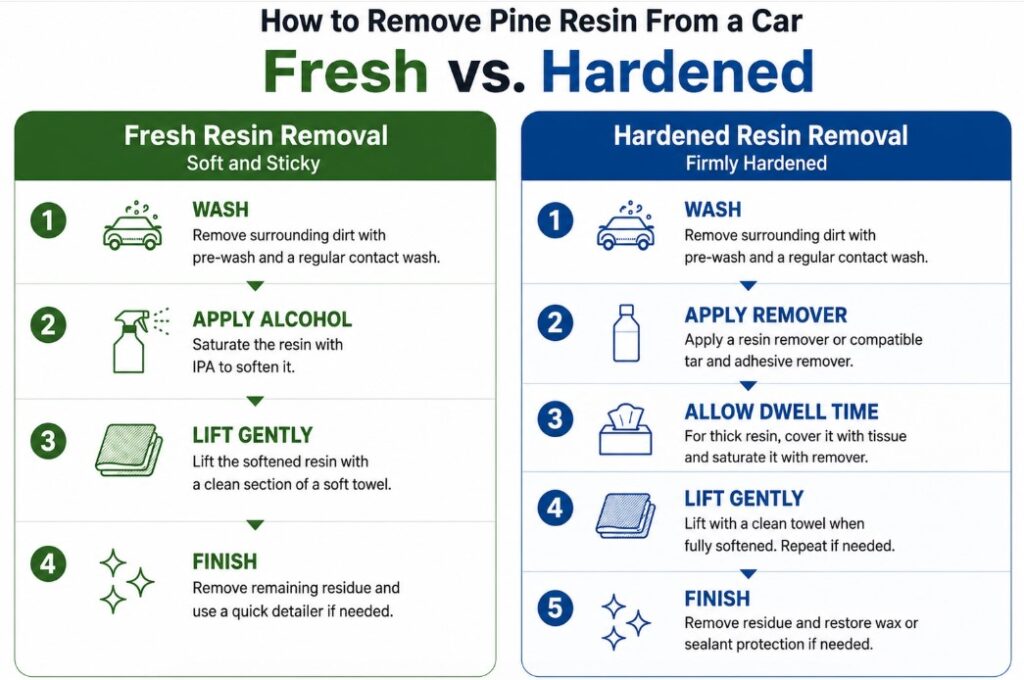
The safest process depends on how far the resin has hardened.
How to Remove Fresh, Soft Resin
Step 1: Wash the Surrounding Area
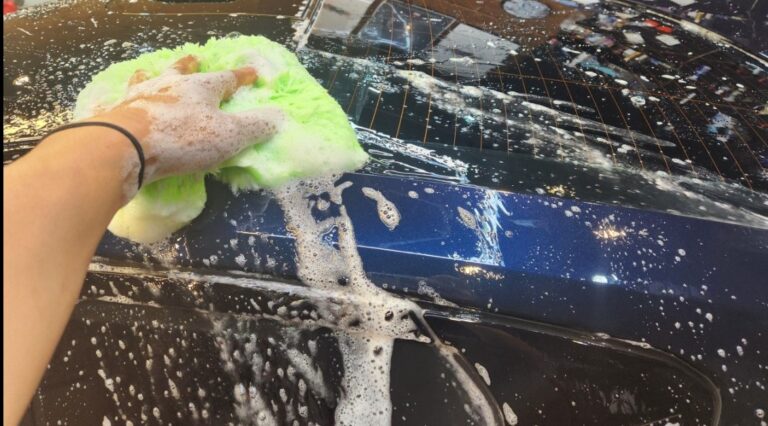
Use pre-wash and a normal contact wash to remove dust and loose particles around the resin. This reduces the risk of dragging grit across the paint during spot treatment.
Step 2: Apply Isopropyl Alcohol
Saturate the resin with isopropyl alcohol. Do not start rubbing as soon as the liquid touches the surface. Give it time to penetrate and soften the sticky deposit.
Step 3: Lift the Resin Gently
Use a clean section of a soft towel to pick up the softened resin. If part of the deposit remains, apply more alcohol and allow another dwell period. Repeating the softening step is safer than increasing pressure.
Practical tip: Use a clean disposable utility towel when possible. Resin transfers easily into towel fibers and may contaminate the towel for future paint use.
Step 4: Clean the Residue
Remove any remaining alcohol and resin residue. A paint-safe quick detailer can be used for the final wipe if necessary.
Fresh resin process: Wash → apply alcohol → allow it to soften → lift gently → clean the residue
How to Remove Old, Hardened Resin
Step 1: Wash First
Complete a proper pre-wash and contact wash before using a solvent. This removes loose contamination and makes the remaining resin easier to identify.
Step 2: Apply a Compatible Remover
Apply a dedicated tree sap and resin remover or a compatible tar and adhesive remover. Follow the specified dwell time, and do not allow the product to dry completely on the panel.
Step 3: Maintain Contact on Thick Deposits
For a large or thick resin deposit, place a small piece of clean tissue or soft disposable material directly over the spot and saturate it with remover. This keeps the liquid in contact with the resin for longer.
The tissue acts as a reservoir. It is not a scrubbing tool.
Step 4: Lift and Repeat
Once the resin has softened, lift it gently with a clean towel. Repeat the cycle of application, dwell time, and gentle lifting until the deposit is gone.
Step 5: Finish and Restore Protection
Remove any remaining chemical residue and inspect the surface. Alcohol and solvent-based removers can weaken or remove waxes and sealants, so reapply spray wax, sealant, or another appropriate protectant if needed.
Hardened resin process: Wash → apply remover → allow it to soften → lift gently → repeat if needed → clean the residue → restore protection
5. What to Do If a Mark Remains
After removal, determine whether you are seeing leftover resin or a change in the paint surface.
The Area Still Feels Sticky or Raised
The resin has not been removed completely. Apply the appropriate remover again, allow more dwell time, and lift the softened material without increasing pressure.
The Surface Feels Smooth but an Outline or Haze Remains
The resin may be gone, leaving behind mild staining, haze, or a difference in gloss. Try a paint cleaner to remove light surface staining and restore clarity.
See How to Use a Paint Cleaner for the correct preparation and application process.
If a paint cleaner does not improve the mark, the clear coat may require inspection and polishing.
Decision guide: Sticky or raised means more resin removal is needed. Smooth with a visible outline means the paint may need cleaning or polishing.
6. Important Precautions
Work on a Cool Surface
Do not apply alcohol or solvent-based removers to hot paint. Heat causes the product to evaporate too quickly, reducing working time and increasing the chance of uneven residue. Work in the shade and allow the panel to cool first.
Do Not Wipe Before the Deposit Softens
Rubbing a hard or sticky deposit can spread it and drag embedded particles across the paint. Let chemistry and dwell time do the work.
Do Not Scrape the Resin
Avoid fingernails, plastic cards, razor blades, and other sharp tools. If the resin does not release, apply more remover and extend the dwell time within the product’s instructions.
Do Not Let the Remover Dry
Monitor the treated area and remove or rinse the product before it dries on the surface.
Spot-Test Sensitive Materials
Paint protection film, unpainted plastic, trim, rubber, and repainted panels may respond differently to solvents. Check the product label and test a hidden area first.
Inspect the Protective Layer
Solvents may weaken wax, sealant, or other protective products. Check water behavior and surface slickness after cleaning, then replenish protection where necessary.
7. Frequently Asked Questions
Is Every Sticky Spot Under a Tree Pine Resin?
No. It may be tree sap, honeydew, bee droppings, another insect residue, or tree resin. Begin with soaking, pre-wash, and a normal wash. Reassess only what remains.
Can a Normal Car Wash Remove Tree Sap or Resin?
A normal wash may remove fresh, water-rich tree sap and insect residue. Hardened pine resin has low affinity for water and usually requires alcohol or a compatible resin remover.
Can I Use Isopropyl Alcohol on Tree Resin?
Isopropyl alcohol can soften some relatively fresh resin. Saturate the deposit, allow it to soften fully, and lift it gently. Always work on a cool surface and spot-test when material compatibility is uncertain.
Can Tar Remover Remove Pine Resin?
Some tar and adhesive removers can soften pine resin, but product formulas vary. Check the label for tree sap or tree resin compatibility before use.
How Do I Remove Old, Hardened Resin?
Apply a dedicated or compatible solvent-based remover, allow sufficient dwell time, and lift the softened material. Repeat the application–dwell–lift cycle instead of applying more pressure.
What If a Mark Remains After the Resin Is Gone?
If the surface is still sticky or raised, resin remains. If it feels smooth but shows an outline, haze, or gloss difference, try a paint cleaner. Polishing may be required if the mark does not improve.
Can I Use a Resin Remover on Paint Protection Film?
Only if the product manufacturer confirms compatibility. Test a hidden area first because paint protection films and their top coatings can react differently to solvents.
Conclusion
Cars parked under trees can collect several types of contamination, including tree sap, honeydew, bee droppings, and pine resin. Start with soaking, pre-wash, and a normal contact wash to remove water-soluble residue and surrounding dirt.
If a raised resin deposit remains, change methods. Relatively fresh resin may respond to isopropyl alcohol, while hardened resin is usually better treated with a dedicated tree sap and resin remover or another compatible solvent-based product.
The safest approach is to avoid extra force. Soften the contamination thoroughly, lift it with minimal contact, and repeat the process when needed. If the deposit is gone but a smooth mark remains, assess the paint with a paint cleaner before considering polishing.
Key rule: Soften it thoroughly first, then lift it away with minimal contact.