Reconsidering the Additional Benefits of Paint Cleaners by Starting With the Comparison Conditions
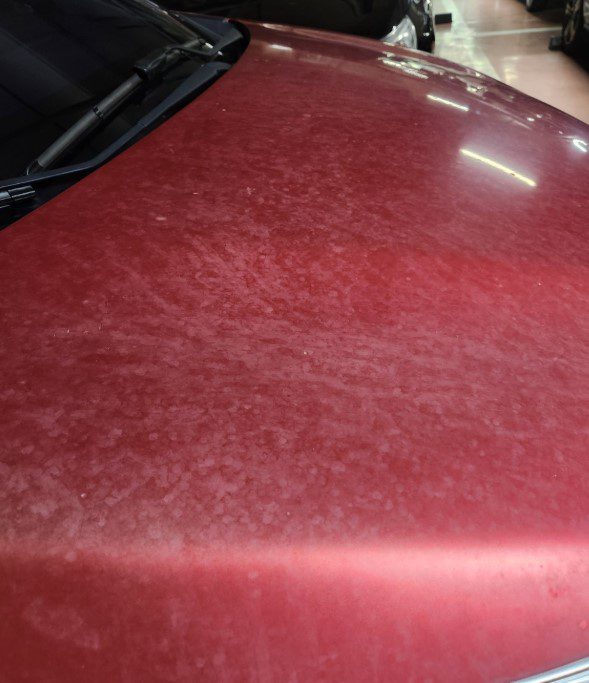
When people search for ways to remove mineral contamination or water spots, they often encounter a familiar progression:
Acid pre-wash
→ Non-abrasive paint cleaner
→ Polishing
According to this sequence, if an acid pre-wash does not remove the contamination, users move on to a non-abrasive paint cleaner. If the marks still remain, they proceed to polishing.
This sequence makes a paint cleaner look like a stronger chemical removal method than an acid pre-wash.
But is that really true?
This article does not question whether paint cleaners can remove mineral contamination.
Instead, it asks whether a paint cleaner still adds meaningful chemical removal after you already complete an acid pre-wash and an appropriate physical removal process.
If you’re not familiar with how acid-based cleaning works in detailing, review the fundamentals of acid pre-wash processes before continuing.
Table of Contents
- Are Acid Pre-Washes and Paint Cleaners Being Compared Under the Same Conditions?
- What Types of Contamination Does a Paint Cleaner Actually Remove?
- Does Chelation Make a Paint Cleaner Stronger Than an Acid Pre-Wash?
- Physical Removal Can Also Be Added to an Acid Pre-Wash Process
- How Much More Can a Paint Cleaner Remove After an Acid Pre-Wash?
- A Paint Cleaner May Be an Alternative Process, Not the Automatic Next Step
- Frequently Asked Questions
- Conclusion
Are Acid Pre-Washes and Paint Cleaners Being Compared Under the Same Conditions?
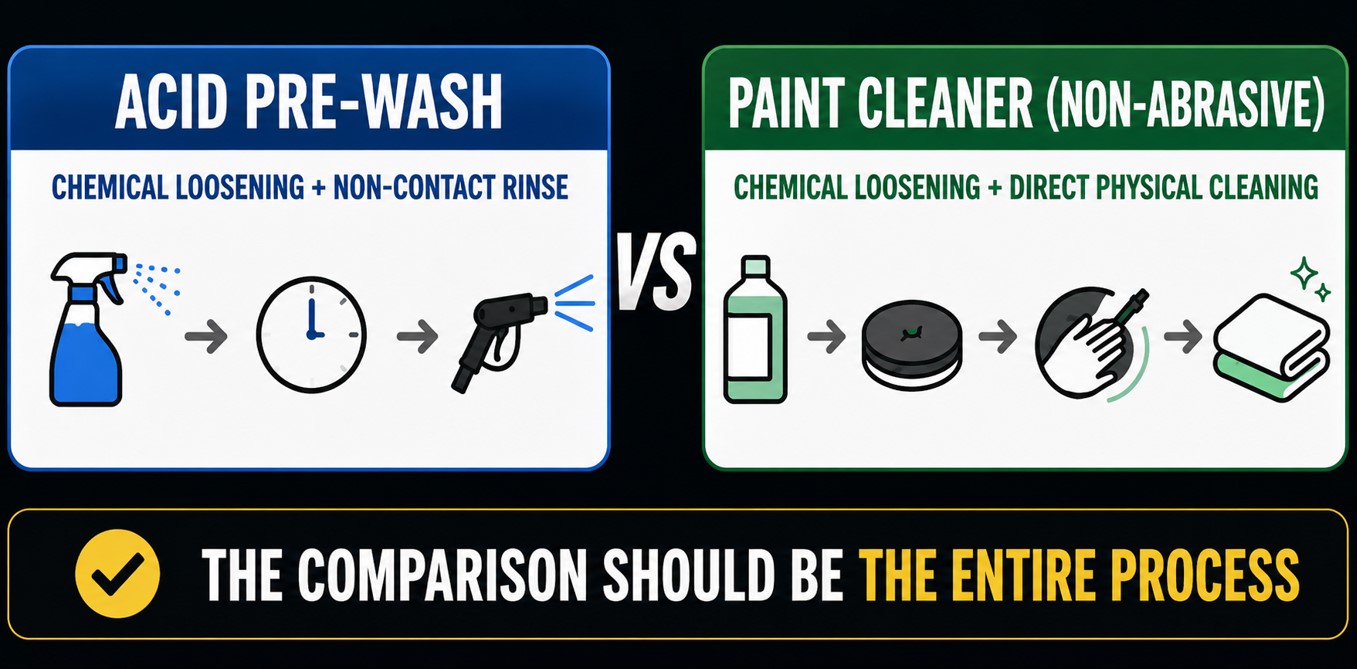
Detailers usually perform an acid pre-wash like this:
Apply the chemical
→ Let it react
→ Pressure rinse
A paint cleaner involves more steps:
Apply the product
→ Work it with a pad
→ Use repeated movements
→ Buff with a towel
The difference between these processes goes beyond the chemical itself.
An acid pre-wash loosens mineral contamination chemically, then uses water pressure and flow to remove it. It typically avoids direct contact with a wash mitt or applicator pad.
A paint cleaner combines chemical cleaning with repeated pad movement and towel buffing. The product may weaken or dissolve residues, while direct contact and friction remove what remains.
You can summarize the comparison like this:
Acid pre-wash = chemical loosening + non-contact rinsing
Paint cleaner = chemical loosening + direct physical cleaning with a pad and towel
A pressure rinse also removes contamination physically because it uses water pressure and flow. However, it does not act like a pad or towel moving repeatedly across the surface.
Because of this, the usual comparison does not isolate chemical cleaning power.
People judge acid pre-wash results after chemical reaction and rinsing. They judge paint cleaner results after combining chemical action, pad movement, and towel buffing.
One process avoids direct contact, while the other relies on it. You cannot compare the final results as if both processes used the same conditions.
Even when marks become less visible after using a paint cleaner, you still need to identify the cause:
- Chemical action from the paint cleaner
- Physical action from the applicator pad
- Additional removal during towel buffing
A proper comparison must evaluate the entire process, not just the product.
What Types of Contamination Does a Paint Cleaner Actually Remove?
A non-abrasive paint cleaner does not focus only on mineral removal.
Manufacturers design it to remove or reduce multiple types of surface residue at once.
Mineral deposits rarely exist alone on automotive paint. The surface may also contain:
- Oily film
- Road film
- Old wax or sealant
- Detergent residue
- Mixed organic and mineral contamination
Depending on its formulation, a paint cleaner can soften oily residue, remove aged protection products, clean embedded surface film, and help remove some mineral contamination.
It also needs to provide enough lubrication and workable consistency so users can spread it with a pad and remove it with a towel.
Cleaning multiple types of residue in one step offers a real advantage.
However, a cleaner-looking surface after using a paint cleaner does not reveal what caused the improvement.
Did the result come mainly from:
- Oil and road-film removal?
- Removal of old wax or sealant?
- Mineral removal?
- Pad contact?
- Towel buffing?
If you do not separate these factors, you may mistake the overall cleaning result for superior chemical mineral-removal power.
For a deeper understanding of mixed contamination layers, refer to our guide on surface contamination types in automotive detailing.
Does Chelation Make a Paint Cleaner Stronger Than an Acid Pre-Wash?
Some paint cleaners include chelating agents that bind with metal ions such as calcium and magnesium.
Chelating agents capture metal ions after they separate from mineral deposits. This keeps them suspended in the cleaning solution and reduces the chance of redeposition.
Under the right conditions, chelation can also help dissolve solid mineral deposits.
For this reason, you should not automatically consider chelation weaker than acidic dissolution.
However, the key question is not whether chelation can work in theory.
The practical question is:
How strongly does the mineral-removal system work inside a paint cleaner, and does it still add meaningful benefit after an acid pre-wash?
Formulators face different challenges when they design a chemically aggressive system versus a stable automotive product.
Manufacturers do not make acid pre-washes mildly acidic because they lack stronger acids. They control reactivity so users can safely apply the product to paint, glass, trim, plated parts, and exposed metals.
Paint cleaner manufacturers face similar limits.
They must balance:
- Mineral-removal ability
- Oil and residue removal
- Lubrication
- Application properties
- Buffing behavior
- Material compatibility
A paint cleaner’s ability to remove some minerals does not prove that it acts as a stronger chemical stage than an acid pre-wash.
An all-in-one interior cleaner and protectant offers a useful comparison.
It can clean and protect at the same time, which makes it convenient.
However, that does not mean it cleans better than a dedicated cleaner or protects better than a dedicated coating.
The same principle applies here.
A paint cleaner can remove multiple types of residue, but that does not automatically make it stronger than an acid treatment designed specifically for mineral contamination.
Physical Removal Can Also Be Added to an Acid Pre-Wash Process
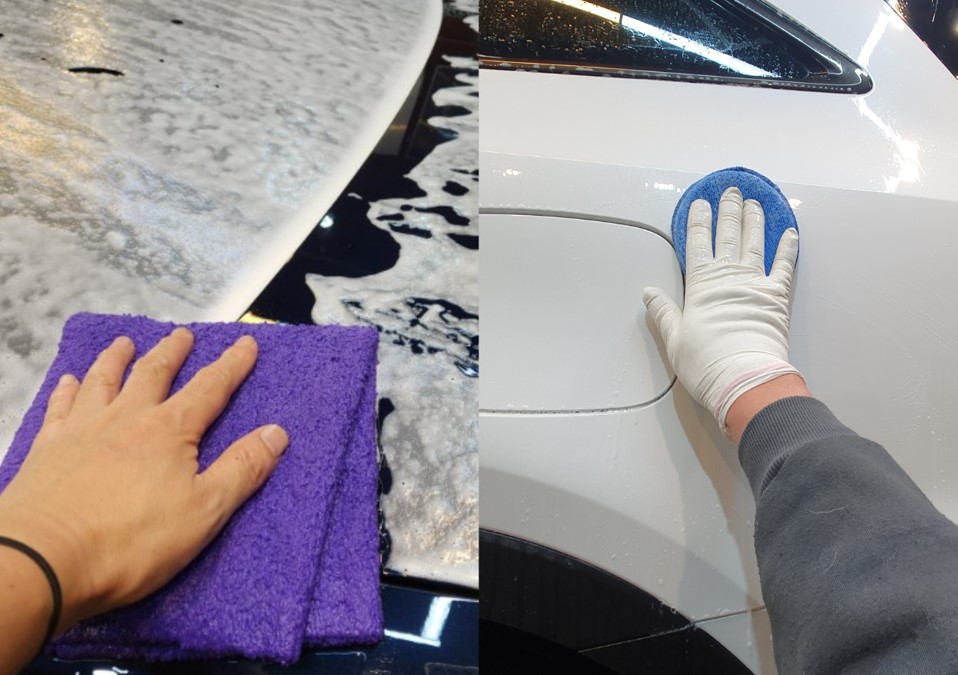
You do not have to limit an acid pre-wash to a spray-and-rinse process.
The real risk comes from making direct contact while dirt, hard particles, and oily contamination still remain on the paint.
To reduce that risk, you should first create a safer surface condition for contact washing.
A possible process looks like this:
Alkaline pre-wash
→ Pressure rinse
→ First contact wash
→ Acid foam
→ Light second wash
→ Final rinse
The alkaline pre-wash and first contact wash remove road film, oily contamination, and general dirt.
After you remove those layers, the acid can reach mineral contamination more effectively.
At the same time, these steps reduce hard particles that could cause marring during contact washing.
The acid foam then reacts with exposed mineral deposits.
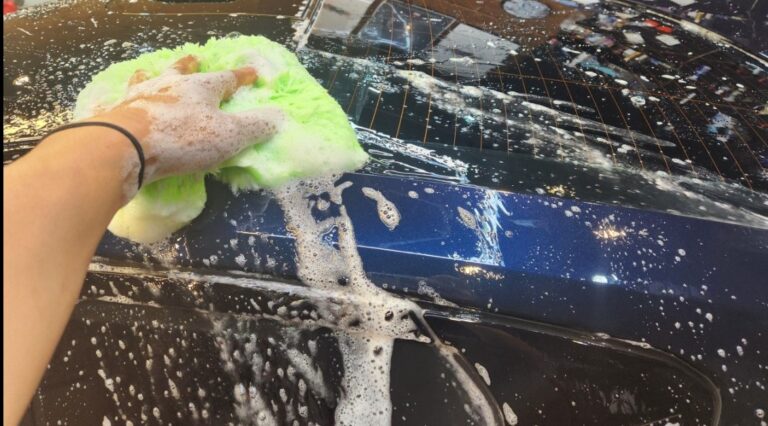
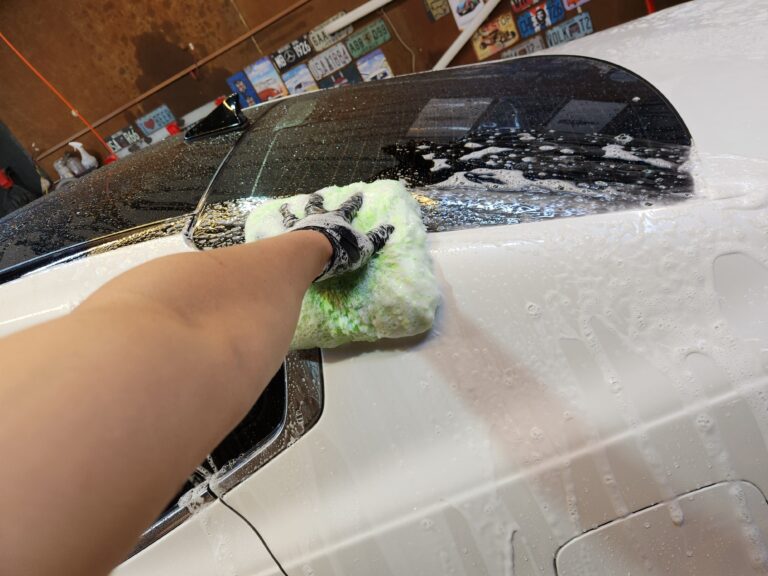
A light second wash, with proper lubrication, removes the residue that the acid has loosened.
This step does not aim to scrape hardened minerals away with force.
The process follows this order:
Remove general contamination
→ Expose the mineral layer
→ Let the acid react
→ Remove the loosened residue
You do not need to reserve physical removal only for paint cleaners.
You can also include a controlled contact stage in an acid-cleaning process after preparing the surface properly.
Traditional comparisons often stop the acid process after rinsing, while allowing the paint cleaner to benefit from pad contact and towel buffing.
Once you add a second wash, the comparison changes:
Acid pre-wash + acidic reaction + second wash
versus
Non-abrasive paint cleaner + pad application + towel buffing
Now both processes include chemical cleaning and physical removal.
If you want to improve wash safety during contact stages, see our article on minimizing wash-induced marring.
How Much More Can a Paint Cleaner Remove After an Acid Pre-Wash?
The key question is no longer which product is stronger.
Instead, ask:
After completing an acid pre-wash and a second wash, how much additional mineral contamination can a paint cleaner remove?
When the surface improves after using a paint cleaner, several factors may explain the change.
Chelation may remove additional mineral residue.
Solvents may remove oily film or aged wax and sealant.
Pad movement and towel buffing may physically remove remaining residue.
Another possibility also exists.
The mineral deposit may already be gone, and the visible mark may actually be etching or permanent surface damage.
In that case, a non-abrasive paint cleaner cannot fully remove the mark because it no longer sits on the surface.
For this reason, reduced visibility after using a paint cleaner does not prove stronger chemical performance.
You need to identify what the paint cleaner actually removed:
- Remaining mineral contamination?
- Oily residue?
- Old wax or sealant?
- Residue removed through pad and towel contact?
Without this distinction, you may misinterpret the result as purely chemical mineral removal.
A Paint Cleaner May Be an Alternative Process, Not the Automatic Next Step
This article does not argue against using paint cleaners.
A paint cleaner can efficiently remove oily film, old protection products, mixed residue, and some mineral contamination in one process.
An acid pre-wash offers a different approach.
You first reduce general contamination and oils. Then you treat exposed mineral layers with acid and follow with a second wash to remove loosened residue.
You can view these as alternative processes:
Non-abrasive paint cleaner + pad application
or
Acid pre-wash + second wash
Problems arise when people treat them as a fixed sequence:
If acid does not work, use a paint cleaner.
If the paint cleaner does not work, polish.
This assumption treats the paint cleaner as a stronger chemical stage.
However, once you add proper physical removal to the acid process, the comparison changes.
A paint cleaner may still add value, but you need to identify that value instead of assuming it.
Frequently Asked Questions
Can a Paint Cleaner Remove Minerals Chemically?
Yes. Depending on formulation and conditions, chelation and other mechanisms can remove mineral contamination.
However, this does not automatically make it a stronger next step after an acid pre-wash.
Must an Acid Pre-Wash Always Be Used as a Non-Contact Process?
No.
After you reduce dirt and hard particles and ensure proper lubrication, you can perform a light second wash to remove residue loosened by the acid.
Should a Paint Cleaner Never Be Used After an Acid Pre-Wash?
You can still use it.
However, you should define the purpose clearly.
Are you targeting remaining mineral contamination, or preparing the surface by removing oils and old protection?
These goals differ.
What if the Mark Remains After the Mineral Deposit Has Been Removed?
The mark may be etching rather than surface contamination.
If the paint itself has changed, additional chemical cleaning will not help much. You may need polishing depending on the severity.
For more detail, see our guide on water spot etching vs deposits.
Conclusion
A paint cleaner can remove some mineral contamination.
However, that does not automatically make it the next step after an acid pre-wash.
You can turn an acid pre-wash into a complete process by removing general contamination first and adding a light second wash after the acid reacts.
This approach combines:
- Chemical loosening
- Physical removal
Before adding a paint cleaner, ask two questions:
Did it remove actual remaining mineral contamination?
Did it provide enough additional improvement to justify another step?
The real issue is not whether a paint cleaner works.
The key question is what additional removal it provides after acid treatment and physical removal—and whether that benefit justifies the extra step.